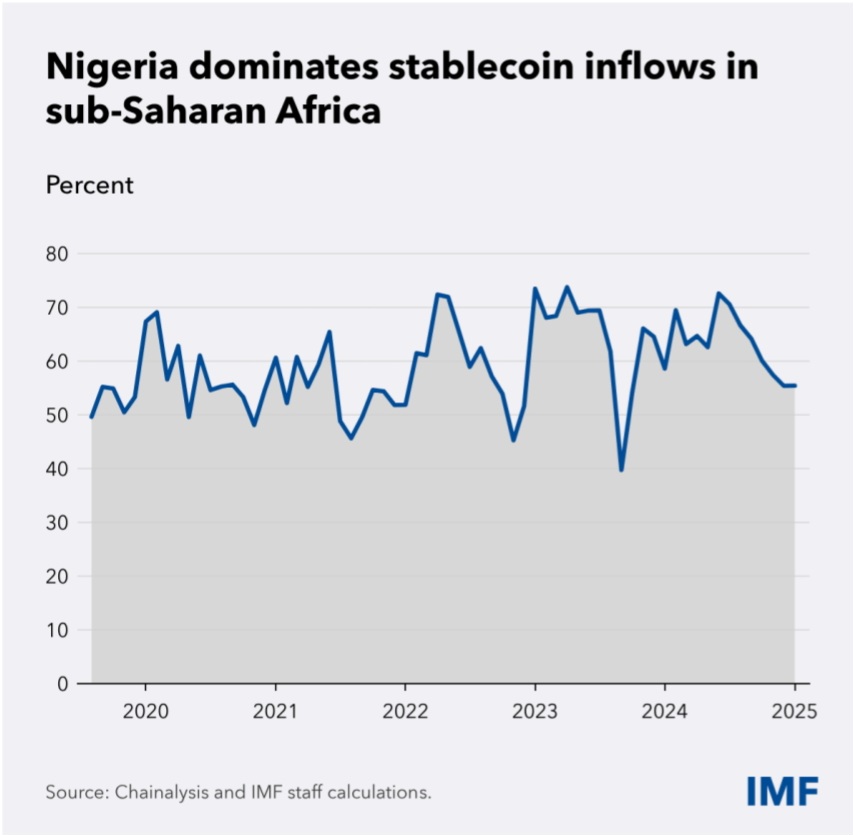
Millions of dollars are moving into and out of Nigeria through smartphones, digital wallets, and dollar-backed crypto assets, creating a new challenge for Africa’s most populous economy.
The International Monetary Fund (IMF) has warned that the rapid rise of stablecoins in Nigeria is making cross-border payments cheaper and faster, but could eventually weaken the effectiveness of the country’s monetary policy if regulators fail to keep pace.
The warning comes as Nigeria cements its position as one of the world’s biggest crypto markets.
According to the IMF, the country received about $59 billion in crypto-asset inflows between July 2023 and June 2024.
Nigeria ranked second globally on Chainalysis’ 2024 crypto adoption index and remained among the world’s most active markets in 2025.