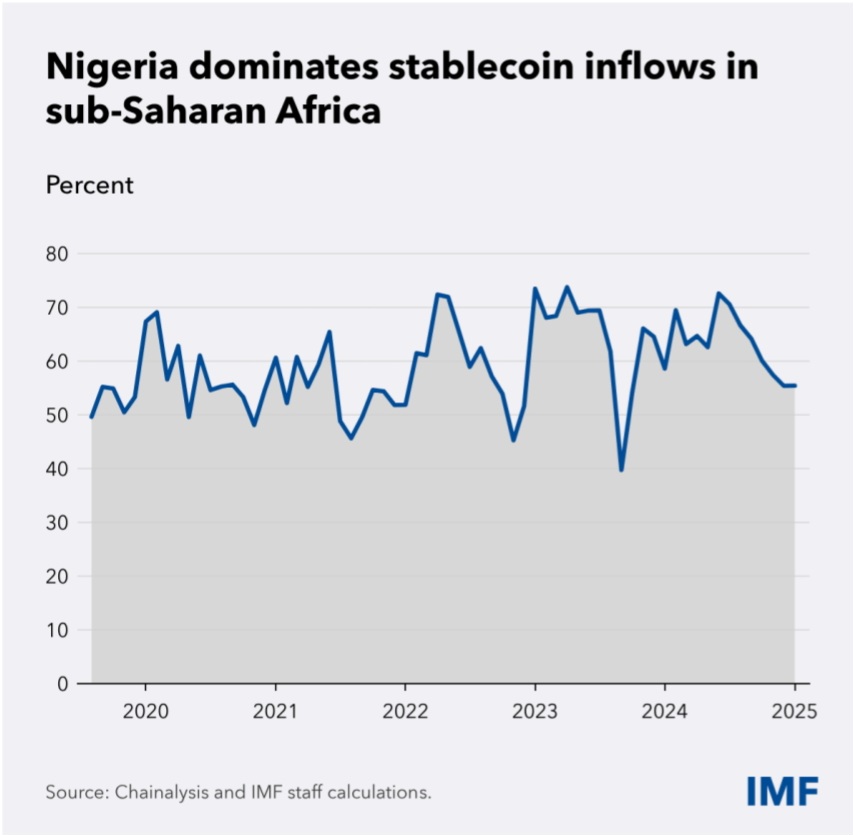
The International Monetary Fund said Nigeria's surging stablecoin adoption is “testing the limits” of existing monetary and regulatory frameworks, as households and small firms increasingly use dollar-pegged digital tokens for cross-border payments.
Stablecoins have gained traction in Nigeria because they allow users with a smartphone and internet access to receive remittances or make cross-border payments in minutes, often at lower cost than traditional channels, the IMF said in a report on Tuesday.
The average cost of sending $200 to sub-Saharan Africa remains around 9% of transaction value, well above the global average of 6%, the organization added, citing the World Bank.
According to the report, domestic conditions also accelerated the shift to stablecoins in 2023 and 2024. A sharp depreciation of the naira, persistent inflation, and limited access to official foreign exchange pushed households and small firms toward dollar-linked assets to hedge currency risk and settle payments with overseas suppliers.
But the same features that make stablecoins attractive also raise policy concerns. The IMF said widespread use of U.S. dollar-denominated stablecoins can resemble a digital form of dollarization, potentially reducing demand for the local currency and weakening the transmission of domestic monetary policy.