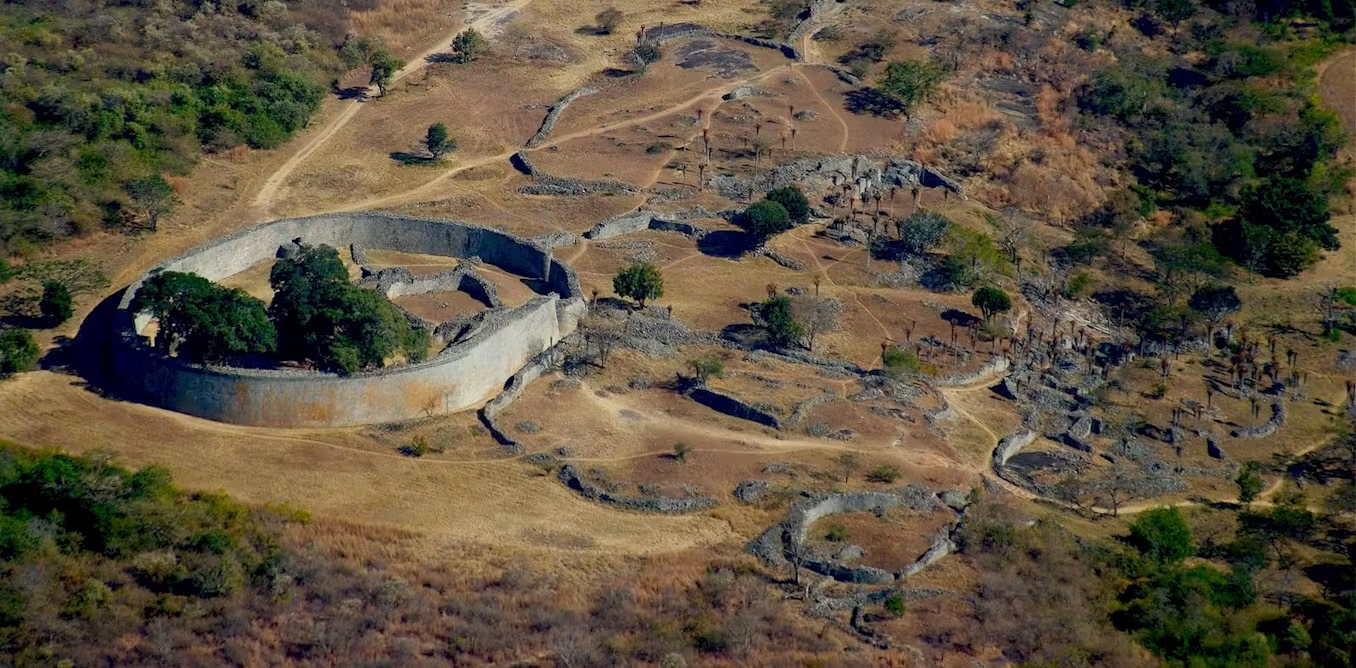
For more than a century, Great Zimbabwe has stood at the centre of a powerful story about the Zimbabwe culture. This remarkable African civilization flourished in southern Africa during the Middle Ages, constructing more than 200 dry-stone palaces, locally known as madzimbahwe (houses of stone).
These towering monuments, immense gold wealth, and an array of exotica including glass beads and glazed ceramics from distant lands, have often been interpreted as proof that southern Africa’s early states were ruled by authoritarian kings. Leaders who exercised near-absolute control over their subjects.
À lire aussi :
Zimbabwe’s house of stone: the gallery that showcases a famous sculpture tradition
In archaeology textbooks, museum exhibitions, and even political discourse, the image of Great Zimbabwe – rivalled in size and grandeur only by the Egyptian pyramids – has often been reduced to one of a despotic African kingdom ruled from above by divine kings.