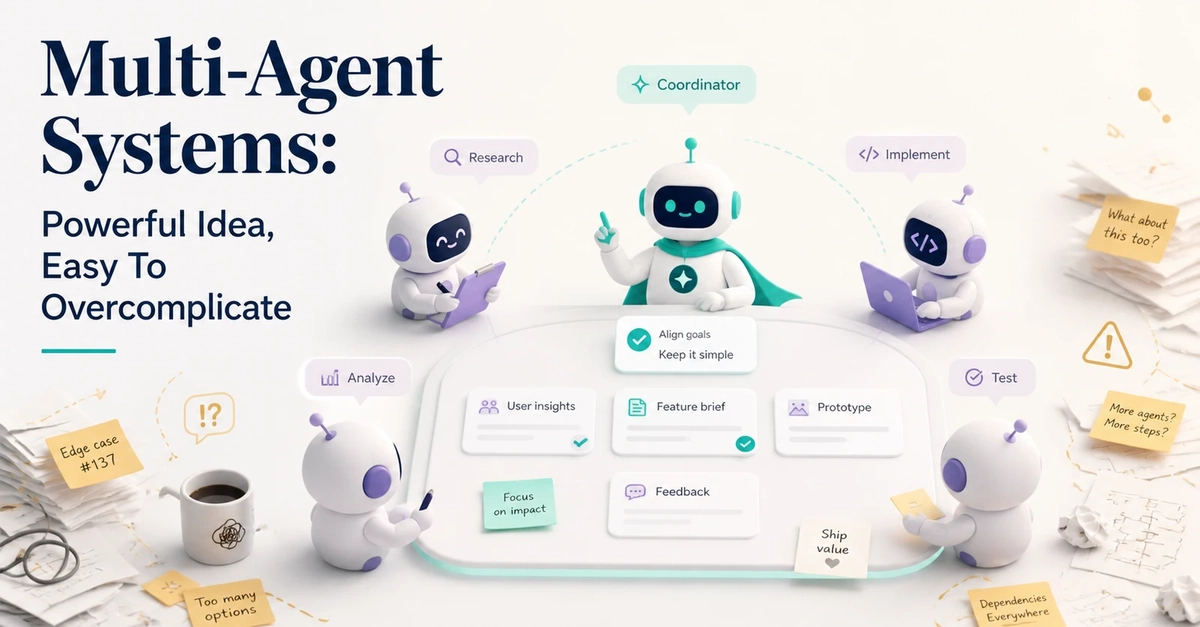
One AI agent answering a question is useful. Five agents that divide a complex task, pass state to each other, and act on live enterprise systems is a meaningfully different category of system. It also carries a meaningfully different category of operational problems.
Multi-agent orchestration is the architectural pattern that makes the second case coherent. But a lot of teams prototype multi-agent systems in a weekend and then spend months figuring out why production is unpredictable, expensive, and impossible to audit.
Here's how it actually works, what the frameworks solve, and what they leave on the floor.
What multi-agent orchestration is
A single AI agent handles a task from start to finish, sequentially. Multi-agent orchestration distributes that work: each agent owns a defined role, capability, or subtask. An orchestration layer above them decides who runs when, what context each agent receives, what they're allowed to access, and how the system behaves when something fails.