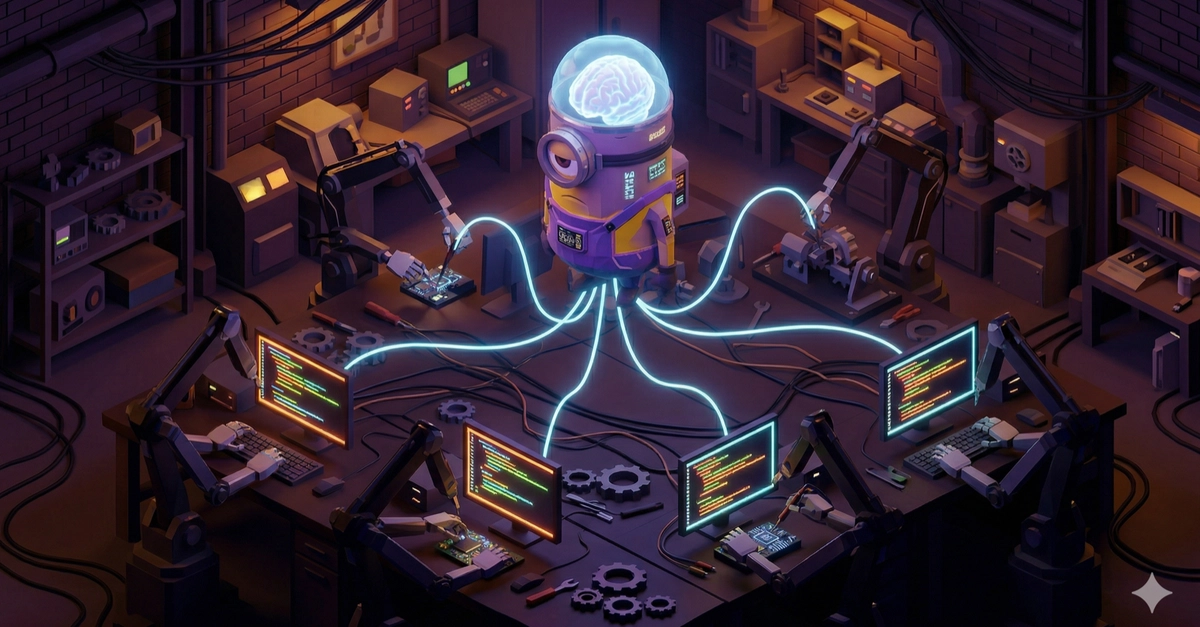
More developers are running several AI tools at once now: Claude for code, GPT for docs, a specialized agent for data analysis. Each one does its job and it looks productive.
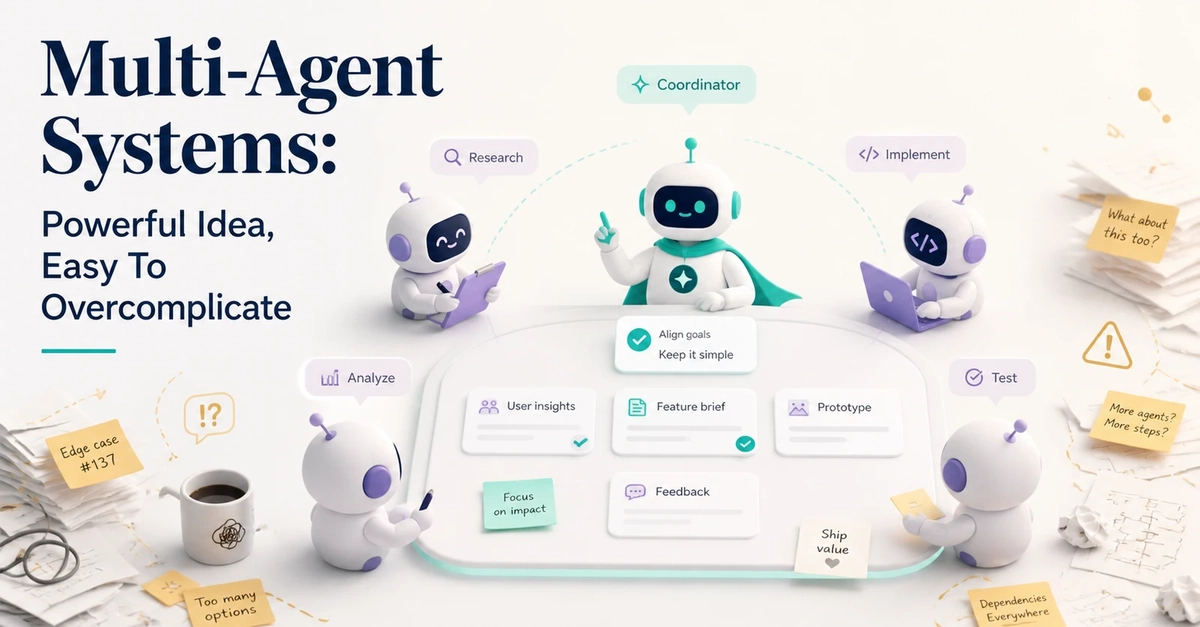
But that kind of parallelism is just more hands on deck, not real collaboration. The moment you try to get multiple agents to handle a task with dependencies, complexity jumps to a completely different level.
Who Sees What
The first question that comes up when agents work simultaneously is who sees what. Two agents writing the first and second half of a proposal; do they need to see each other's progress, or work blind and let a human merge the output? If they can't see each other, how do you keep style consistent and avoid duplication? If they can, how do you handle interference, when agent A reads B's output and gets pulled in a different direction?
There's no universal answer, it depends entirely on the task. Brainstorming needs agents to see each other's ideas and build on them; pipeline tasks only need upstream output, anything extra is noise. What you need is configurable visibility control with different information topologies for different task modes. Most existing frameworks haven't built this abstraction, so developers patch it together in their prompts.