The global economy is entering a new phase. For 40 years the dominant objective was efficiency. Capital, production, labor, logistics and technology were organized across borders to reduce costs and maximize output.
Today that model is being challenged by a new objective: resilience. The language used is "de-risking". The assumption is straightforward. Dependence creates vulnerability. Therefore reducing dependence should increase security.
The problem is that the global economy is not simply a collection of isolated national economies. It is an interconnected system. Actions that appear rational at the national level often create systemic risks at the international level. The question is not whether risks exist in globalization. They always have. The question is whether de-risking reduces the risks or simply creates new ones.
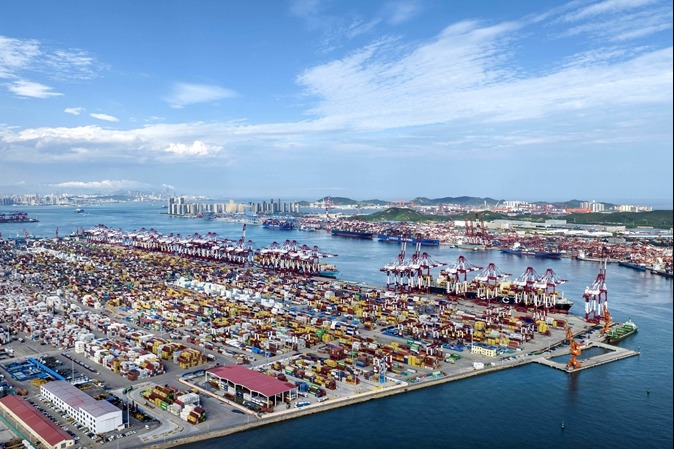
Global trade now exceeds $35 trillion annually, equivalent to nearly 30 percent of global GDP. The system is anchored by a handful of major economic centers. The Asia-Pacific accounts for close to 40 percent of global exports and imports, the European Union generates around $10 trillion in combined internal and external trade, and North America contributes about $3 trillion in goods exports. China, the United States and major economies in Europe and Asia continue to anchor global trade within an interconnected system of goods, services and capital flows.