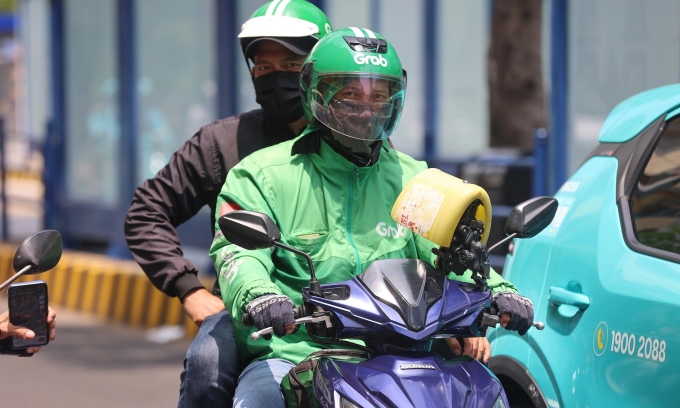
More than a decade after Grab and Uber brought the gig economy to Vietnam, the country's roughly 600,000 ride-hailing and delivery drivers still have no legal standing as employees. The "partner" label the platforms have used since 2014 spares the companies from paying social insurance, health insurance or unemployment insurance, and Vietnamese law has yet to decide whether these drivers are owed any of it, even as Britain, France, the European Union and neighboring Singapore have all moved to pull their own platform workers under legal protection.
When the model arrived, almost no one questioned it. The pitch was the "sharing economy," in which the app merely linked someone who needed a ride with someone who owned an idle vehicle and split the cost of fuel.
Huynh Long, then 32 and a factory worker at the Tan Thuan Export Processing Zone in Ho Chi Minh City, signed up to drive GrabBike to pay off a motorbike loan.
"In the early days the bonuses were worth more than what passengers paid," he recalled. Within a year his app income matched his factory wage and he quit to drive full time, alongside co-workers hoping to clear VND15-20 million ($570-760) a month.
"The positives at the time drowned out almost the entire debate over labor relations," said Nguyen Tat Nam, former head of the labor and social insurance division at the Ho Chi Minh City Department of Labor, Invalids and Social Affairs, now the Department of Home Affairs.