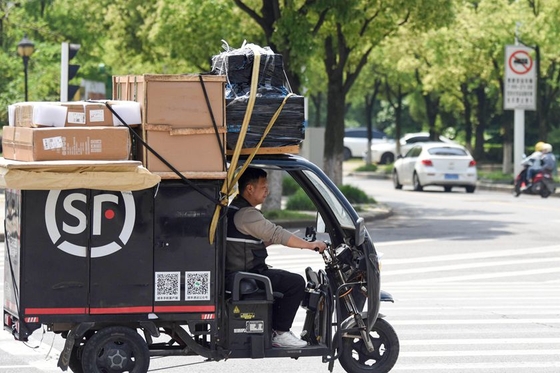
Bao Zhang began driving for a Chinese ride-hailing app this year after losing his job as a software tester and says the weak job market gives him little hope of returning to the tech sector.
His story is increasingly common in China, where tens of millions are shifting from formal employment into the gig economy as meager unemployment insurance, record numbers of graduates and a shortage of jobs squeeze opportunities.
"Those who used to take taxis now have to drive them themselves," said the 30-year-old, who works from 7 a.m. until nearly midnight in Beijing to earn about 6,000 yuan ($885) a month after vehicle rental and charging costs.
The China New Employment Forms Research Center, a think tank, estimates the number of people in flexible employment – without a permanent full-time contract – rising to 320 million this year from 280 million in 2025, a cohort almost as large as the U.S. population and about 44% of China's workforce.
Gig economy acts as China's safety net