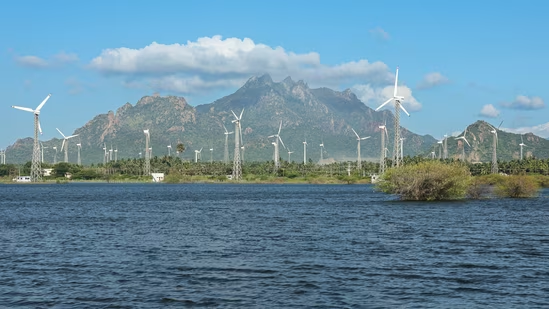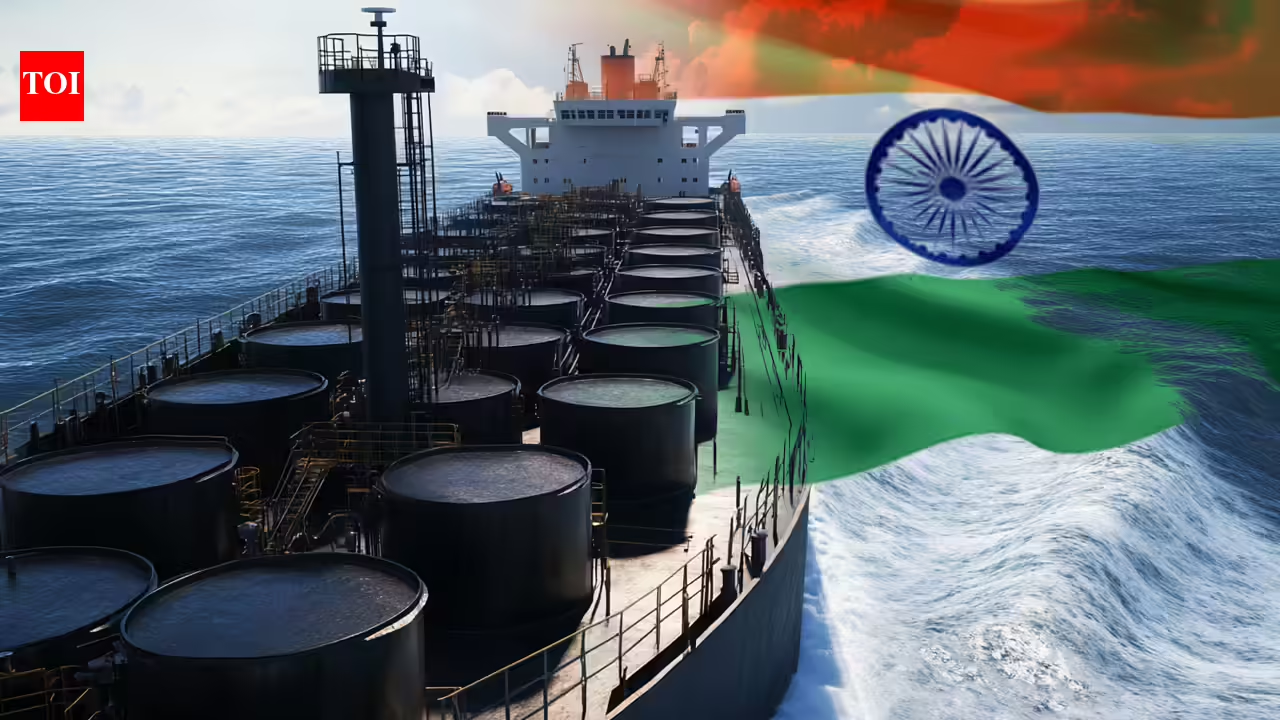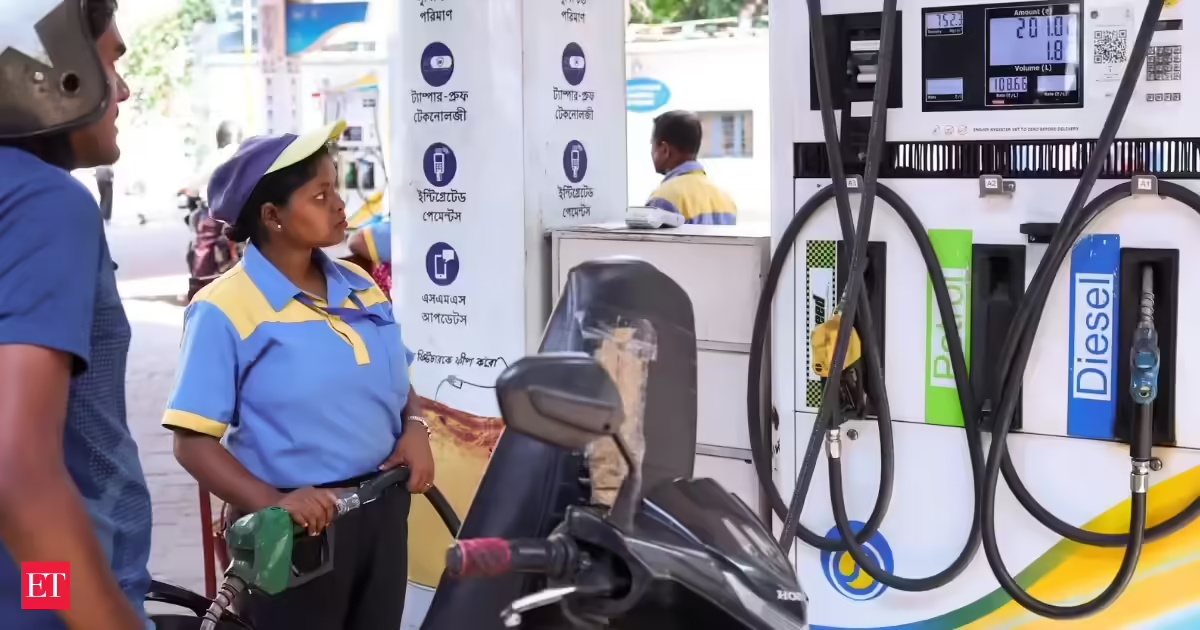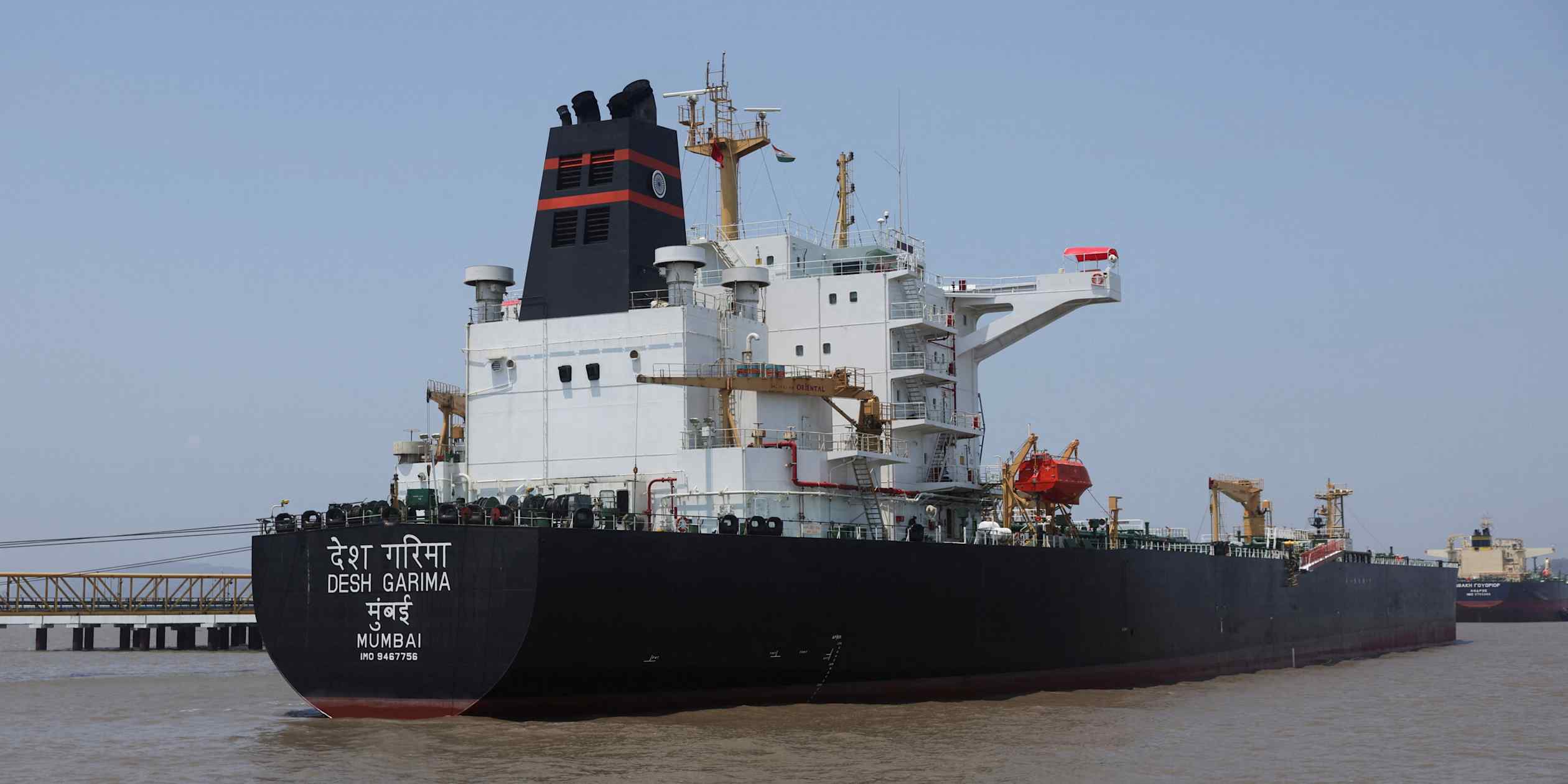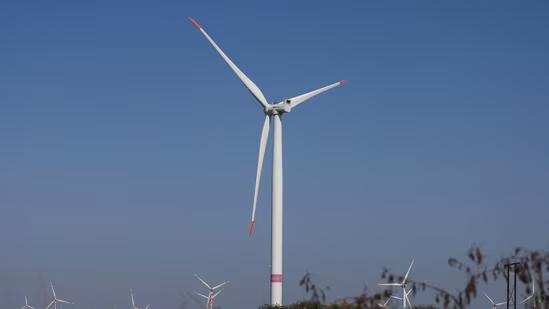
Since Iran blocked the Strait of Hormuz in February, India has been confronting the full cost of its dependence on imported energy and the numbers are unsparing. India imports about 85-90% of its crude oil — roughly five million barrels a day. Even before the present crisis — which may come to an end with the announced peace deal — India’s fossil fuel import bill stood close to $180 billion.India has already crossed 283 GW of installed non-fossil fuel capacity, including over 154 GW of solar and 56 GW of wind. (Reuters/Representative Image)Given this stark reality, it is time to treat India’s energy transition as not merely a climate obligation, but as a core energy security strategy. The objective must be to build a clean energy system that is affordable, reliable, diversified and increasingly domestic.ALSO READ | Why the Iran ceasefire and Modi–Trump talks could redefine India’s strategic outlook: HT decodesIndia has already crossed 283 GW of installed non-fossil fuel capacity, including over 154 GW of solar and 56 GW of wind. It has achieved the target of 50% installed electricity capacity from non-fossil sources ahead of the 2030 deadline. It has electrified 28 million households and provided clean cooking fuel to more than 100 million homes.The economics have also shifted decisively. Solar is now among India’s cheapest sources of new power. Renewable energy with storage is becoming increasingly competitive for evening and peak supply. Green ammonia auctions in India have discovered prices far below prevailing international levels. This progress exemplifies the fact that clean technologies have firmly entered the mainstream of India’s energy economy.ALSO READ | India must build its own clean energy talent poolBut the next phase must be far more ambitious. India must think beyond the 500 GW non-fossil target for 2030. In 2025, China added over 400 GW of renewable power in a single year. India, on the other hand, added 56 GW in total. India is climatically blessed and if the objective is energy security, India should target a trajectory towards 1,500 GW of clean energy capacity. This would be ambitious, but definitely not unachievable. This target would send a clear signal to markets, manufacturers, states and investors that India intends to compress the next decade of energy transformation into the next five years. Without this ambition, it would also not be possible for India to drive data centres and be a champion of the next wave of artificial intelligence (AI). Globally, data centres today consume more energy than the country of Japan and new data centres will all have to be powered by clean energy.Such an ambition cannot rest on generation capacity alone. India cannot build a 1,500 GW clean energy system if the grid lags behind. Generation must move in lockstep with evacuation capacity, grid stability and demand-side readiness. Renewable-rich corridors will need accelerated transmission build-out and faster connectivity approvals. This has to be undertaken on a war footing. Digitalisation must also become central to this effort. Smart grids, AI-enabled forecasting, smart meters, real-time congestion monitoring and better demand management will be critical to managing a system with very high renewable penetration.ALSO READ | Hormuz blockade: Boon or bane for clean energy?Storage is equally critical. It is what turns renewable energy from intermittent supply into reliable, round-the-clock power. Every major renewable tender should be designed around firm and dispatchable 24x7 clean power. Batteries must be deployed at renewable generation sites, but also at substations, industrial clusters and load centres where they can reduce congestion and improve grid reliability. Pumped hydro should be pushed in mission mode for longer-duration balancing, with identified sites, time-bound clearances, assured evacuation and bankable offtake arrangements.Electric mobility must also move from gradual adoption to mass deployment. If India wants to reduce exposure to imported oil, electrification of transport is non-negotiable. That means announcing a clear transport electrification roadmap: Full electrification of new two-wheelers and three-wheelers by 2027, full electrification of new bus procurement by 2030, and the electrification of cars and trucks by 2030, supported by charging infrastructure and domestic battery manufacturing. India must become a champion of electric vehicles and penetrate global markets. Every successful electric vehicle and every domestically produced battery pack will take a small bite out of future oil dependence.Green hydrogen and its derivatives should be targeted where they create real demand and reduce fossil fuel imports. The priority should be steel, cement, refineries, fertilisers, shipping fuels and selected industrial clusters, rather than spreading limited resources across every possible use case. India must aim to become the cheapest producer and exporter of green hydrogen and green ammonia.ALSO READ | What US-Iran peace deal means for IndiaThe next phase of energy independence will also depend on frontier technologies. Small Modular Reactors will not solve the power challenge of the next five years, but by the 2030s they can provide firm clean power to industrial clusters, data centres and hydrogen hubs.The Cabinet has approved the Shanti Bill, but the rules are still pending. Clarity is needed for the private sector to make investments. Concentrated solar thermal should be deployed where heat is required, including food processing, chemicals, textiles and minerals processing. Offshore wind must be treated not merely as a power project, but as an industrial capability project covering ports, foundations, subsea cables, turbines, installation and operations.Finally, India must secure critical mineral supply chains with the same seriousness with which it has scaled renewable energy. Lithium, cobalt, nickel and rare earth elements are essential inputs for clean technologies. Yet China remains dominant in refining most strategic minerals. India must build mineral processing and recycling hubs with port access, clean power, water security, industrial land and environmental safeguards. Strategic partnerships can secure mineral feedstock, but mineral processing will ensure value addition happens in India.India’s next energy leap will not be defined merely by capacity additions, but rather by building the system that makes renewable deployment reliable, affordable and secure. If we are ambitious and get this right, the energy transition will do far more than reduce emissions. It will eliminate India’s energy dependency, strengthen energy security, improve industrial competitiveness and build the foundation for Viksit Bharat.Amitabh Kant is chancellor, NIITUniversity, chairman, Fairfax Centrefor Free Enterprise, and ex-G20 Sherpa& Ex -CEO, Niti Aayog.The views expressed are personal
Amid US-Iran war, clean energy allows India to withstand risks
The objective must be to build a clean energy system that is affordable, reliable, diversified and increasingly domestic.
1,038 words~5 min read