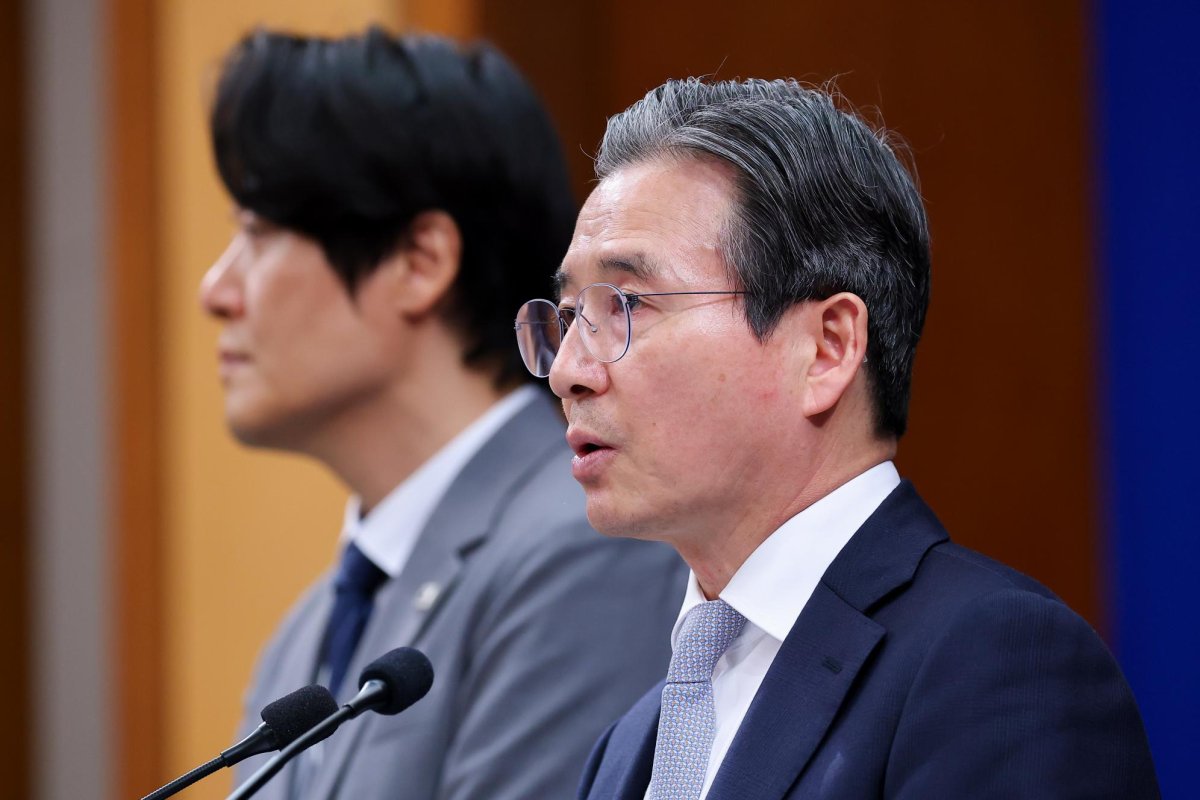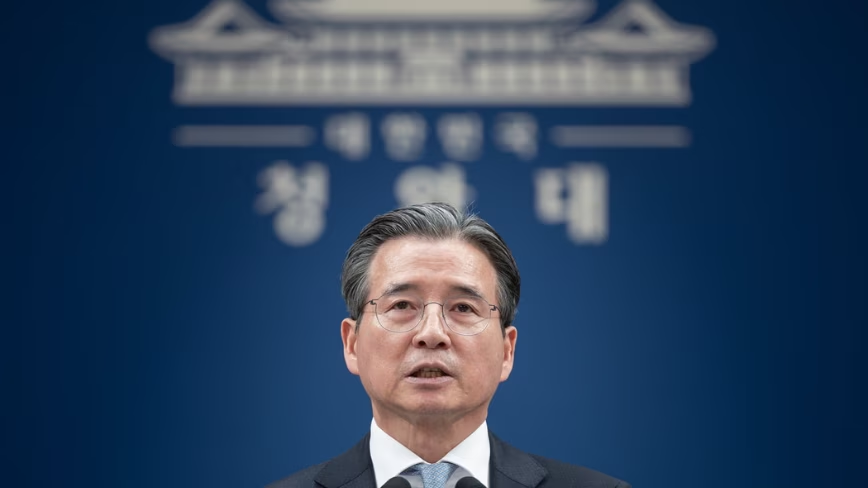
Kim Yong-beom, presidential chief of staff for policy (Yonhap) Kim Yong-beom, the presidential chief of staff for policy, on Tuesday proposed a "citizen dividend" scheme that would return part of the windfall tax revenue generated by the semiconductor boom to the public.김용범 청와대 정책실장은 화요일 "국민 배당금"제를 제안했다. 반도체 호조로 거두어진 초과 세수 일부를 국민에게 되돌려주자는 구상이다.After the proposal triggered controversy, the presidential office brushed it off as Kim’s personal opinion that had not been discussed internally. Nevertheless, the abrupt and radical suggestion from the government’s top policymaker bewildered people who place their trust in a capitalist market economy.이 제안이 논란을 불러일으키자 청와대는 김 실장의 개인적인 의견일뿐 내부적으로 논의된 사항은 아니라고 일축했다. 그러나 정부의 핵심 관계자로부터 나온 갑작스러운 급진적 제안은 자본주의 시장경제를 신뢰하는 이들을 어리둥절하게 만들었다.Kim wrote on Facebook that the fruits of the artificial intelligence infrastructure era are not generated by a handful of companies alone, but rest on an industrial foundation built collectively by the Korean people over the past half-century, adding that part of those gains should be systematically returned to the public. He mentioned "citizen dividends" as a concrete way of putting the idea into practice.김 실장은 페이스북에 인공지능 인프라 시대의 결실은 몇몇 기업의 힘으로만 이뤄낸 것이 아니라 지난 반세기에 걸쳐 대한민국 국민이 함께 쌓아온 산업 기반에 기초하고 있다는 글을 올리며 그 결실의 일부는 구조적으로 전 국민에게 환원되야 한다고 덧붙였다. "국민 배당금"을 그 아이디어를 실행에 옮기는 구체적인 방법 중 하나로 들기도 했다.First, the anti-market undertones contained in the concept of distributing profits in the form of dividends to every citizen are deeply concerning.우선 이윤을 배당금 형태로 전국민에게 분배한다는 생각에 담긴 반시장적 기류는 심각하게 우려를 불러일으킨다.The argument that semiconductor companies have grown on the back of special legislation, public infrastructure such as roads, electricity and water supply, and tax benefits is understandable to some extent. But that is entirely different from saying that those profits should therefore be distributed to the public.반도체 기업들이 특별법, 도로, 전력 및 용수 공급 그리고 세제 혜택을 발판삼아 성장했다는 주장은 어느 정도는 납득할 수 있다. 그러나 따라서 그 이윤을 국민에게 나누어주어야 한다는 주장은 완전히 별개의 이야기다.In 2023, Samsung Electronics suffered a 15 trillion won ($10 billion) loss in its semiconductor business alone. The government and the public did not absorb any of those losses then. A structure in which corporate "windfall profits" are shared with the public, while companies alone bear the losses, is inconsistent with both fairness and basic economic principles.2023년 삼성전자는 반도체 사업에서만 15조원의 손실을 겪었다. 정부와 국민은 당시 그 손실을 전혀 감내하지 않았다. 기업이 손해는 오롯이 홀로 감당하면서 "초과 이윤"은 국민과 나누는 구조는 공정성 및 기본 경제 원칙에 맞지 않다.Instead, Kim’s proposal gives the impression that the government also intends to take a slice of the hundreds of trillions of won in operating profits expected this year at Samsung Electronics and SK hynix, as labor unions, subcontractors, farmers and fisher groups, and even politicians, scramble for a share.김 실장의 제안은 도리어 삼성전자와 SK하이닉스가 올해 기록할 것으로 예상되는 수백조의 영업이익에서 정부 또한 한몫을 챙기려는 듯한 인상을 준다. 노조, 하청업체, 농업 및 어업 집단 그리고 심지어 정치인들까지도 지분을 챙기려 드는 것과 마찬가지다.When companies earn profits, the government collects its due in corporate taxes. This is the mechanism through which profits are redistributed to society in a capitalist market economy. If the government seeks to take corporate profits by means other than taxes, it would need a legal basis enacted through legislation. Otherwise, it would amount to unfair double taxation, nearing coercion.기업이 이윤을 창출하면 정부는 법인세로 정당한 몫을 징수한다. 이것이 자본주의 시장 경제 사회에서 이윤이 재분배되는 구조다. 만약 정부가 세금 이외의 수단으로 기업의 이윤을 차지하려고 한다면 입법을 통해 마련된 법적 근거를 필요로 한다. 그렇지 않다면 강압에 가까운 불공정한 이중 과세에 해당할 것이다.If there is excess tax revenue, it should primarily be used to pay down the national debt in line with the principles of fiscal management. Redistributing excess tax revenue to the people under the label of a "dividend" invites suspicions of a populist attempt at winning favor with cash payments.초과 세수가 있다면 이는 재정 운용 원칙에 준해 국가 부채를 갚는데 우선적으로 사용되어야 한다. "배당금"이라는 명목으로 국민에게 초과 세수를 재분배하는 것은 현금을 지급해 호의를 사려는 포퓰리즘적 시도라는 의심을 부른다.Companies are fulfilling their social obligations by paying taxes and creating jobs.기업들은 세금을 내고 직업을 창출함으로써 사회적 의무를 다하고 있다.If a company still has profits left after covering its costs, including taxes, debt repayments, payments to subcontractors and labor expenses, those profits belong to the shareholders. If profits are to be "shared with society," the decision likewise belongs to the shareholders.회사가 세금, 부채 상환, 하청업체 및 인건비를 포함한 비용을 제하고도 여전히 남는 이윤이 있다면 이는 주주에게 돌아가야 한다. 이윤을 "사회와 공유"해야 한다면 그 결정권 또한 마찬가지로 주주에게 있다.Viewed from the perspective of enhancing industrial competitiveness, Kim’s understanding of the issue is overly complacent. Not only is the AI-driven semiconductor boom unlikely to continue forever, but major competitors such as the United States and China are aggressively closing the gap.산업 경쟁력 강화의 측면에서 보면 이 사안에 대한 김 실장의 이해는 지나치게 안일하다. AI 주도의 반도체 호조는 영원히 지속되지 않을 것일 뿐더러 미국과 중국 등의 주요 경쟁자들은 공격적으로 격차를 줄여오고 있다.In these circumstances, is it not the role of the president’s chief economic aide to worry first about strategies for maintaining or expanding the lead? For tech companies, profits should be used first and foremost for investment in new technologies and facilities. Companies that fail to do so are quickly driven out of the market. Now is not the time to kill the goose that lays the golden eggs, but to raise more such geese.이러한 상황에서 이 선두 자리를 유지하거나 더 앞서나갈 전략에 대해 먼저 고심하는 것이 대통령의 주요 경제 보좌관으로서의 역할이지 않을까. 테크 기업들에 있어 이윤은 무엇보다 먼저 새로운 기술과 시설에 투자하는데 사용되어야 한다. 그러지 못한 기업은 시장에서 곧 밀려나고 만다. 지금은 황금알을 낳는 거위를 죽일 때가 아니라 그런 거위를 더 많이 길러내야 할 때다.Foreign investors reportedly dumped Korean stocks in large quantities on Tuesday after Kim’s remarks. His words may not have been the sole reason for the sell-off, but markets are highly sensitive to such signals. One of the government’s responsibilities is to safeguard the principles of the market economy so people can invest with confidence.김 실장의 발언 이후 화요일 외국인 투자자들이 대량으로 한국 주식을 팔았다고 한다. 그의 발언이 매도의 유일한 이유는 아닐지라도 시장은 그러한 신호에 매우 민감하다. 정부의 책무 중 하나는 사람들이 안심하고 투자할 수 있도록 시장경제의 원칙을 지키는 것이다.windfall 뜻밖의 횡재concrete 구체적인enact 제정하다coercion 강제, 강압complacent 안일한
'Citizen dividend' '국민 배당금'
Kim Yong-beom, the presidential chief of staff for policy, on Tuesday proposed a "citizen dividend" scheme that would return part of the windfall tax revenue ge
1,066 words~5 min read