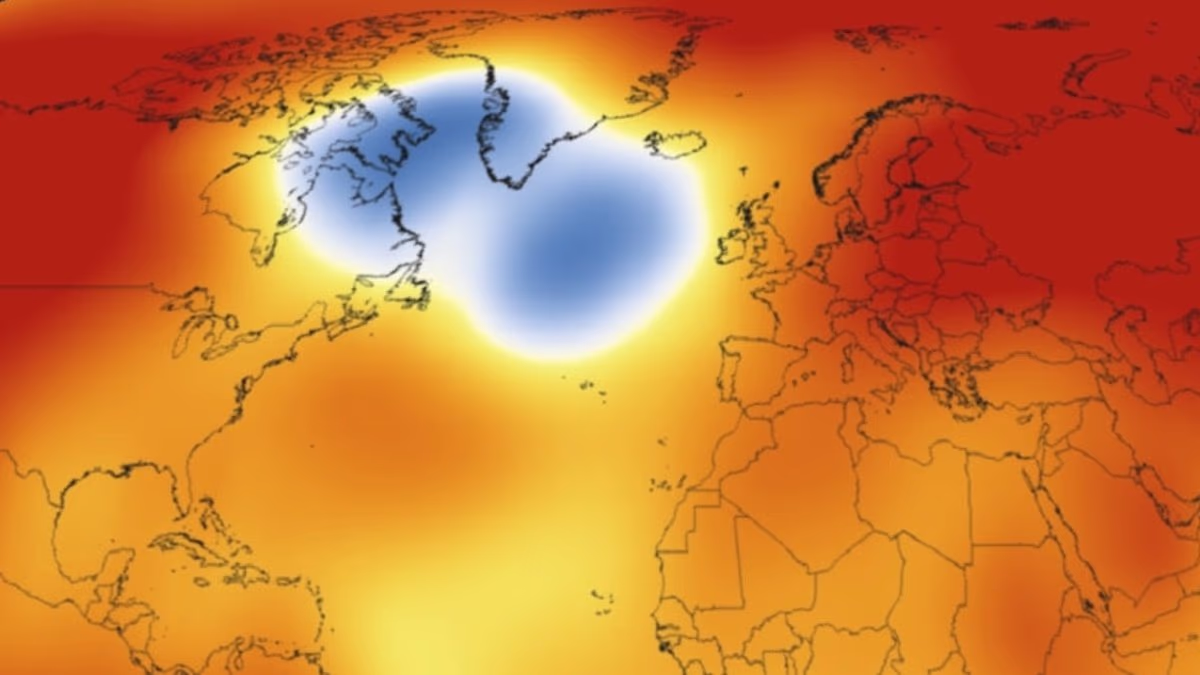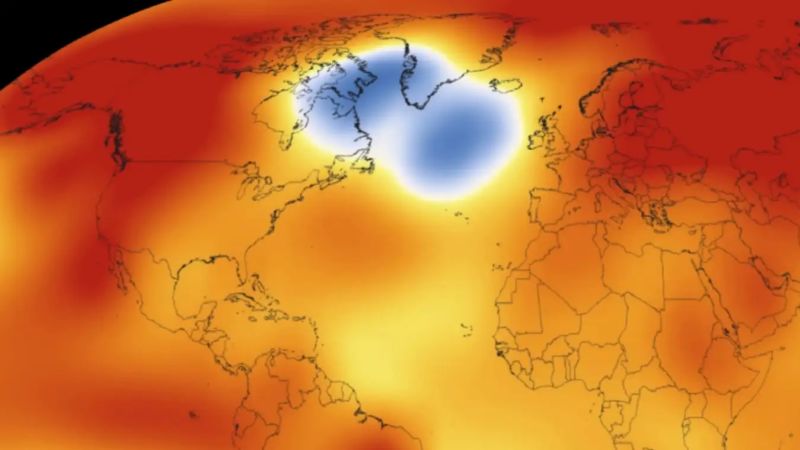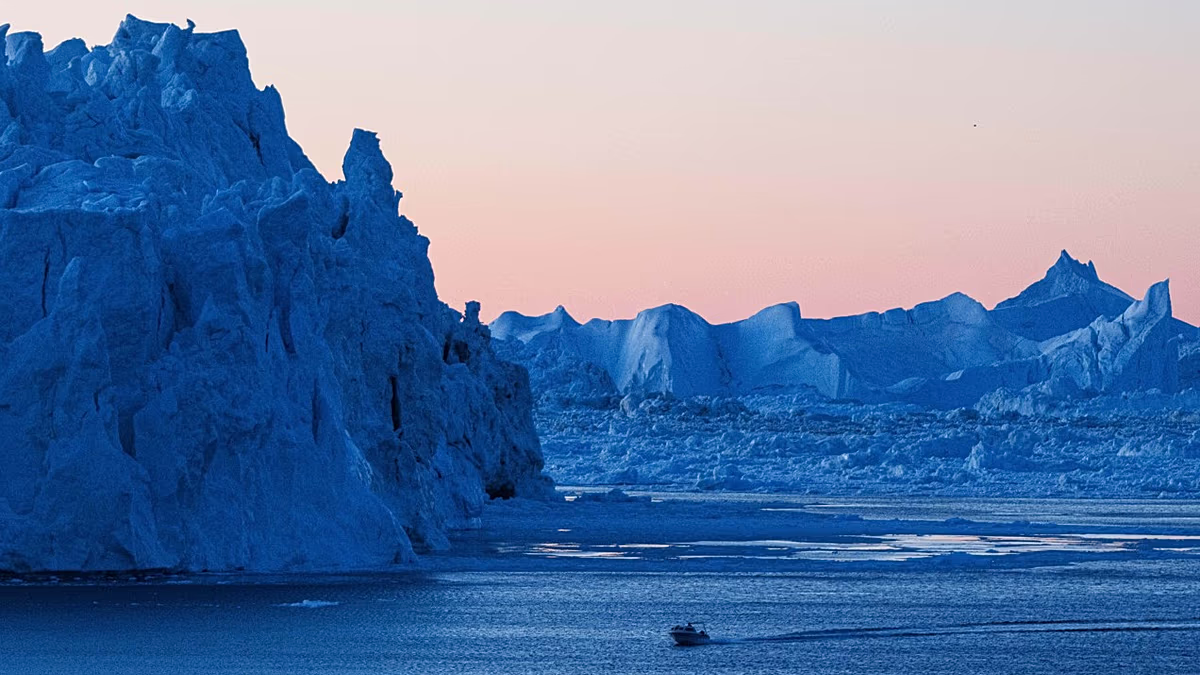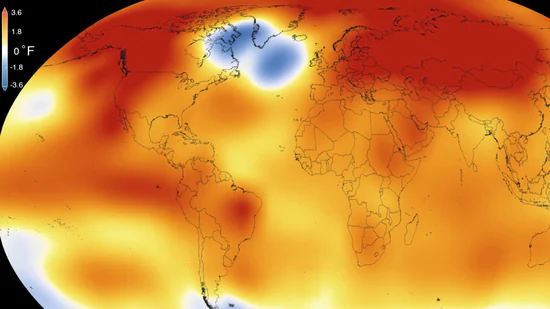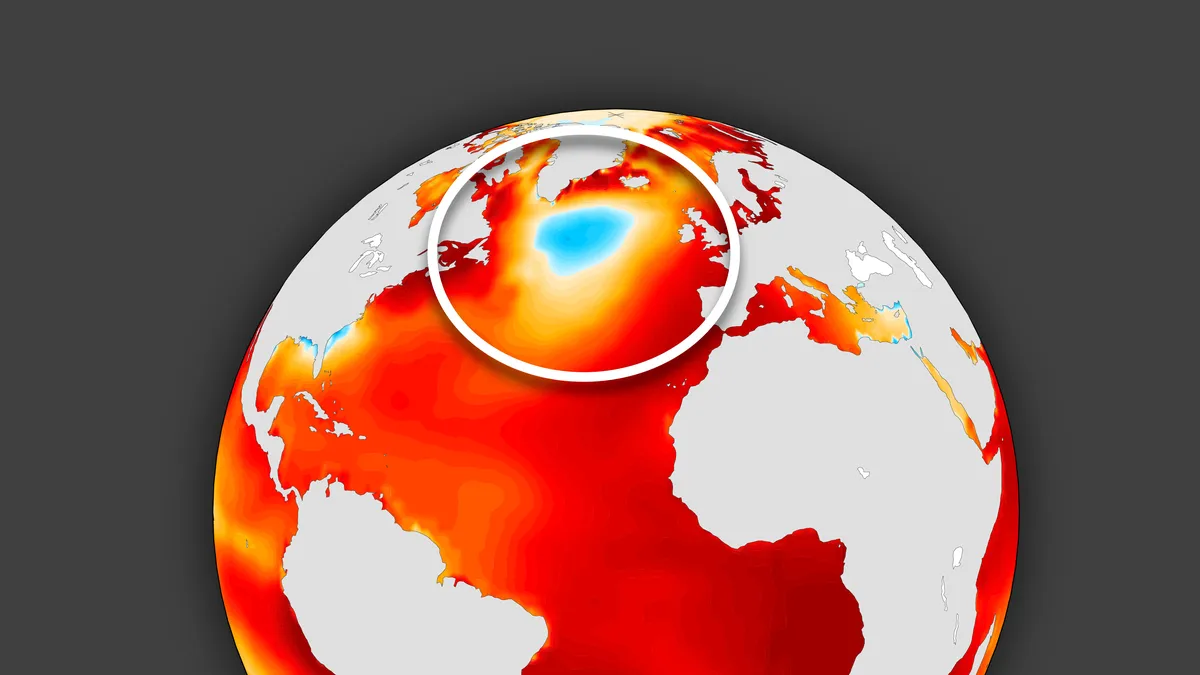
Scientists have linked an unusual "cold blob" in the North Atlantic — one eerily similar to the one featured in the film "The Day After Tomorrow," that has a major impact on global weather.While the findings weren't that extreme, a recent study showed the area has cooled by up to 1 degree Celsius (1.8 degrees Fahrenheit) over the past few decades. Researchers at the University of California believe this is due to changes to the Atlantic Meridional Overturning Circulation (AMOC), a complex network of ocean currents."The region to the south of Greenland is highly sensitive to AMOC change, where the surface cooling due to an AMOC slowdown may exceed background greenhouse gas warming," said Wei Liu, a climate scientist at the University of California, Riverside, who led the study.Because these currents carry heat throughout the planet like an oceanic conveyor belt, any changes could have a domino effect on many parts of the Earth.Unable to view our graphics? Click here to see them.The Atlantic Ocean's conveyor beltOcean water is continuously moved around by currents. Near coastlines, tidal currents are impacted by the gravitational pull of the sun and moon. Winds drive surface currents and much slower currents extend from the ocean’s surface down to the seafloor.These deeper currents are caused by variations in temperature and salinity. Together, these movements form a vast "global conveyor belt," which includes the AMOC, according to the National Oceanic and Atmospheric Administration.For years, this region has stood out on global temperature maps as one of the few ocean areas showing long-term cooling. It has become a key area for studying how the atmosphere and ocean respond to change, according to NASA's Goddard Institute for Space Studies."One of the most striking features of modern climate change is a region south of Greenland that has cooled while most of the global ocean has warmed. This is called the North Atlantic Warming Hole or the North Atlantic Cold Blob," said Kai‑Yuan Li, a PhD candidate in the Department of Earth and Planetary Sciences at UC Riverside.What happens if the 'cold blob' persists?Scientists have cautioned that ocean currents are weakening and may eventually become so weak that they can no longer distribute heat around the world.If any part of the AMOC slows, it could bring the entire system to a standstill. Scientists estimate it will weaken by at least 20% by 2100 and it may eventually shut down completely.The strongest impacts would be felt around Greenland, Iceland and northern Europe. Cooler ocean temperatures can alter air temperatures, shift storm paths and change pressure systems. In turn, marine ecosystems may adjust as patterns of temperature and salinity evolve.Several studies indicate that sea levels along the U.S. East Coast would rise faster if the AMOC weakens. A 2015 Nature study linked a roughly 30% slowdown in the AMOC between 2009 and 2010 to one of two causes behind an "unprecedented" 128 millimeter increase in sea level north of New York City during that two-year period, according to Carbon Brief, a United Kingdom-based website which covers Climate Science.SOURCE: Wei Liu, Associate Professor of Climate Chang and Kai‑Yuan Li, PhD candidate in the Department of Earth and Planetary Sciences University of California Riverside, CarbonBrief, LiveScience. com, NOAA and NASA
Mysterious 'cold blob' discovered in Atlantic. Does it mean trouble?
A mysterious Atlantic 'cold blob' or 'warming hole' signals weakening currents, prompting warnings of collapse from scientists. These maps show where.
539 words~2 min read