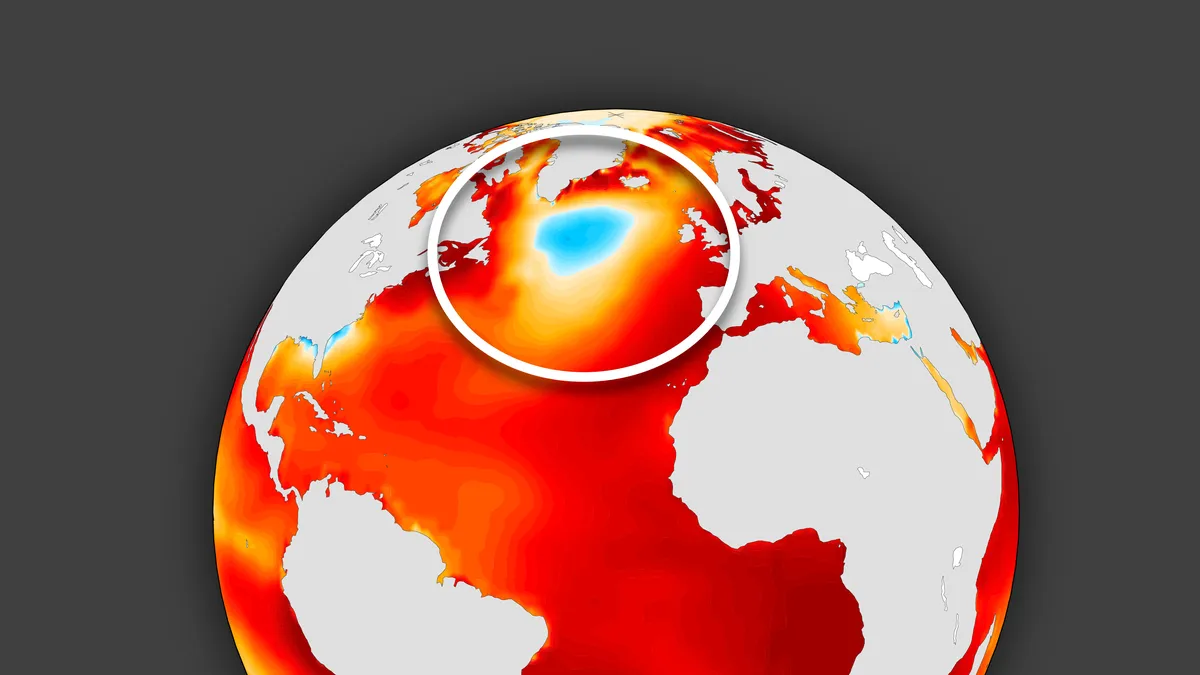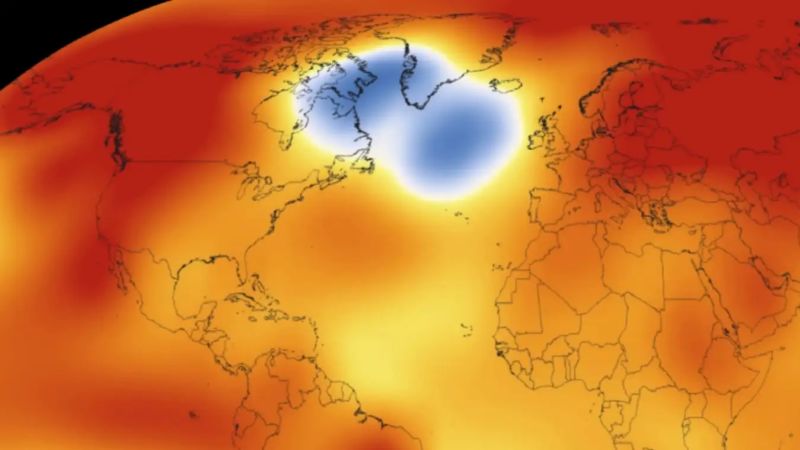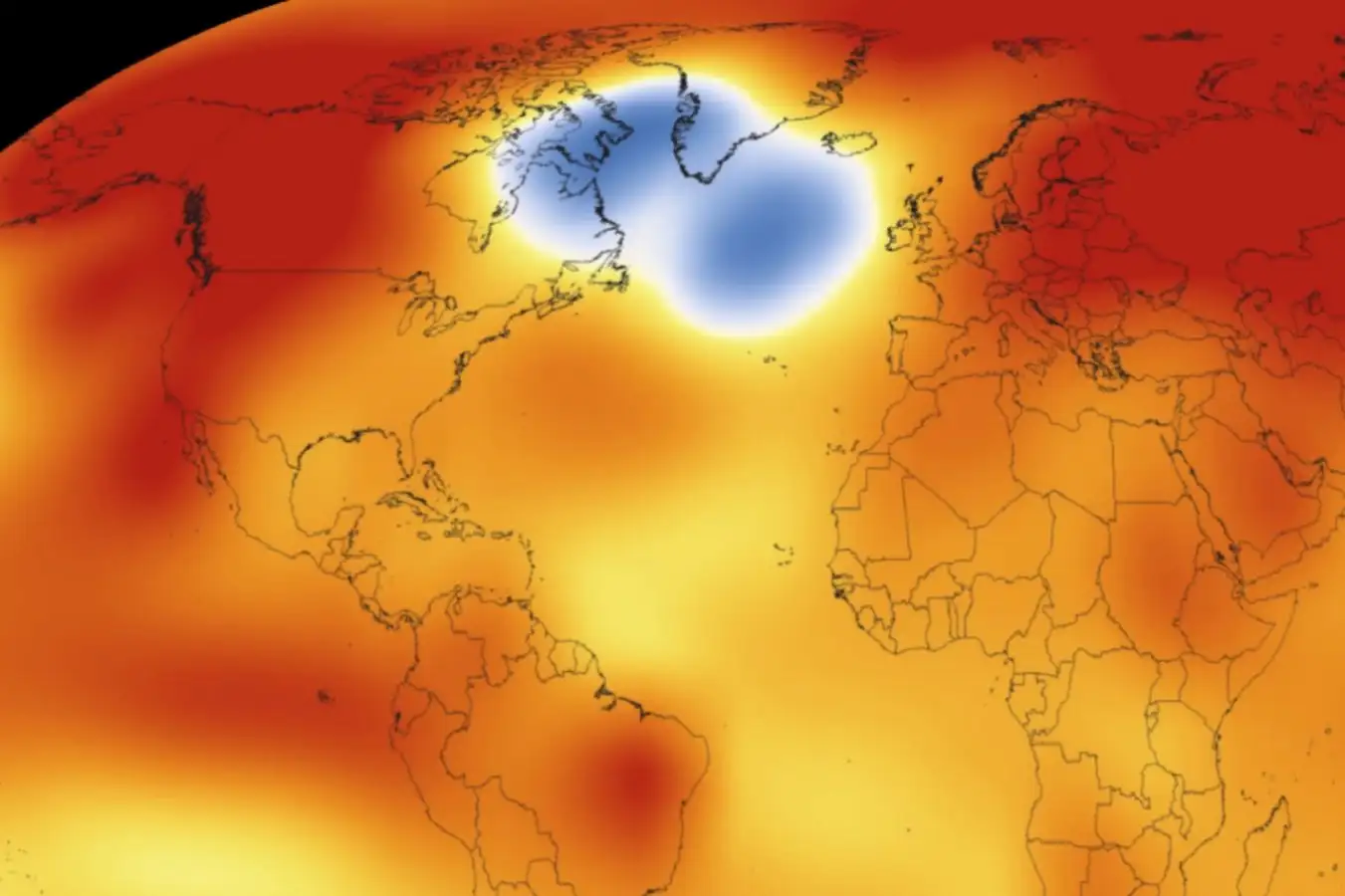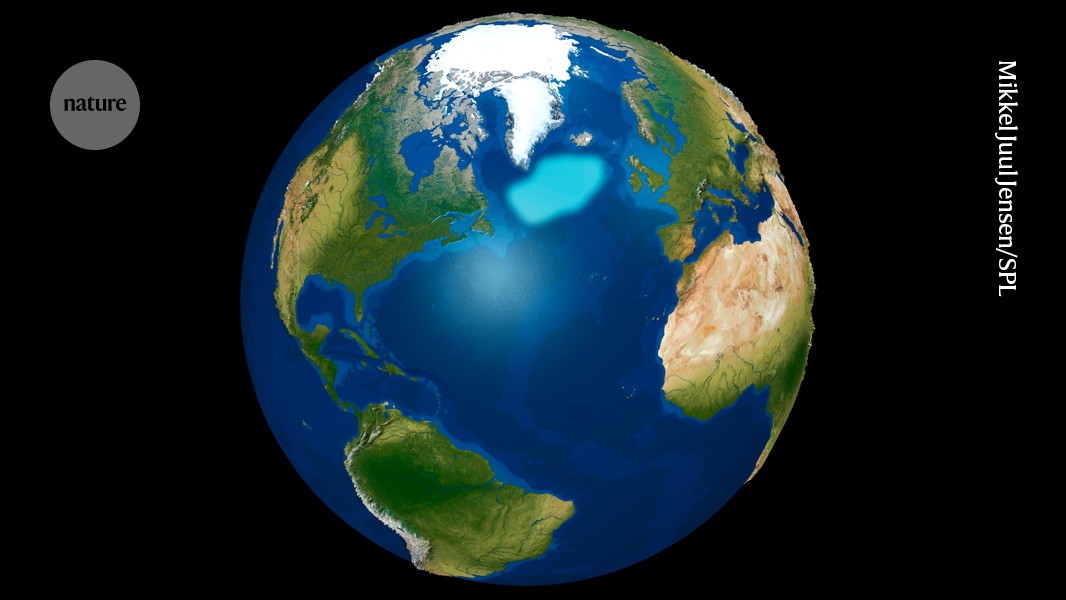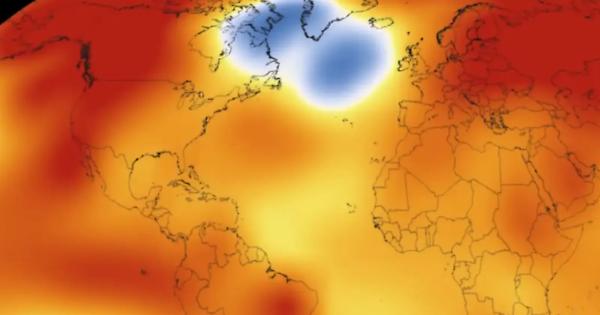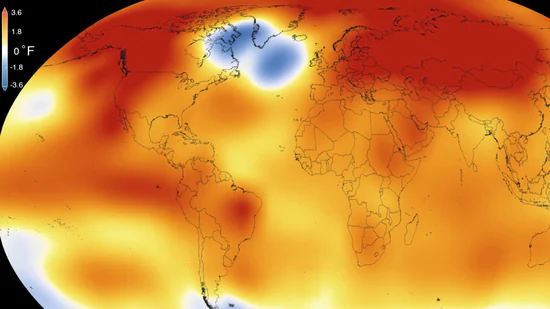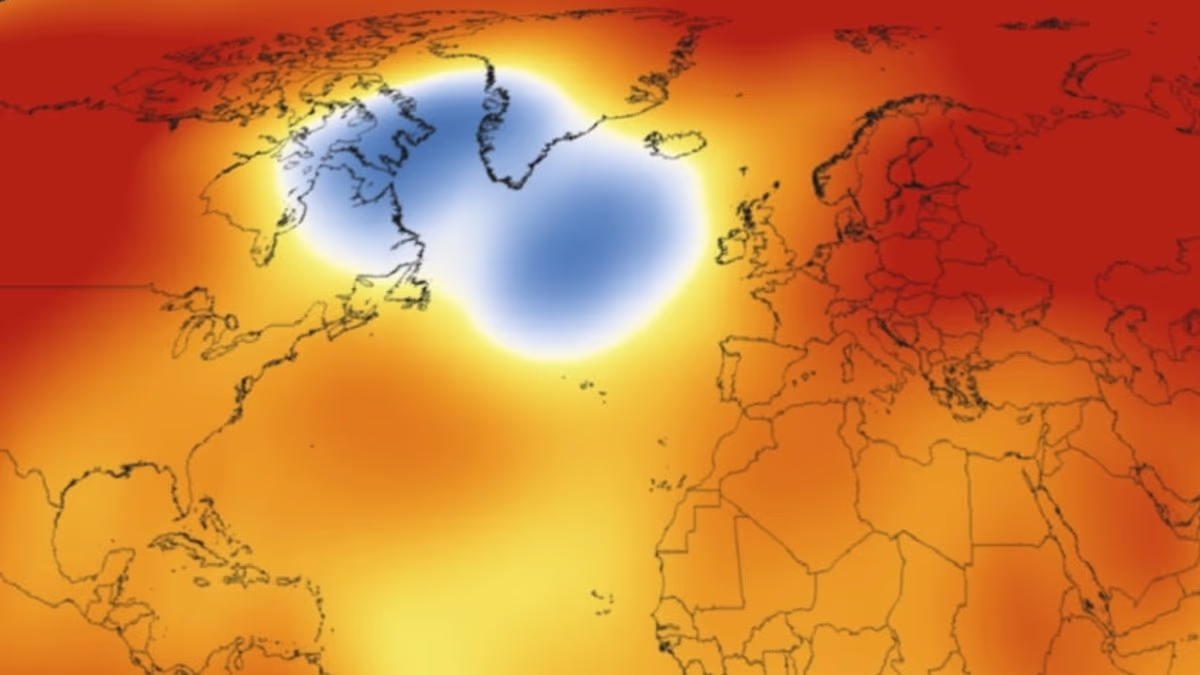
A mysterious 'cold blob' has emerged in the North Atlantic – and scientists say it indicates a critical ocean current is on the verge of collapsing.While the rest of the Earth's oceans have grown warmer amid the building El Niño, one patch of sea southeast of Greenland has remained stubbornly chilly.For decades, scientists have been baffled over why this 'hole' is cooling down while everywhere else heats up.Now, a group of researchers argue that it is because the critical Atlantic Meridional Overturning Circulation (AMOC) is slowing down.AMOC is a vast network of ocean currents carrying warmth from the tropics to Europe, of which the Gulf Stream is one small part.However, recent data suggests that human–caused climate change could be driving this system to a tipping point that could trigger its total collapse.Were AMOC to collapse, it would plunge northern Europe into a 'new Ice Age' and trigger famines by disrupting crucial monsoon rains in Africa and Asia.Lead author Professor Stefan Rahmstorf, of Potsdam University, told New Scientist: 'Even if, in some modelling approaches, it seems possible that the cold blob is caused by the atmosphere, in fact, the data show it is caused by the ocean.' A 'cold blob' in the North Atlantic could be a sign that the crucial Atlantic Meridional Overturning Circulation (AMOC) is slowing down AMOC plays a crucial role in keeping the planet's current climate stable by moving heat, nutrients, and carbon around the world.The 'engine' driving this global conveyor belt is the cold, salty waters that form in the North Atlantic around Greenland.As this dense water sinks towards the bottom of the ocean, warm water from the Tropics is pulled northwards, and the cycle keeps the current moving.However, scientists are concerned that fresh water from Greenland's melting glaciers is disrupting this process by diluting the water and making it less dense.Studies have shown that AMOC has already slowed by about 15 per cent since the mid–20th century due to climate change, and could be driven into total collapse in the future.Since a slowing AMOC would result in less warm water arriving in the North Atlantic, scientists had suggested that it could be part of the explanation for the cold blob.However, our direct observations of AMOC only date back around 20 years, which makes drawing a strong connection challenging.Likewise, other researchers have proposed a competing theory, arguing that the cold blob is actually being caused by changing wind conditions. The North Atlantic 'cold blob' or 'warming hole' is a region of ocean that has been getting cooler even while the rest of the planet gets hotter
Is Gulf Stream collapsing? Mysterious cold blob found in Atlantic
A mysterious 'cold blob' has emerged in the North Atlantic - and scientists say it indicates a critical ocean current is on the verge of collapsing.
1,125 words~5 min read