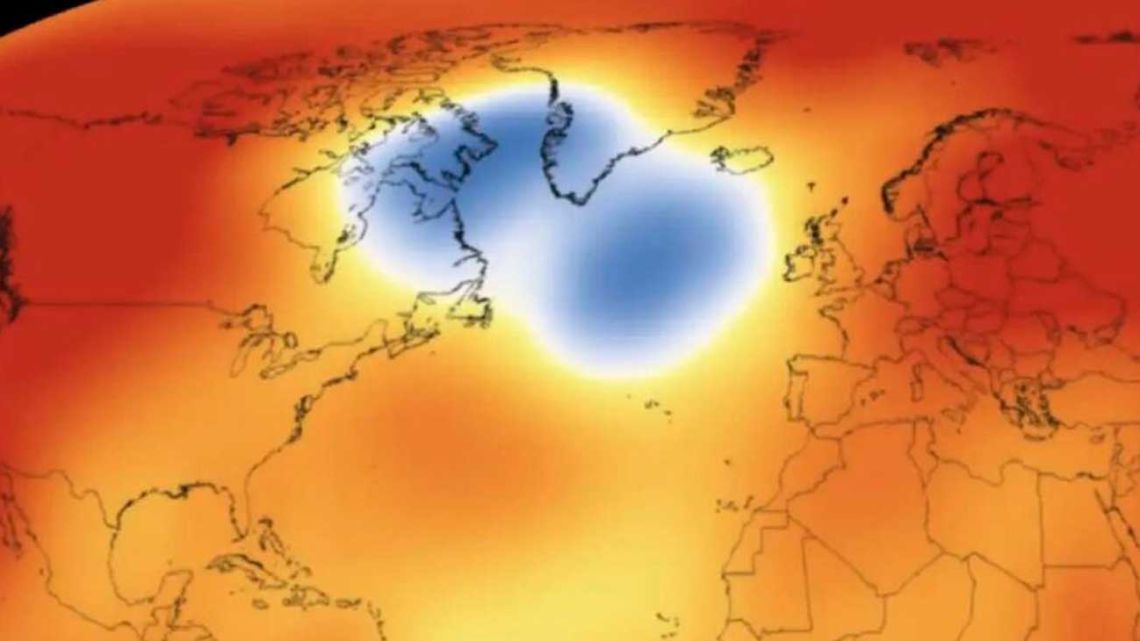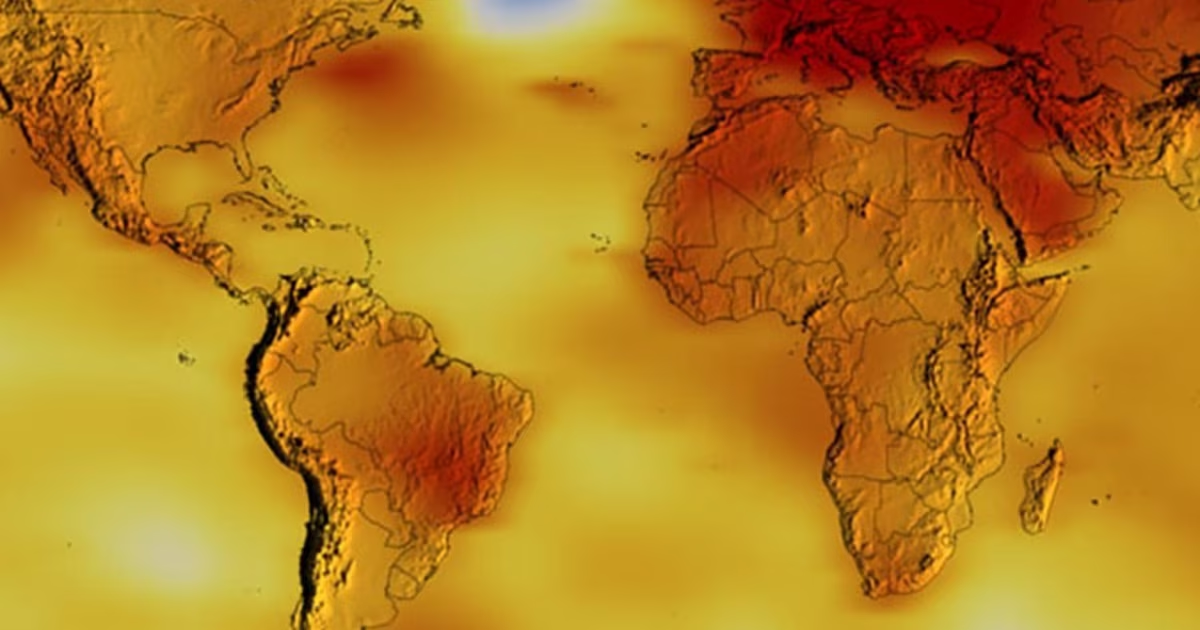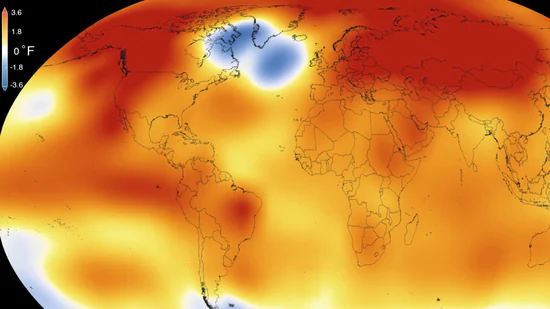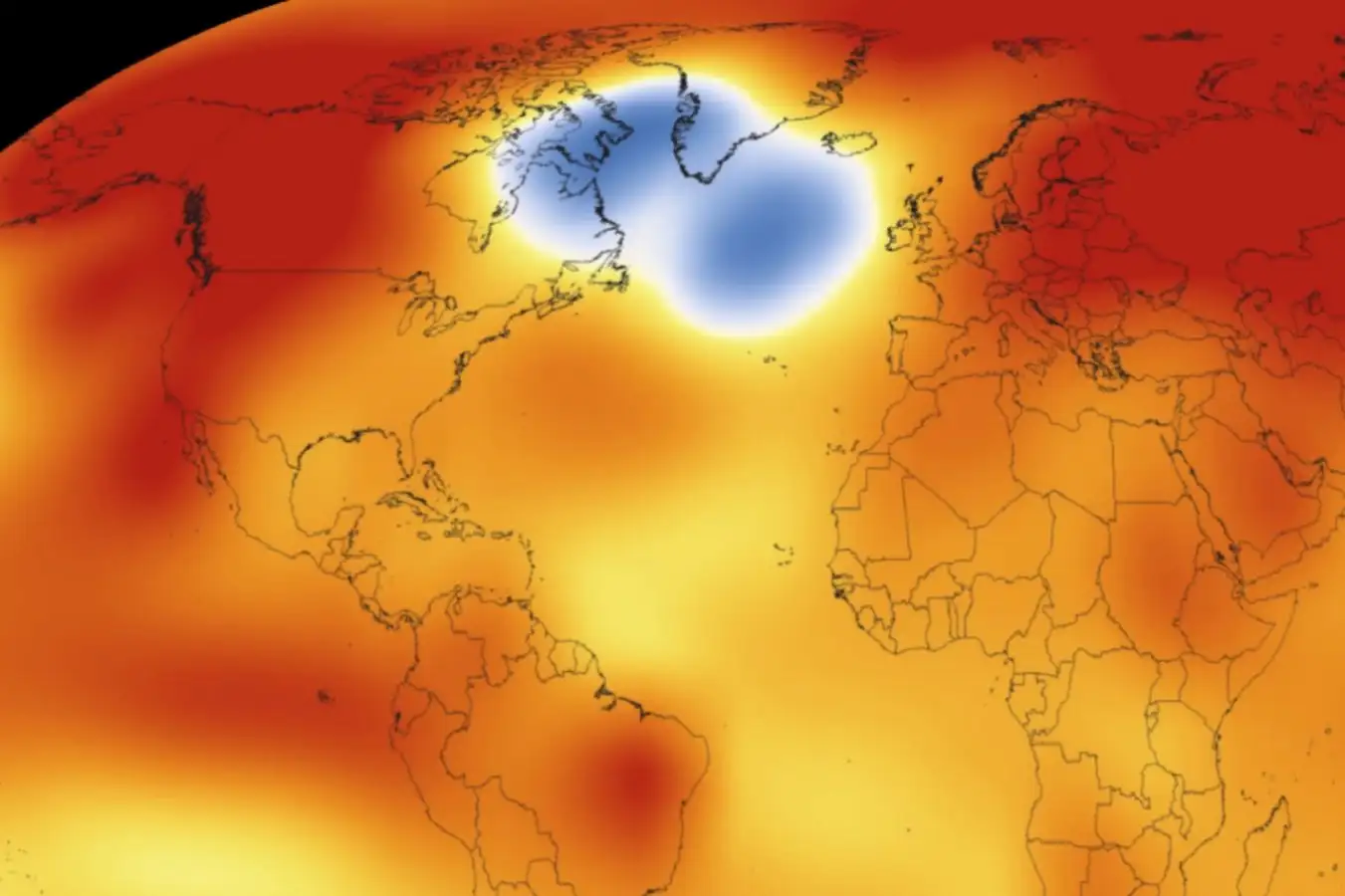
The “cold blob” appears in a data visualisation showing average temperatures in 2015, relative to the 1951-80 averageNASA Scientific Visualization Studio/Goddard Space Flight Center
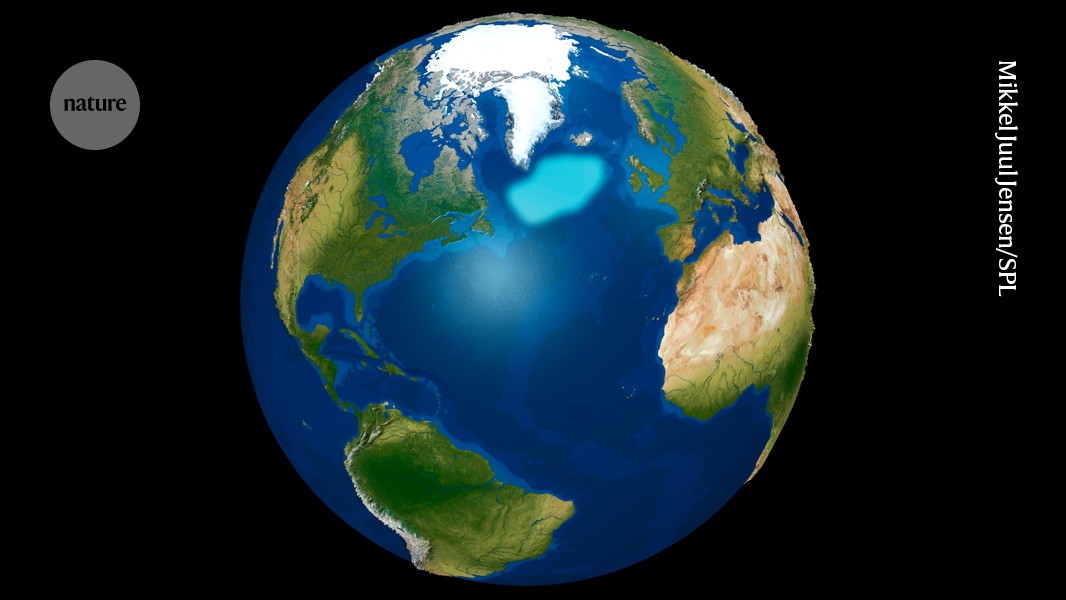
Over the past 150 years, Earth’s entire surface has been warming, except for one patch of the north Atlantic. Located south-east of Greenland, this area has cooled by as much as 1°C and is known as the “warming hole” or the “cold blob”.
Scientists have been split over why this cold blob exists, but the latest evidence backs up the idea that it is caused by a weakening of the Atlantic Meridional Overturning Circulation (AMOC), the system of currents that transports warmth from the tropics to Europe.
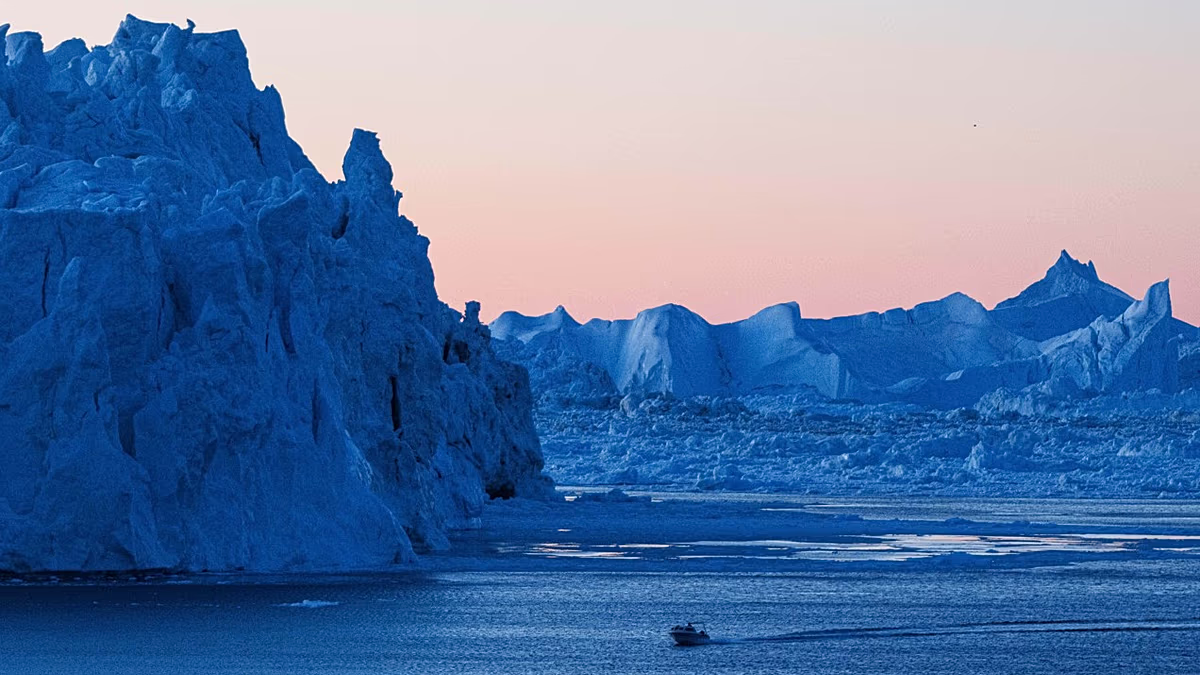
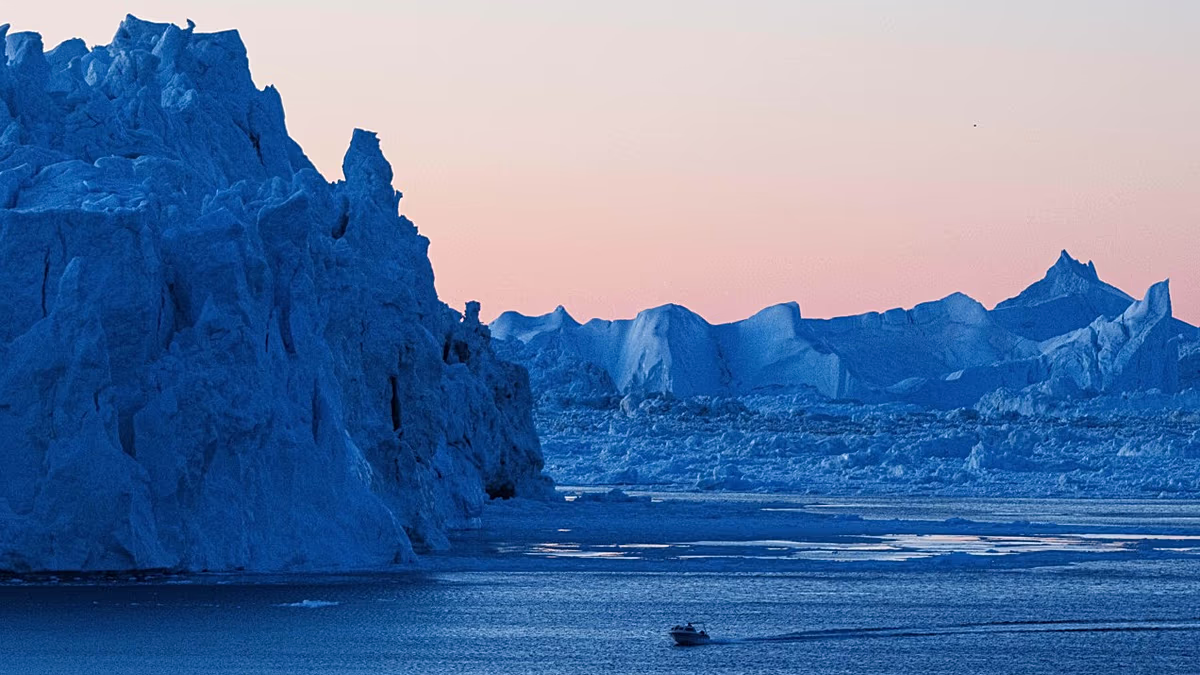
The AMOC carries warm, salty water from the Gulf of Mexico towards the north Atlantic, where it cools and sinks, flowing back south along the ocean floor. Scientists are concerned that the surge of freshwater from Greenland’s melting ice is making this salty water less dense, so it sinks more slowly, weakening the circulation.
Some research suggests the AMOC could cross a tipping point within decades, locking in a future collapse that would freeze Europe and disrupt monsoon rains crucial for agriculture in Africa and Asia. But we only have 22 years of direct observation of AMOC strength, not enough to tease out a clear trend.