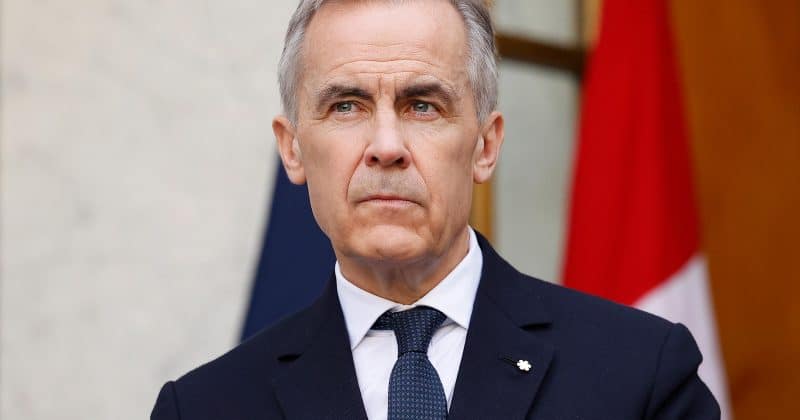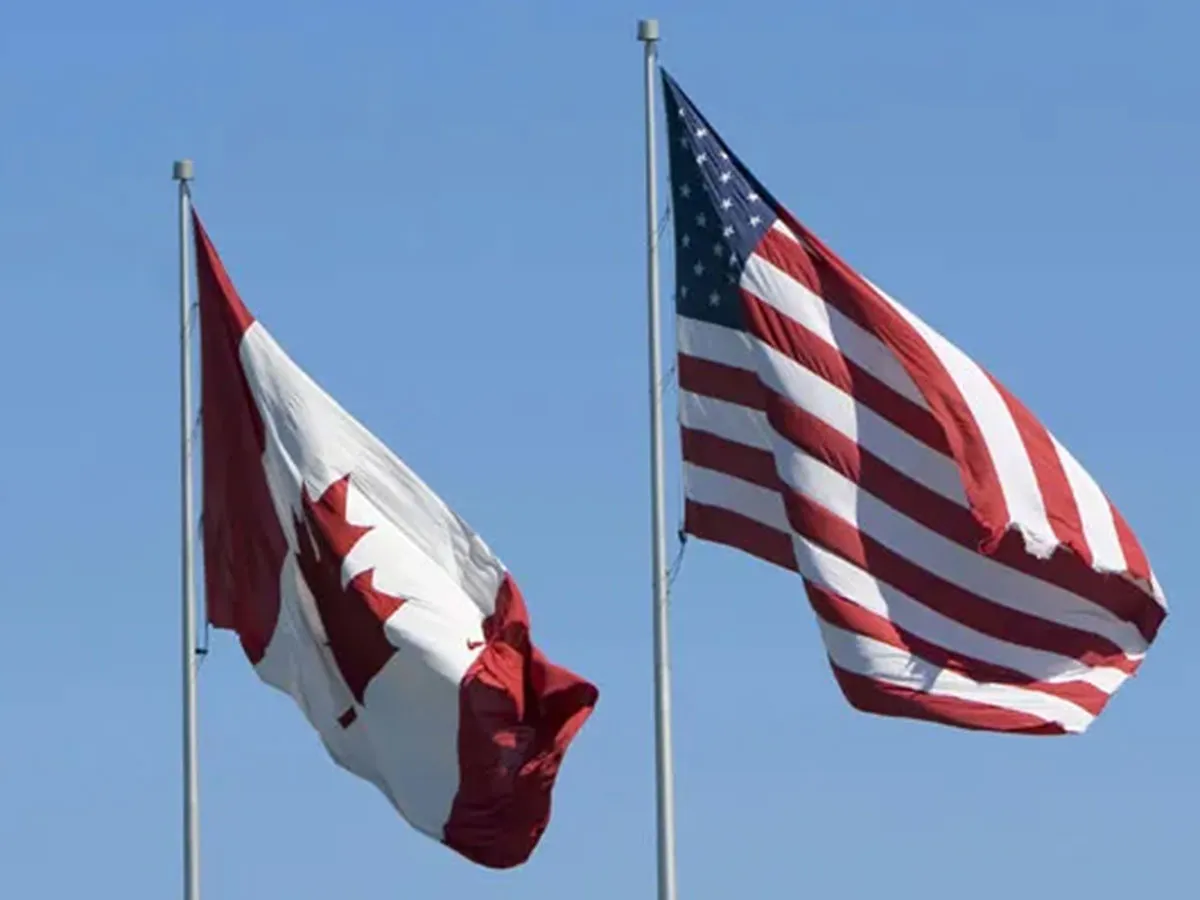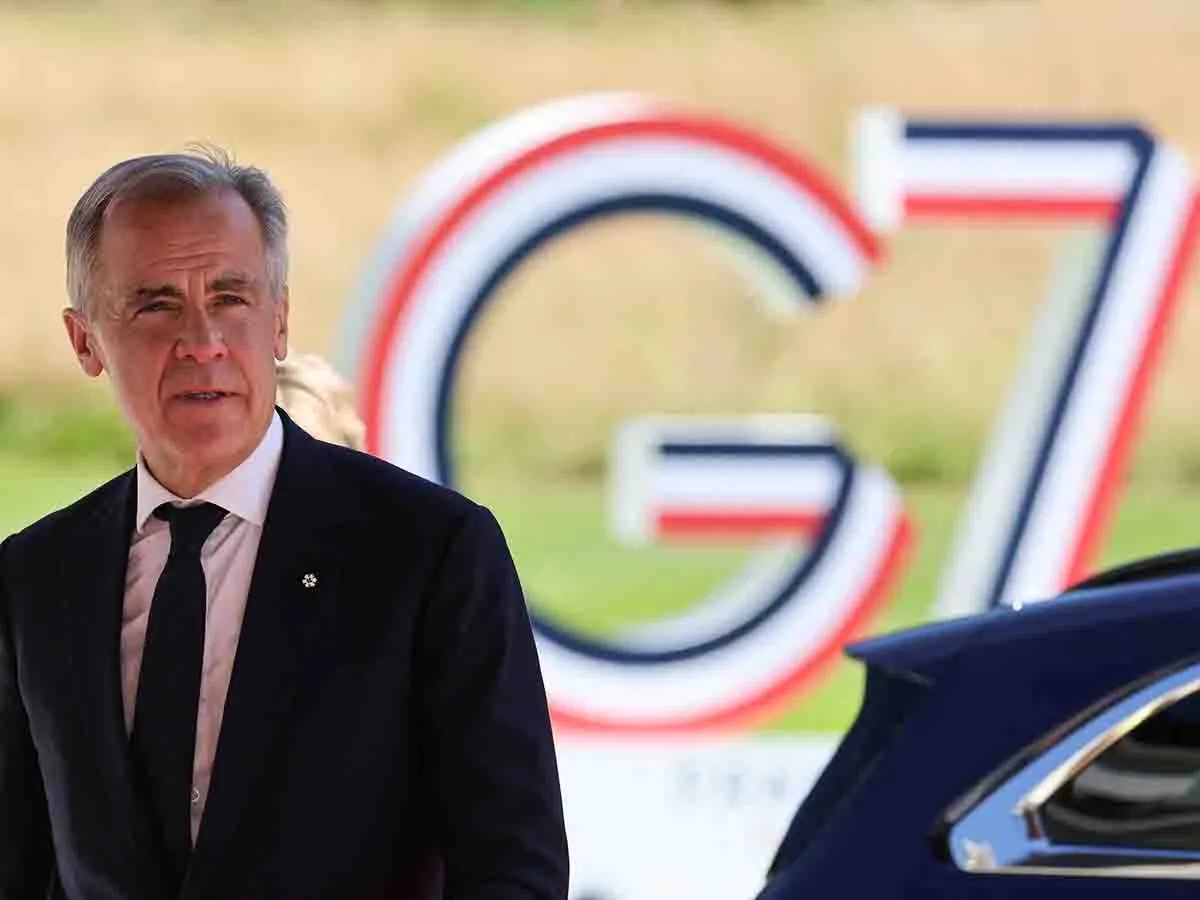
Skip to Content News Archives Economy Energy Oil & Gas Renewables Electric Vehicles Mining Commodities Agriculture Real Estate Mortgages Mortgage Rates Finance Banking Insurance Fintech Cryptocurrency Work Wealth Smart Money Wealth Management Investor Personal Finance Family Finance Retirement Taxes High Net Worth FP Comment Executive Women Puzzmo Newsletters Financial Times Business Essentials More Innovation Information Technology FP500 Podcasts Small Business Lives Told Tails Told Shopping Financial Post Store Obituaries Place a Notice Advertising Advertising With Us Advertising Solutions Postmedia Ad Manager Sponsorship Requests Classifieds Place a Classifieds ad Working Profile Settings My Subscriptions Saved Articles My Offers Newsletters Customer Service FAQ News Economy Energy Mining Real Estate Finance Work Wealth Investor FP Comment Executive Women Puzzmo Newsletters Financial Times Business Essentials HomeNewsEconomyCarney says U.S. wants to avoid changes to CUSMA that would trigger a vote in CongressPrime minister says current talks are happening 'in the context of maintaining the foundation' of the trade pactAuthor of the article:Last updated 1 hour ago You can save this article by registering for free here. Or sign-in if you have an account.Canada's Prime Minister Mark Carney arrives to attend the Group of Seven summit in Evian, eastern France, on June 15, 2026. Carney said over the weekend the United States has been clear that it doesn't want to change the "fundamental architecture" of CUSMA. Photo by Ludovic MARIN /AFP via Getty ImagesPrime Minister Mark Carney said Trump administration officials have been clear that they don’t want to trigger a vote in Congress by changing the “fundamental architecture” of the North American free trade deal.Subscribe now to read the latest news in your city and across Canada.Exclusive articles from Barbara Shecter, Joe O'Connor, Gabriel Friedman, and others.Daily content from Financial Times, the world's leading global business publication.Unlimited online access to read articles from Financial Post, National Post and 15 news sites across Canada with one account.National Post ePaper, an electronic replica of the print edition to view on any device, share and comment on.Daily puzzles, including the New York Times Crossword.Subscribe now to read the latest news in your city and across Canada.Exclusive articles from Barbara Shecter, Joe O'Connor, Gabriel Friedman and others.Daily content from Financial Times, the world's leading global business publication.Unlimited online access to read articles from Financial Post, National Post and 15 news sites across Canada with one account.National Post ePaper, an electronic replica of the print edition to view on any device, share and comment on.Daily puzzles, including the New York Times Crossword.Create an account or sign in to continue with your reading experience.Access articles from across Canada with one account.Share your thoughts and join the conversation in the comments.Enjoy additional articles per month.Get email updates from your favourite authors.Create an account or sign in to continue with your reading experience.Access articles from across Canada with one accountShare your thoughts and join the conversation in the commentsEnjoy additional articles per monthGet email updates from your favourite authorsSign In or Create an AccountorCarney said the three countries in the Canada-United-States-Mexico-Agreement (CUSMA) are currently holding separate, bilateral talks on a variety of trade irritants in part because no side wants to make sweeping changes to the existing deal.The prime minister said all those discussions are happening “in the context of maintaining the foundation” of CUSMA, which U.S. President Donald Trump negotiated and which was passed by Congress during his first term. If the deal were to be “fundamentally changed, then that would have to be approved by the relevant legislatures,” Carney told reporters from Ireland, where he’s on a visit before heading to the Group of Seven leaders’ summit in France.Get the latest headlines, breaking news and columns.By signing up you consent to receive the above newsletter from Postmedia Network Inc.A welcome email is on its way. If you don't see it, please check your junk folder.The next issue of Top Stories will soon be in your inbox.We encountered an issue signing you up. Please try again“The U.S. has been clear that they do not want to go to Congress to change the fundamental architecture,” he said.The U.S., Canada and Mexico do almost US$2 trillion in annual trade with each other, and CUSMA-compliant goods have largely been exempt from Trump’s barrage of tariffs — a fact Carney pointed out again in his remarks on Saturday. Still, the White House has placed new duties on products such as autos and steel from its two neighbours, straining ties and disrupting supply chains.American and Mexican negotiators have been holding formal, scheduled rounds of talks on trade. Canada has not yet begun that process, which Carney has attributed to the fact that the U.S. simply has more trade issues to discuss with Mexico.Asked whether he’s worried the U.S. and Mexico could strike a bilateral deal on tariffs that sets a difficult precedent for Canada, Carney said his government is in regular communication with Mexican President Claudia Sheinbaum.“We share perspectives, information, we share objectives,” Carney said. “We’re both committed as much as possible in the new trading environment to an integrated North American market.”On Thursday, he’d said Canada is seeking its own bilateral deal with Mexico.He also said there are still active discussions happening between Canadian and American trade officials, even if they aren’t formalized in negotiating rounds as with Mexico.Dominic LeBlanc, the Canadian minister leading U.S. trade talks, was in Washington on June 2 to meet with U.S. Trade Representative Jamieson Greer, and they will talk again at the G7.LeBlanc and Greer have seen positive movement on several issues, Carney said, without providing further details. “Lots to do, but progress being made,” he said. Join the Conversation This website uses cookies to personalize your content (including ads), and allows us to analyze our traffic. Read more about cookies here. By continuing to use our site, you agree to our Terms of Use and Privacy Policy.
Carney says U.S. wants to avoid changes to CUSMA that would trigger a vote in Congress
Mark Carney said Trump officials don’t want to trigger a vote in Congress by changing the “fundamental architecture” of CUSMA. Read on.
TL;DRAI
Trump administration rules out CUSMA restructuring to avoid Congress, pursuing bilateral tariff deals. For tech supply chains, tariff friction stays bilateral rather than wholesale, preserving 2 trillion USD in North American trade exemptions and stability.
968 words~4 min read