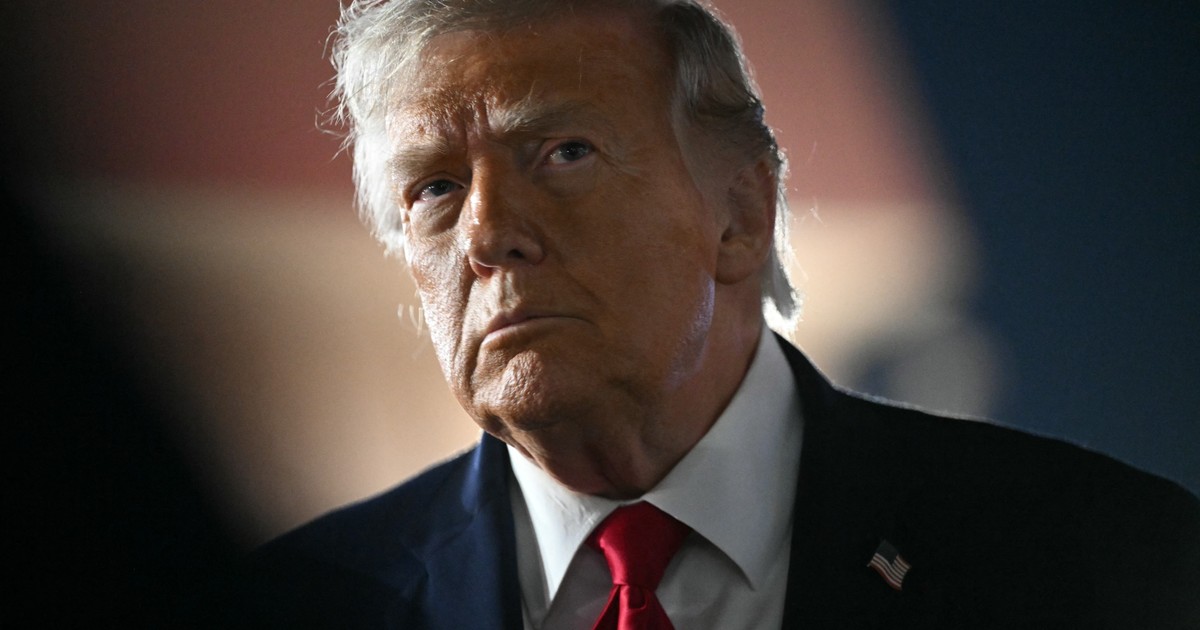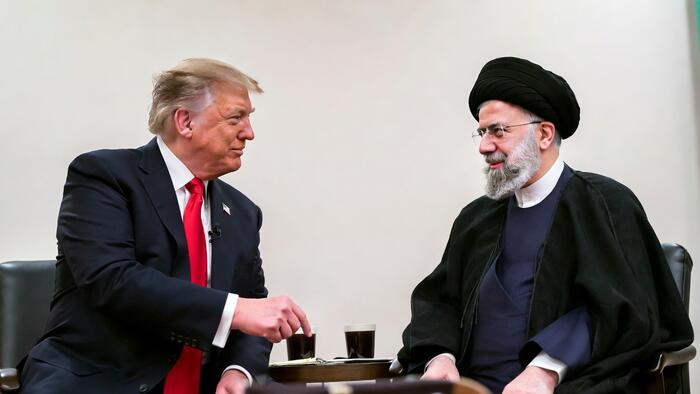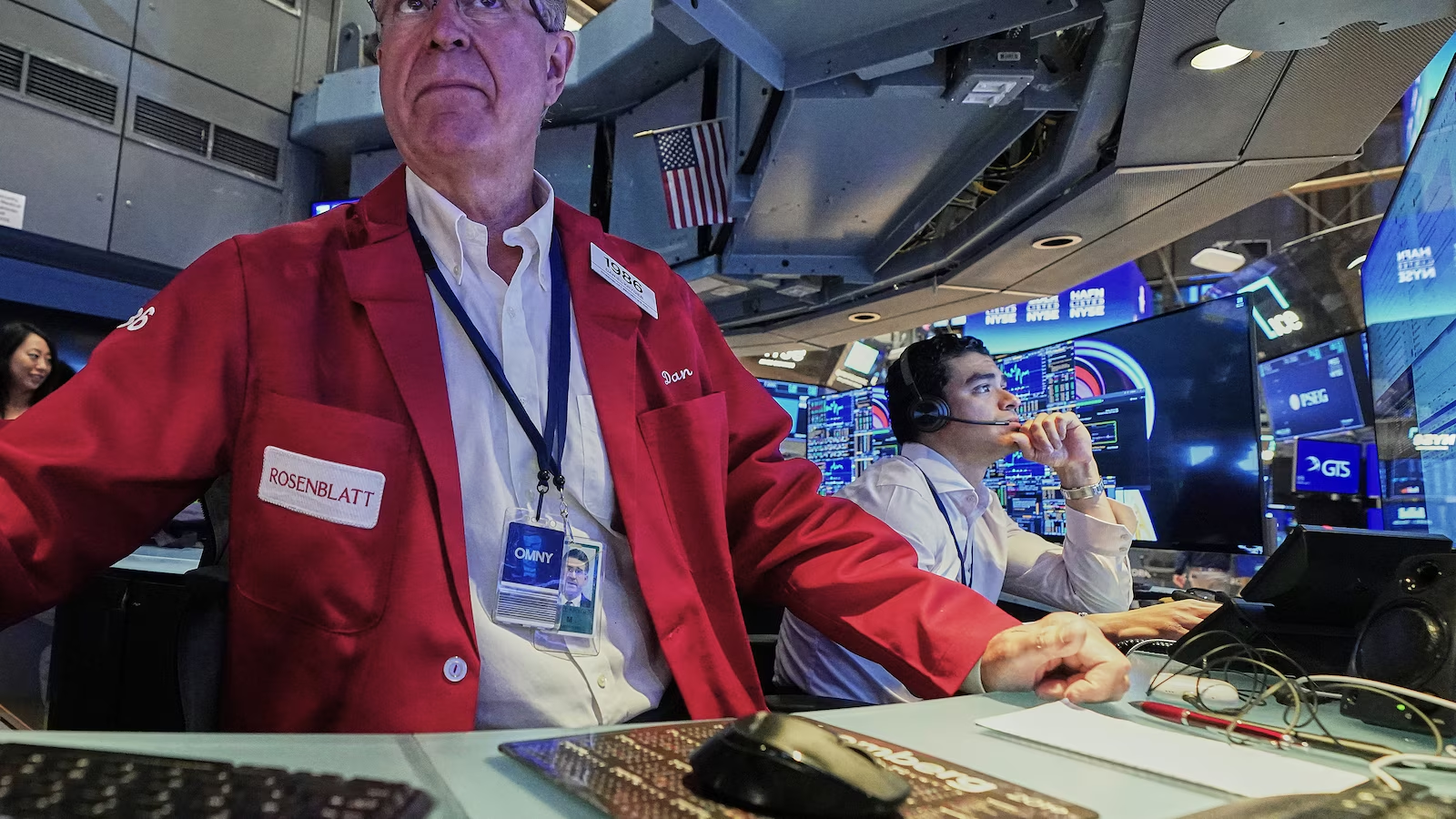
Global markets soared in a risk-on rally following the announcement of a US-Iran deal Sunday night. Stocks and bonds rallied while oil tumbled to a three-month low after the US and Iran said they have reached an interim agreement to reopen the Strait of Hormuz and halt the war. This will provide a 60-day window for negotiation. As of 8:00am ET, Nasdaq 100 futures advanced 2.1%, while those for the S&P 500 rose 1.3%. In the pre-market, Mag 7 are all higher led by NVDA (+2.1%), META (+2.0%) and MSFT (+1.7%). European stocks climbed 0.7% to shatter a pre-war record high while Asian stocks were similarly buoyant. Bond yields are 2-5bp lower led by the belly of the curve and the 10Y trading around 4.4%. The USD is lower. Brent fell to around $83 a barrel and WTI slid below $80 for the first time since the start of the war. Gold and Bitcoin gained strongly, while the dollar lost ground against all major currencies. European bonds outperformed global peers. Metals are higher led by gold (2.8%) and silver (+3.9%). US economic data calendar includes June Empire manufacturing (8:30am), May industrial production (9:15am) and June NAHB housing market index (10am)In premarket trading, miners, cruise-line operators and airlines gain, while energy stocks fall, on the US-Iran deal. Mag 7 stocks are all higher (Amazon +2.4%, Nvidia +2%, Alphabet +1.8%, Meta +1.5%, Microsoft +1.5%, Tesla +1.5%, Apple +0.7%)Hawkeye 360 (HAWK) is up 6.1% after Jefferies raised its recommendation on the defense technology company to buy from hold on revenue upside from defense demand.Old Dominion (ODFL) falls 1.1% after Citi analyst Ariel Rosa cut the recommendation to sell from neutral, writing that optimism about the trucking industry seems to be reflected in the valuations of sector players.Roku Inc. (ROKU) shares rise 2.5% after Fox Corp. agreed to buy the company for $160 per share in cash and stock. Fox (FOXA) shares fall 13%SpaceX (SPCX) jumps 6% after its blockbuster debut Friday vaulted it into the ranks of the world’s most valuable public companies.In other weekend news, the US government has ordered Anthropic to disable access to its most advanced AI platforms for all foreign nationals after discovering it’s possible to “jailbreak” the Fable 5 AI model. The agreement between Washington and Tehran signals an end a three-month conflict that has claimed thousands of lives and upended financial markets. A pickup in energy flows would also help unwind the premium embedded in crude prices, offering comfort to policymakers battling inflation.“Risk appetite is back on, but the issue is to know whether the Strait fully reopens,” said Christopher Dembik, senior investment manager at Pictet Asset Management. “Trump doesn’t have a great track record of lasting deals in the Middle East, so there’s a risk of tensions spiking back during the summer.”Investors are awaiting details of the US-Iran agreement ahead of a formal signing scheduled for Friday in Switzerland. The Strait of Hormuz will reopen after Friday’s signing of the deal, President Donald Trump said on social media. The event would then trigger the start of 60 days of talks on Iran’s nuclear program. Trump told the New York Times that if an agreement isn’t reached on nuclear, he could restart military attacks. For its part, Iran will allow free transit through the waterway for only 60 days, Fars news agency reported, citing a person familiar with the matter.“It’s not a permanent solution, so a significant risk premium will likely be priced into markets,” said George Moran, European macro strategist at RBC. “But, if oil stays around $80-85, it certainly takes a good amount of pressure off central bankers’ shoulders.”Investors bet that a reopening of the Strait of Hormuz would likely help ease inflation pressures and reinforce expecations for lower interest rates. Swaps traders are pricing about a 75% chance of a quarter-point Federal Reserve interest-rate hike by December, down from about 80% on Friday.The agreement sees some hedge funds reopening pre-war playbooks, while some market participants caution the economic fallout from the conflict remains unresolved. Reactions in other assets include Bitcoin rallying to its highest level in nearly two weeks, while WTI crude oil slumped around 5%, although considerable challenges remain to relieving a profound global crunch. Hormuz trade will take months to return to normal. Turning back to the market, the US stock market is poised to see a surge in new equity issuance, with JPMorgan estimating share sales will add roughly $1.5 trillion of stock to the market over the next two years. It could herald a seismic shift, compared to buybacks by S&P 500 companies alone erasing $12 trillion worth of stock over 20 years.Meanwhile, with everyone flooding back into risk, the cost to fund US equity positions is jumping unexpectedly, due to the combination of the AI-driven stock rally, the massive growth of leveraged ETFs and SpaceX’s $75 billion listing. The financing spreads embedded in S&P 500 Index futures have opened up the biggest gap to Treasury financing rates since late 2024. In Europe, the Stoxx 600 gains are led by autos, industrials and construction stocks, though the benchmark has pared its rise. Here are the biggest movers Monday:Banca Generali climbs as much as 9.5% to a new record after Jefferies upgraded the Italian private bank to buy, based on a turn in flows and better visibilityIQE shares rise as much as 20% after the semiconductor company announced a multiyear agreement to supply indium phosphide wafers to Tower SemiconductorTécnicas Reunidas rises as much as 10% after the Spanish company said it has been awarded two engineering, procurement and construction contracts for upstream facilities to handle oil field production in the Middle EastBelimo shares advance as much as 9.2% to the highest since July 2025 after Morgan Stanley upgraded the company to overweight, saying much of the company’s revenue growth in coming three years will come from data centersCorbion shares rise as much as 8.9% to their highest since February 2025 after the Dutch company got an upgrade to buy at Berenberg, which cited higher fish oil prices and the potential for further consolidation in the food ingredients sectorEnergy and defense stocks are among those underperforming as European stocks rise to a new record, with most sectors trading higher after the US and Iran reached an interim agreement to reopen the Strait of HormuzKesko falls as much as 11% after the Finnish retailer said it would buy building materials distributor Dahl’s business in Sweden, Norway, and Denmark from Saint-Gobain for €1.2 billion excluding debt. Kesko will sell new shares as part of the financingTelia falls as much as 4%, the most since January, after being downgraded to sell from hold at Berenberg, which said expectations of stronger growth are already reflected in the priceVistry shares fall as much as 5.6% to the lowest since 1999 after analysts said the homebuilder is cutting prices more aggressively than peers and faces a greater impact from rising build costsLuceco slides as much as 12%, retreating from the 2022-high hit at the end of last week, after the maker of electrical products said CEO John Hornby is retiringShares in AJ Bell, DWS and Aberdeen slip after Goldman Sachs downgrades the three investment firms, arguing that recent rallies leave limited upside at a time when the sector faces increased competition and a continued shift toward passive investmentUCB drops as much as 4.3% after Barclays downgraded the stock to equal-weight from overweight, citing limited upside for the Belgian biopharmaceutical company’s shares over the next 12 monthsAsian stocks advanced after the US and Iran announced an interim agreement to reopen the Strait of Hormuz, easing concerns over energy-supply disruptions that have driven up oil prices. The MSCI Asia Pacific Index climbed as much as 3.2%, on track for its biggest two-day rally since March 2022. Japan’s Nikkei 225 soared to a record high, while South Korea’s Kospi and the Philippine index gained more than 5%. Most other regional markets were in the green. The renewed flow of energy under the peace deal is expected to lower inflationary pressures ahead of interest rate decisions this week from the Federal Reserve and other central banks. The threat of tighter monetary policy has clouded the outlook for growth following the artificial intelligence boom of the past few years. Among key factors being watched locally, the Bank of Japan is widely expected to raise its benchmark interest rate to the highest level since 1995 in its decision due Tuesday. Sectors to WatchChinese electric truck and battery maker stocks rise after the government announced a plan to scale up new‑energy heavy-duty trucks, targeting 40% market penetration.Chinese chip stocks advance as risk appetite improves, with sentiment further boosted by a report that ByteDance is in talks with China’s Iluvatar CoreX to buy AI chips.Asian gold-related stocks follow precious metal prices higher after the US and Iran reached a deal to reopen the Strait of Hormuz.Asian energy shares fall, tracking a slump in oil, after the US and Iran said they reached an interim agreement to reopen the Strait of Hormuz. Airline stocks rise.InnoScience Suzhou Technology’s shares jump as much as 12% in Hong Kong after China’s top court backs the company’s case and blocks Infineon Technologies from selling gallium nitride products in the country.Chinese brokerage stocks rise as investors rotate into cyclicals on improved sentiment from Iran peace deal and earnings outlook.Japanese space industry stocks plunged after SpaceX surged on its first day of trading in the US Friday.In rates, treasuries hold opening gap higher, with futures just off session highs in early US session and front-end yields 4bp-5bp lower. Price action is driven by slide in oil prices after the US and Iran reached agreement to open the Strait of Hormuz. Fed rate-hike expectations shift further into the future, with a 25bp move fully priced in by March. Treasury yield curve steepens as front-end tenors outperform, widening 2s10s spread by about 1bp, 5s30s by 2.5bp; 10-year is around 4.44% vs session low 4.418% reached in Asia session, slightly lagging bunds and gilts in the sector. Treasury auctions this week include $13 billion 20-year bond reopening Tuesday and $24 billion 5-year TIPS reopening Thursday. IG dollar issuance slate includes a couple of offerings so far; dealers forecast about $25 billion this week, concentrated ahead of Wednesday’s Fed meeting.In commodities, Brent drops to about $83/barrel and WTI is below $81, down 5% to the lowest since the start of the Iran war. Gold prices are also rising above $4,300/oz on reduced rate-hike bets. The Bloomberg Dollar Spot Index is off its lows but still down against most major currencies.US economic data calendar includes June Empire manufacturing (8:30am), May industrial production (9:15am) and June NAHB housing market index (10am)Market SnapshotTop Overnight NewsThe US and Iran said they reached an interim agreement to reopen the Strait of Hormuz, setting the stage for 60 days of negotiations on the fate of Tehran’s nuclear program. Iran will allow free Hormuz transit during that period under the pact. Both sides will meet in Switzerland on Friday to sign a deal. No text of the accord has been released. BBGThe stock market is starting to expand again after years of shrinking — and potentially at a scale not seen since the dot-com era. For the better part of two decades, a defining feature of the US stock market has been scarcity. Year after year, shares disappeared from public hands, with buybacks by S&P 500 companies alone erasing nearly $12 trillion worth. BBGTreasuries climbed across the curve as investors dialed back expectations for inflation and Fed rate hikes. The reported deal may help alleviate pressure on Kevin Warsh before this week’s policy meeting. BBGEuropean Central Bank President Christine Lagarde warned that high energy prices are starting to feed through to other parts of the economy. Lagarde said the ECB will take measures if they start to feel second-round effects, such as wage increases, and are looking at underlying inflation. BBGPrices are likely to stay elevated for longer even if the war in Iran were to end soon, Bundesbank President Joachim Nagel said in an interview with Deutschlandfunk. BBGThe UK announced a full ban on under-16s using social media from early next year in one of the strictest online crackdowns in the democratic world. BBGRussia’s ballistic-missile attacks against Ukraine have grown in ferocity and magnitude in recent weeks because Russian military planners are exploiting one of Ukraine’s greatest weaknesses: The Ukrainian military does not have enough Patriot missile interceptors to keep up with the barrages. NYTPresident Donald Trump has said he will hit France’s wine industry with a 100% tariff on exports to the U.S. if it does not scrap its digital services tax on U.S. technology companies. The warning comes ahead of this week’s G7 meeting in Évian-les-Bains, France. CNBCSouth Korea's stock market is approaching a milestone of potentially being considered for MSCI Inc.'s developed-market status after surging more than 90% this year. Most investors expect MSCI to keep Korea in the emerging-market camp for now, but believe it's a matter of time before Korea is classified as a developed market. BBGJPM Market Intel team: "We flipped to Tactically Bullish from the previous cautious stance because a potential US–Iran agreement could catalyze a broad risk-on impulse across equities, supported by strong fundamentals. That said, the historical pattern suggests that “everything rally” can fade into concentrated leadership following the initial impulse"Volatile market rotations during the past week continued to follow the pattern of the sharpest Momentum rallies in recent decades. Before the sell-off that started two weeks ago, a narrow-breadth Momentum rally had driven the sharpest two-month S&P 500 return since 1971, when scaled relative to volatility. Following similarly sharp rallies in the past, the Momentum factor has usually struggled during the subsequent few months. In addition to the historical precedent, the current market characteristics of elevated trading leverage, still-narrow market breadth, and uncertainty about both the macro outlook and the AI build-out suggest volatility will persist. GoldmanWeekend Iran War UpdatesOver the weekend, the US and Iran announced a 60-day peace framework, marking a significant de-escalation of the conflict. Iran will reopen the Strait of Hormuz in exchange for the US lifting its naval blockade, waiving sanctions on Iranian oil and releasing part of Iran's frozen assets. Regarding uranium, Iran would be allowed to dilute enriched uranium on site, while the 60-day window allows for further negotiations on its enriched uranium programme. The deal also covers Lebanon, with Pakistan's PM posting on X that the pact called for the immediate and permanent termination of military operations on all fronts, including Lebanon.A source told Fars that the text of the MoU underwent changes that have definitely and explicitly emphasised the issue of exercising Iranian-Oman sovereignty over the Strait of Hormuz. It is now written that the future of the administration of maritime services in the Strait of Hormuz will be "determined" by Iran and Oman. Furthermore, the change now writes that Iran will only accept ships for 60 days of free passage. That is, the US has accepted the principle of receiving fees and has only taken a 60-day discount from Iran. But after these 60 days, Iran intends to benefit from the financial revenues generated by the traffic. Israeli Defence Minister Katz said "we oppose the withdrawal of the IDF from Lebanon... have made it clear to US President Trump". If Iran attacks Israel because of events in Lebanon, "we will strike it with full force and make sure it clearly understands the gap in capabilities." Israel's Finance Minister said that "the agreement is bad for the entire world. We will have to continue the campaign in creative ways." Israeli National Security Minister Ben-Gvir said US President Trump's agreement does not bind us in any way. US and Iran to hold preparatory talks in Doha before deal signing, AFP reported citing a diplomat. UKMTO receives report of an incident 14 Nautical Miles south of Yemen coast.US President Trump posted on Sunday, "The Deal with the Islamic Republic of Iran is now complete. Congratulations to all! I hereby fully authorize the toll-free opening of the Strait of Hormuz, and, simultaneously herewith, authorize the immediate removal of the United States Naval blockade. Ships of the World, start your engines. Let the oil flow!"US President Trump said in a New York Times phone interview that he reached a deal, despite objections from Israeli PM Netanyahu, whom he described as "very difficult", while Trump added the US is to resume Iran strikes if it can't reach a nuclear accord. Trump also stated that the deal is to ensure the Strait of Hormuz is permanently toll-free and that the MoU suspends tolls in the Strait for 60 days.Pakistan's PM Sharif said, following intensive talks, we are pleased to announce that the peace deal between the US and the Islamic Republic of Iran has been reached, with the official signing ceremony to take place on Friday, 19th June in Switzerland. Sharif also stated that both sides have declared an immediate and permanent termination of military operations on all fronts, including in Lebanon, and that with an agreement now in place, the mediators will facilitate a series of meetings this week.Iran's Deputy Foreign Minister Gharibabadi said the text of the memorandum of understanding has been finalised and an official signing of the MoU take place on Friday in Switzerland, while negotiations for a final deal will be held for a period of 60 days and they will take their own measures if they witness breaches from the other side. Gharibabadi said the MoU text will be published after official signing, but does not mean trust in the enemy, as well as noted that among the topics to be discussed in the 60-day negotiations are ending sanctions, mechanisms for Iran's reconstruction, and establishing mechanisms to monitor all parties' commitments.Iran's Foreign Ministry said an immediate and permanent end to the war and military operations on all fronts is effective Sunday night, while it added that talks are contingent on the release of assets and the lifting of sanctions.Iranian media Mehr News reported that the US-Iran 14-point MoU includes a US commitment to lift sanctions, withdraw its forces from around Iran, lift the naval blockade, reopen the Strait of Hormuz, lift oil sanctions, and release frozen Iranian funds; nuclear issue pushed back by 60 days for final agreement. Additionally, the US is required to present a plan to rebuild Iran’s economy, while the final negotiations between the two countries should focus on nuclear and economic issues, without discussing Iran’s missile program. This text still needs to be reviewed and finalized by the relevant institutions in Iran. US official denied Iran's claim of a USD 12bln unconditional fund release, stating that any release of Iranian funds is tied to a pay-for-performance deal, according to Axios' Ravid.Iran's chief negotiator/Parliament Speaker Ghalibaf and Foreign Minister Araghchi will travel to Geneva to sign the agreement, while US VP Vance is reported to sign on behalf of Washington, according to NYT. It was also reported by Axios that US VP Vance will meet with Iran's Parliamentary Speaker Ghalibaf in Geneva on Friday to sign the US-Iran agreement.Mehr News reported continued violations of the ceasefire, stating that Nabatiyeh and Kafrmanah in southern Lebanon were targeted by Israeli artillery shelling.A more detailed look at global markets courtesy of NewsquawkAPAC stocks rallied following the announcement that the US and Iran reached an interim agreement to end the hostilities and reopen the Strait of Hormuz. The deal, which is scheduled to be signed on Friday, immediately ends the US naval blockade against Iran and provides time for negotiations towards a final deal to be held for a period of 60 days. However, there are some differing views between the sides regarding the release of funds, with Iran claiming a USD 12bln unconditional fund release, which a US official pushed back on, stating that any release of Iranian funds is tied to a pay-for-performance deal, while President Trump warned that the US would resume Iran strikes if it can't reach a nuclear accord. ASX 200 was led higher by outperformance in the mining, materials and resources sectors, with notable strength seen in gold miners, while energy was at the other end of the spectrum owing to the reaction in underlying commodities to the deal to extend the ceasefire and open the Strait of Hormuz. Nikkei 225 surged to a fresh record high above the 69,000 level with tech, manufacturing and heavy industry stocks boosted amid the lower oil prices and peace agreement. Hang Seng and Shanghai Comp tracked the gains of regional peers as the PBoC continued to boost its daily liquidity efforts, and with the gains led by mining and tech, while Chinese airlines soared and oil majors suffered from the drop in oil prices.Top Asian NewsFitch affirms China at "A"; outlook stable.China issued guidelines on classifying and grading financial information data.China is setting up for a commercial launch of a cross-border digital currency platform that would be backed by the central banks of China, Hong Kong, Thailand, the UAE and Saudi Arabia to reduce reliance on the dollar and to draw Beijing closer to its Belt and Road trading partners, according to FT.China set out a plan to scale up new-energy heavy-duty trucks and targets 40% market penetration and a fleet of more than 1.6mln vehicles by 2030.European bourses (STOXX 600 +0.6%) are rallying after the US and Iran announced a 60-day peace framework, with the STOXX 600 now reaching a new ATH. Details are yet to be confirmed, but it suggests Iran will reopen the Strait of Hormuz while the US will lift the naval blockade, waive sanctions on Iranian oil and partially release Iran's frozen assets. If there is no breakdown of the deal, the MoU is to be officially signed on Friday in Geneva. Sectors are broadly higher. Cyclicals that have suffered from the closure of Hormuz are the clear outperformers (Autos +3.3%, Construction +2.7%, Travel & Leisure +2.4%). Energy (-3.1%) is the clear underperformer, while Utilities (-1.0%) and Telecoms (-1.1%) also show modest losses.Top European NewsUK PM Starmer is set to backtrack on electric vehicle targets by reducing the all-electric cap from 80% to 50% by the end of the decade amid fears of job losses, according to FT.UK PM Starmer confirmed that the Government is to ban social media for all under 16s.FXG10s mostly firmer against the Buck as energy returns to March levels on the US and Iran’s interim agreement. Antipodeans and CHF lead, while USD/JPY briefly ventured below 160.DXY -0.3%, is pressured as the risk environment is bolstered by the US-Iran interim deal (see commodities for more details). Fed tightening bets have eased overnight with markets assigning a c. 60% probability of a 25bps hike by year-end. Domestic newsflow light ahead of Warsh’s first FOMC meeting as Chair on Wednesday. DXY marked a session trough just below its 21DMA of 99.41.EUR is firmer against both the Sterling and Buck as it reacts to the softer energy complex. Some ECB speakers this morning, none of which did much to spur a reaction in the currency, as price action remains dependent on geopolitical developments. A number of speakers are due to provide remarks throughout the week, which could provide hints as to whether further tightening is warranted, but with constructive updates this weekend, the chances are slimmer.GBP firms, but to a lesser extent than EUR (EUR/GBP +0.2%) with the Makerfield by-election potentially deciding the next UK Prime Minister, and the BoE meeting on Thursday, likely to see the MPC opt to stand pat on rates in a expected 7-2 vote split. On the former, Burnham was busy on the wires over the weekend. He said he would not touch the state pension triple lock, and there were also further reports suggesting Home Secretary Mahmood was an option for Chancellor. GBP/USD +0.2% with 1.34 vulnerable to the downside. EUR/GBP looks to test 0.8650, where the rally stalled overnight. Upside risks to the cross should UK Political uncertainty continue, and an unconvincing BoE potentially highlight vulnerable EUR-UK differentials.CHF is the best performer after the nation voted to reject a proposal to cap its population at 10mln, avoiding issues with the EU (USD/CHF -0.4%). NOK is the worst G10 performer with the popular Middle East conflict trade NOK/SEK continuing to unwind (NOK/SEK -0.9%).Fixed IncomeGlobal fixed benchmarks rise as the US and Iran agree to a framework peace deal, which has led to continued and sustained pressure in the crude complex. In brief, the US and Iran have reached a framework peace agreement; the US will lift its naval blockade, and Iran will reopen the Strait of Hormuz. However, a full text has not yet been released, which has stemmed some uncertainty on a few key points.USTs (+9 ticks) are currently off the overnight highs and continued the downward bias throughout the European morning (109-24+ to 111-00 range). Action which has been facilitated by the easing of inflationary implications associated with lower energy prices. From a yield perspective, there is a clear bull steepening. The US 2yr (4.03%) is eyeing the round 4.00% mark but still remains well above the levels seen pre-Iran war (3.47%). The path yields take will be subject to: a) developments heading into Friday’s signing, b) the signing itself, c) the time it takes for stockpiles to be rebuilt. Finally, on Fed pricing, markets now assign a 65% chance of a hike by Dec’26 (vs the prev. fully priced by year-end).Bunds (+46 ticks) and Gilts (+46 ticks) both gain, thanks to the positive geopolitical updates; the latter outperforming a touch given the UK’s high reliance on external energy. This also comes ahead of the BoE policy decision this Thursday, where rates are expected to remain on hold – the latest geopolitical updates will only further cement that decision.CommoditiesOver the weekend,the US and Iran announced a 60-day peace framework, marking a significant de-escalation of the conflict. Iran will reopen the Strait of Hormuz in exchange for the US lifting its naval blockade, waiving sanctions on Iranian oil and releasing part of Iran's frozen assets. Regarding uranium, Iran would be allowed to dilute enriched uranium on site, while the 60-day window allows for further negotiations on its enriched uranium programme. The deal also covers Lebanon, with Pakistan's PM posting on X that the pact called for the immediate and permanent termination of military operations on all fronts, including Lebanon. However, comments by Israeli Defence Minister Katz suggest Israel will not back out of Lebanon, stating that Israel opposes the withdrawal of the IDF from Lebanon. Additional comments by Israeli Finance Minister stating the US-Iran agreement is harmful to Israel and that they will have to continue their campaign in creative ways.Crude futures gapped lower at the open and have held onto earlier losses. WTI Jul'26 briefly dipped below USD 80/bbl (USD 79.70-82.42/bbl) while Brent Aug'26 trades at the lower end of its USD 82.67-85.93/bbl range.Spot gold has benefited from the weekend newsflow, as markets pare back rate hike bets. Markets now assign a c. 60% probability of a hike by December. Spot gold regained the USD 4300/oz handle, currently trading at the upper end of its USD 4281-4346/oz range.3M LME Copper gains amid the constructive risk tone, gapping higher and oscillating in a USD 13.76k-13.87k/t range.Trade/TariffsUS President Trump threatened 100% tariffs on French wine over digital tax and demands France axes 3% tech levy or face a trade war, according to NYP.Indian Trade Official said USTR Greer to visit India on June 23-24th with the focus on final revisions to interim agreement.Central BankECB's Kazimir said it is increasingly evident that monetary policy has more work to do and is not comfortable with outlook for core inflation above 2% even with more tightening. Even with the US-Iran peace framework, damage in the Middle East cannot be undone overnight and is leaning towards frontloading work that needs to be done, but need to be agile and responsive to incoming information.ECB's Nagel said the ECB is keeping all options open for July meeting and that the ECB is no longer dealing with short-term supply shock. Can't exclude second-round effects from energy. ECB policy settings are still broadly neutral but there is no relief in sight for the foreseeable future.ECB's Kazaks said the ECB can move gradually but is ready to act if needed. To add, Kazaks still see upside risks to inflation.Ukraine updatesUkraine targeted a Russian chemical plant and fuel depot in strikes. It was separately reported that three people were killed and another three were injured in Russia's city of Tula following a drone attack, while a Ukrainian attack damaged two bridges in the Russian-held Kherson region.Ukraine’s Zaporizhzhia nuclear plant was reconnected to the grid after repairs were carried out under an IAEA-brokered local ceasefire.UK forces boarded a sanctioned tanker in the Channel on Sunday in a raid on Russia’s shadow fleet.US Event Calendar8:30 am: Jun Empire Manufacturing, est. 13.5, prior 19.69:15 am: May Industrial Production MoM, est. 0.3%, prior 0.7%9:15 am: May Capacity Utilization, est. 76.2%, prior 76.1%DB's Jim Reid concludes the overnight wrapI hope you all had a good weekend. It was the school fete, and my kids ran what they felt was a very successful homemade lemonade and orangeade stand. The kids and my wife were saying it made so much money they could set up their own business. Without wanting to be a party pooper I had to remind them that I saw the costs on my bank statement. A few hundred oranges and lemons, lots of soda water, other ingredients, an industrial vat to mix it, a few huge glass bottles with taps to dispense them and then all the cups. Oh, and the gazebo, and no ground rent so far. So if anyone wants to invest in this bunch of well-meaning dreamers, please feel free to take me out of my stake. Although if the IPO market stays this buoyant maybe I'll just hold on and float it in a few weeks.The fizz in staying in markets this morning as after 107 days and a seemingly endless number of false dawns, we finally have a deal between the US and Iran to end the war and open the Strait of Hormuz. It was announced at around 10:30pm UK last night and the MoU will be signed in Switzerland on Friday. According to statements carried by Iranian state-affiliated media, the agreement includes a phased lifting of US sanctions on Iranian oil exports, the unfreezing of roughly $12bn in overseas assets, and a commitment to reopen the Strait of Hormuz within 30 days (after mine clearing) alongside the removal of the US naval blockade. The deal also sets out a 60-day negotiation window on a broader accord, including constraints around Iran’s nuclear programme, where Tehran is expected to commit to maintaining its current status and not pursuing nuclear weapons. The US hasn’t been so explicit and whilst the deal is very good news for markets it looks like tough conversations will have occur in the 60-day window to ensure the peace is sustainable. As an example, the Senate needs to approve any extensive sanction relief for Iran. For now the can kicking exercise has been very well received by markets even after a strong US close on Friday where hopes were raised of a weekend signing. Brent is -4.3% lower at $83.31/bbl and S&P 500 (+1.20%), NASDAQ 100 (+1.90%) and Stoxx (+1.60%) futures are higher as I type and in Asia the KOSPI (+5.56%) is again leading the charge with the Nikkei (+5.24%) not far behind and at fresh record highs. The CSI and Shanghai Composite are +1.47% and +0.94% respectively, while the Hang Seng is +0.45%. The S&P/ASX 200 (+1.34%) is also trading significantly higher ahead of tomorrow’s RBA meeting. 10-year USTs are trading -5.3bps lower at 4.43% as I write with 2-yr yields -5.7bps lower.The other major story is the decision late on Friday from the US government to issue an export control directive forcing Anthropic to restrict access to its most advanced models, Fable 5 and Mythos 5, released to great global acclaim last week, to US nationals only, citing undefined national security concerns. In practice, because it is operationally difficult to separate users by nationality, Anthropic opted to suspend access to these models entirely on a global basis. The move marks one of the first instances of the US applying export controls not just to AI hardware (e.g. semiconductors) but directly to frontier models themselves, reflecting a growing view of AI as a strategic, dual use asset.
US Futures, Global Stocks Surge, Oil Tumbles On Iran Deal
“Risk appetite is back on, but the issue is to know whether the Strait fully reopens. Trump doesn’t have a great track record of lasting deals in the Middle East, so there’s a risk of tensions spiking back during the summer.”
6,640 words~30 min read