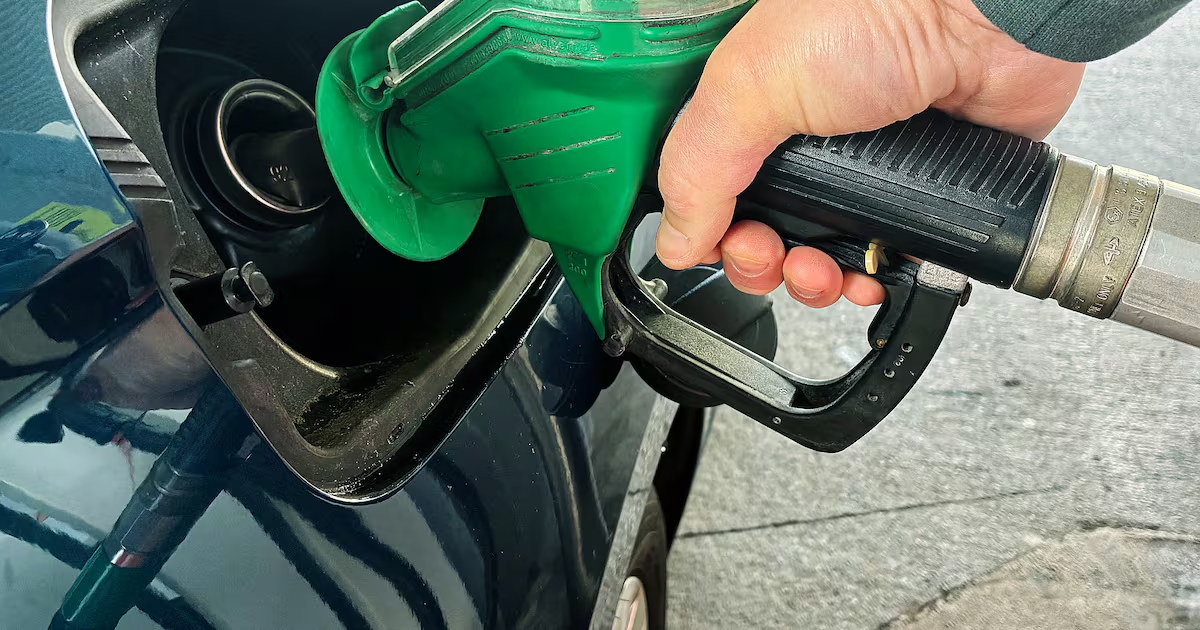
Many Irish consumers will be worse off by at least €1,000 a year as a direct consequence of the war in the Middle East with the full impact of the conflict yet to be felt, experts have suggested. Even if the deal between the US and Iran holds, the war’s aftershocks will keep the price of products including food, oil, gas, plastics, packaging, building materials and fertiliser elevated for months with consumers bearing the ultimate consequences. The European Central Bank (ECB) increased its interest rates late last week, which added hundreds of euro on to the cost of home loans for tens of thousands of mortgage holders.A second increase was considered likely within weeks and would push costs even higher for tracker holders while putting pressure later in the year on homeowners coming out of fixed rate agreements and those on variable rates. Daragh Cassidy of price comparison and switching site bonkers.ie identified the key concerns for households this year as mortgage rates, energy prices and food. “The ECB has already hiked rates once and there’s a strong possibility it’ll hike rates another two times before the end of the year,” he said. “For someone with, say, €150,000 left on a tracker over 10 to 15 years, they could end up paying just over €50 a month extra on their repayments or over €600 a year.”He warned fixed mortgage rates for new customers are also likely to creep up with those coming to the end of their current fixed rate this year or next set to face higher repayments than they may have been expecting. Speaking to The Irish Times, the co-head of geopolitical strategy at EY Ireland Simon MacAllister warned that even if a deal to end the war holds, it will take months to get oil and gas production back to pre-war levels after which all the refineries will have to “resynchronise” which could take a year. “When we think about the impact, we’re talking about plastics and packaging and the components of fertiliser, all of which go into the food and grocery category,” he said. “Products that were seeds when planted in the spring were planted using diesel that was more expensive and they were fertilised with fertiliser that has got more expensive,” he added. [ ECB ready to hike rates again next month if necessary, top official saysOpens in new window ]When the crops are harvested, they will be processed at facilities facing higher energy costs, he said. “We’ll see movement upwards and the inflation rate will continue to build over the rest of the year,” he said. He also identified a likely spike in the cost of construction materials with some construction firms reluctant to price work “because they can’t commit to a fixed price contract” as a result of inflation across the sector.Like MacAllister, Cassidy expressed concern about inflationary pressures likely to be felt by Irish consumers.He identified rising gas and electricity bills as a key concern with many people set to see their bills climbing by over €300 a year, adding that “further hikes from all suppliers can’t be ruled out in the months ahead”. Addressing food inflation, he highlighted a “perception that markets haven’t fully priced in the damage that’s already been done to energy infrastructure in the Middle East, so even if a resolution is soon found, prices could still rocket up.” “Most food production is highly energy intensive, so if the cost of energy (and as a consequence fertiliser) increases, this almost always feeds through into higher prices at the tills for consumers,” he warned. [ Higher-income Irish households benefit twice as much from fuel supports, ESRI findsOpens in new window ]
Irish consumers worse off by at least €1,000 a year due to Middle East war – despite deal
Aftershocks will keep prices of oil, food and packaging high for months
TL;DRAI
ECB rate hikes plus Middle East supply shock increase Irish household costs by €1,000+ yearly; energy and materials inflation lasting months. Geopolitical disruption raises IT infrastructure expenses and capital constraints for enterprises.
612 words~3 min read