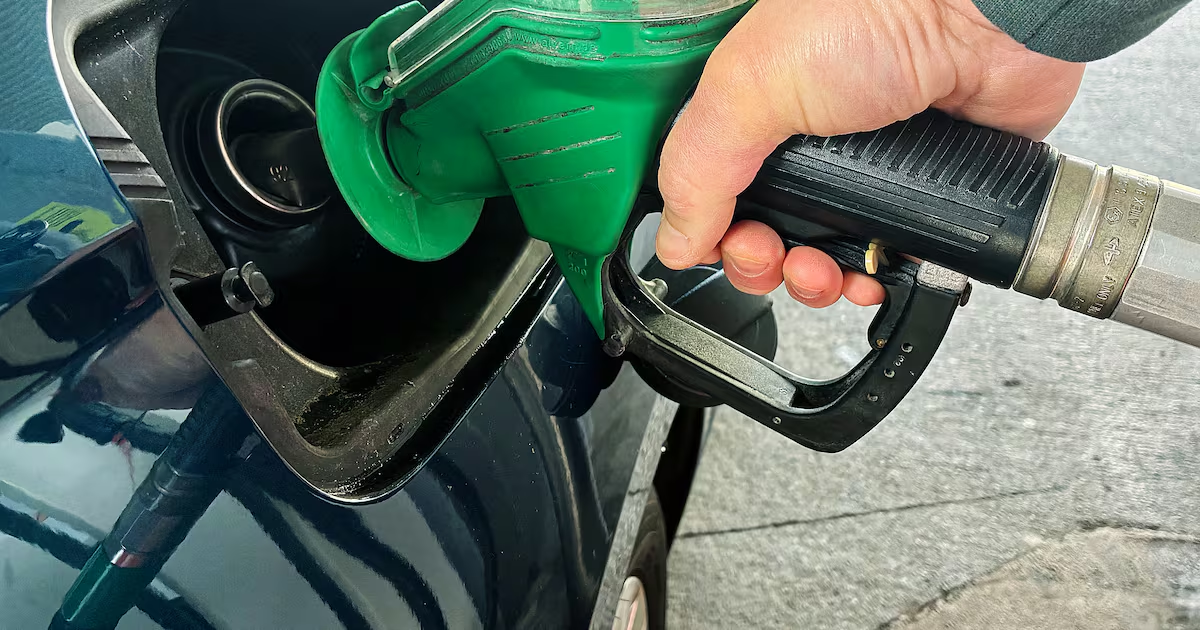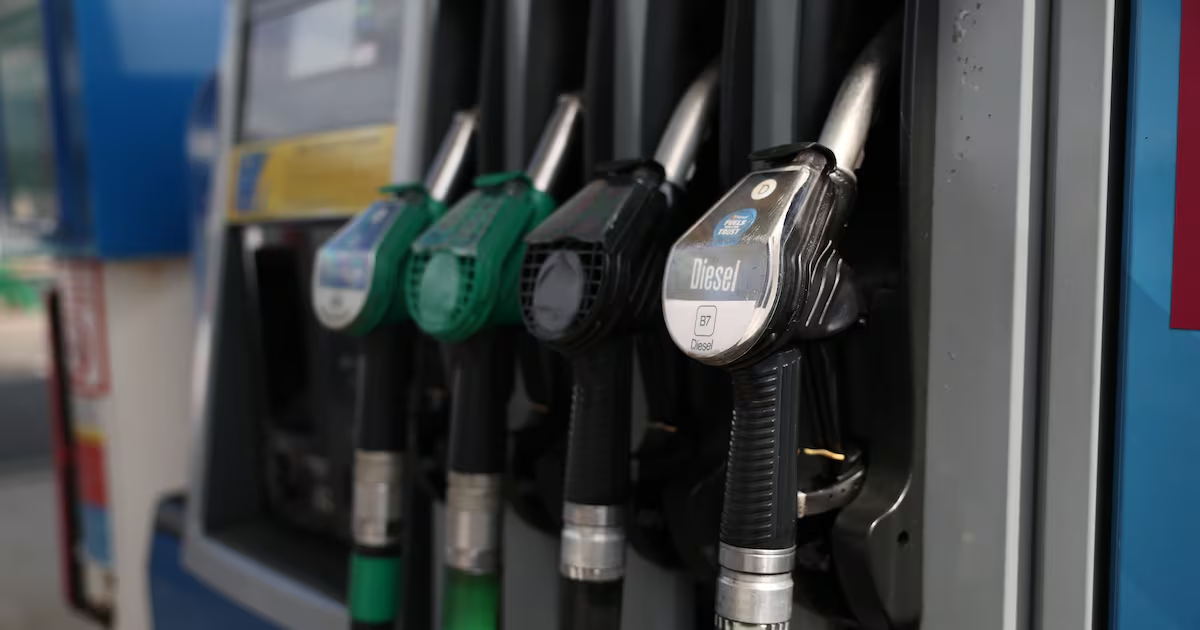
Families face an “unwelcome squeeze” on their cash as surging oil prices sparked by the US-Iran war drive up the cost of living, Bank of Ireland warns.Its forecast comes as the Middle East conflict worsens, threatening further energy price hikes likely to hit Irish households.Inflation will rise by 3.1 per cent this year and 2.7 per cent in 2027, while oil prices remain high as a result of the hostilities, according to the bank’s economic forecast published on Wednesday.Households face “an unwelcome squeeze” on their incomes from higher inflation this year and in 2027 as a result, say the bank’s economists Conall Mac Coille and Patrick Mullane.Bank of Ireland bases its forecast on a likely cost of $86 a barrel for Brent crude, one of the benchmarks for oil prices. That traded close to $89 a barrel on Tuesday.Oil topped $120 a barrel during the conflict’s initial phase but fell to $70 after talks between the US and Iran began, following a ceasefire.The Strait of Hormuz, through which about one-fifth of the world’s oil is shipped, closed again when the sides resumed attacks.In a further threat to shipping, Iran-backed Houthi rebels in Yemen say they will close the Red Sea and attack vessels unloading at Saudi Arabian ports.[ Iran-backed Houthis expand conflict with Red Sea blockade. Will fuel prices climb higher?Opens in new window ]Electricity and gas price increases of up to 11 per cent announced by Irish energy companies will start hitting household bills this month.Bank of Ireland believes people will pay these higher rates for energy until late into the first half of next year, when its economists estimate they could be gradually reversed.Irish people pay more than most other European consumers for electricity and natural gas, EU statistics show.Families “appear to be cautious in their spending” and are increasing the amounts of cash they save, the bank says. Households had €175 billion on deposit with their banks in May, 5.8 per cent more than during the same month last year.However, Irish consumers increased spending by 2.9 per cent in the first three months of the year as their incomes grew strongly, say Mac Coille and Mullane.Irish workers earned a total of €37 billion in the first quarter of the year, almost 6 per cent more than during the same period in 2025, they calculate. Weekly earnings rose 4.4 per cent during that time, outpacing inflation of 3.5 per cent.Irish homes appear “well insulated against a further rise in oil prices”, the economists add. The lender sees the economy contracting by 3 per cent this year, as the surge in pharmaceutical exports from 2025 in advance of possible US tariffs continues to unwind, while employment is seen growing 1.1 per cent.
High prices to squeeze families’ cash, Bank of Ireland warns
Energy price hikes to remain until middle of next year as conflict in Middle East worsens
453 words~2 min read