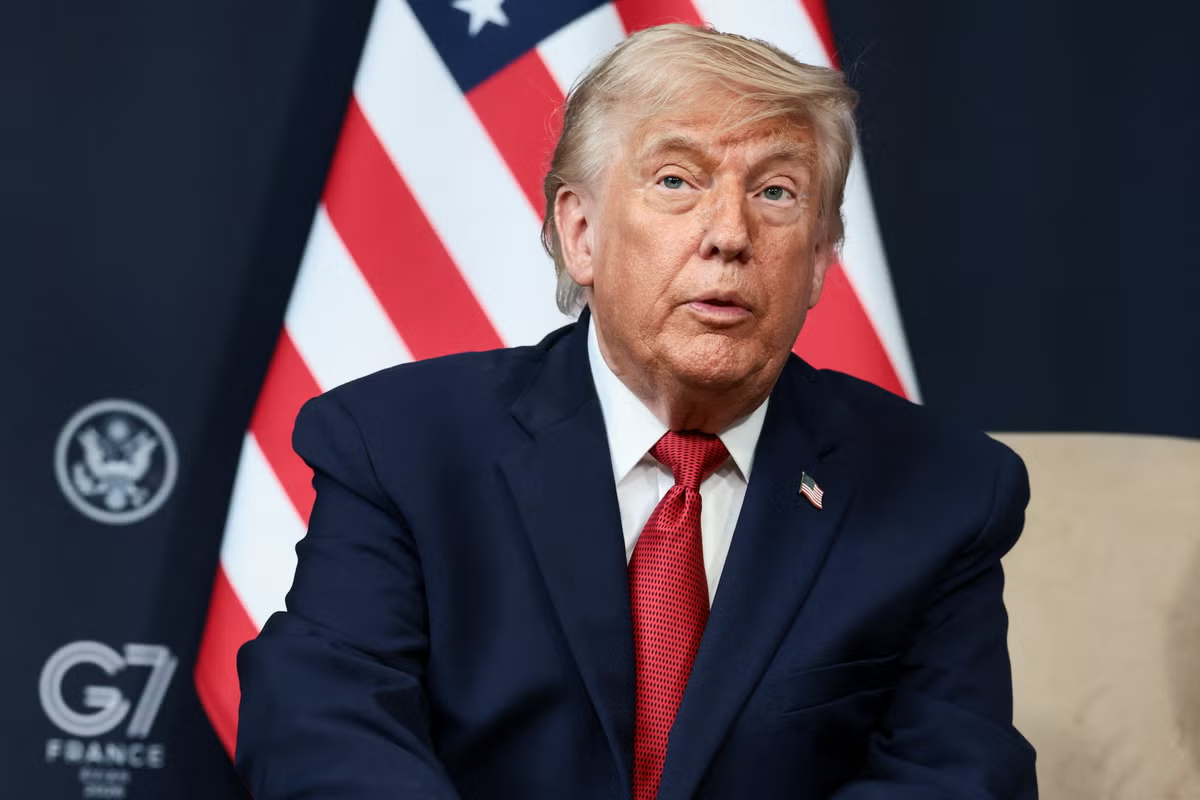
The war that began on February 28 with Israeli and US strikes on Iran has been under a fragile ceasefire since April 8, and a memorandum of understanding towards settling the conflict is set to be signed in Switzerland on Friday.But as fighting on the fronts decreases, the spin war is only beginning. Here's an early scorecard, based on what we know about the deal so far.Iran: Battered, but strategically aheadMilitarily, Iran took the worst of it. Most of its air defences and much of its missile stocks, launchers, top military command and its key nuclear sites were degraded over five weeks of strikes.But strategically, survival against a combined US-Israeli assault is itself being read across the region as a win. Deputy Foreign Minister Kazem Gharibabadi has gone further, saying Iran "achieved great victories in the war" and that the deal was due to the country’s "military achievements" rather than diplomacy alone. Internal divisions have emerged, but Iran is reportedly being approached by neighbours looking to de-escalate and rebuild ties — a signal of where momentum is heading.Iran turned the Strait of Hormuz from a theoretical chokepoint into real leverage. Even though it did not fully close the strait, the disruption showed it could threaten it in a credible way. Now the US is effectively trading sanctions relief to “reopen” a strait that was never really shut.The MoU reportedly includes a pledge from Iran to reaffirm it will not pursue nuclear weapons, with details on its enriched uranium stockpile — and any enrichment pause — left to a second, more substantive accord. There's no real agreement yet — only a framework to negotiate over the enriched uranium stockpile and an enrichment pause. Iran has a long record of stretching out talks such as these while banking on interim concessions. A final deal may never materialise and, if it does, it could land softer than what diplomacy might have achieved before the war started.Sanctions relief flowing back to Tehran strengthens the regime's hand domestically and gives it more resources to feed the weapons programme and proxy network — with nothing in the deal addressing ballistic missiles, backing of militant groups or the regime's grip on power.America: Ended a war it needed to endUS President Donald Trump's administration entered the conflict hoping for rapid regime collapse. That did not happen, so the priority shifted to ending the conflict.Iran is unlikely to view a US return to military action as imminent, especially with America's November midterm elections approaching. That means the diplomacy ahead happens without a real threat of force behind it.Mr Trump's portrayal leans heavily on the deal being better than the one reached under former US president Barack Obama known as the Joint Comprehensive Plan of Action (JCPOA). But on missiles, proxies and regime behaviour, the emerging deal looks structurally similar to that 2015 agreement, only with a war in-between.Israel: The odd one outIsrael is deeply disappointed, although this outcome was foreseeable. Mr Trump and Israeli Prime Minister Benjamin Netanyahu had overlapping goals early on, but those diverged once Washington decided the war had to end and Israel wanted to keep going.Folding Lebanon into the ceasefire — and reportedly reining in Israeli strikes on Hezbollah — is read as another point for Iran. This is in contrast with the post-JCPOA period, when the US and Israel co-ordinated to keep pressure on Iranian arms shipments through Syria.The greater risk for Israel is that Mr Trump appears to view this deal as a signature achievement and a step toward a broader US-Iran reset. Any Israeli moves seen as undermining it risk turning into a confrontation not only with Iran, but with the White House itself.Bottom lineThis looks less like a finished deal and more like a pause in a longer conflict.Each side will claim it as a win. Iran gets relief and says it held its ground. The US can say it ended a war and pulled back from escalation. Israel and others will judge it by what it actually does to Iran’s nuclear and military capabilities.The real test is what happens next. If the follow-up talks produce clear, enforceable limits, an agreement could hold. If not, it’s only a matter of time before the next round of pressure and confrontation.
Who won the Iran war? | The National
Tehran was badly weakened on the battlefield, but the framework deal with Washington may be handing it strategic gains
708 words~3 min read