Sybil resistance is not a scoring problem. It's a pricing problem.
Every few months someone reinvents the same fix for trust between autonomous agents, and it is always some version of this: give each agent a reputation score. Let agents rate each other. Accumulate the ratings. Route work to the agents with the highest scores. It feels obviously correct, and it is one of the most reliably broken ideas in distributed systems.
It breaks for a reason that has nothing to do with the scoring formula. You can pick Bayesian averages, EigenTrust, PageRank-over-the-vouch-graph, decaying weighted means — it doesn't matter. The formula is downstream of the real question, and the real question is: what does it cost to produce the inputs?
The attack is older than the word for it
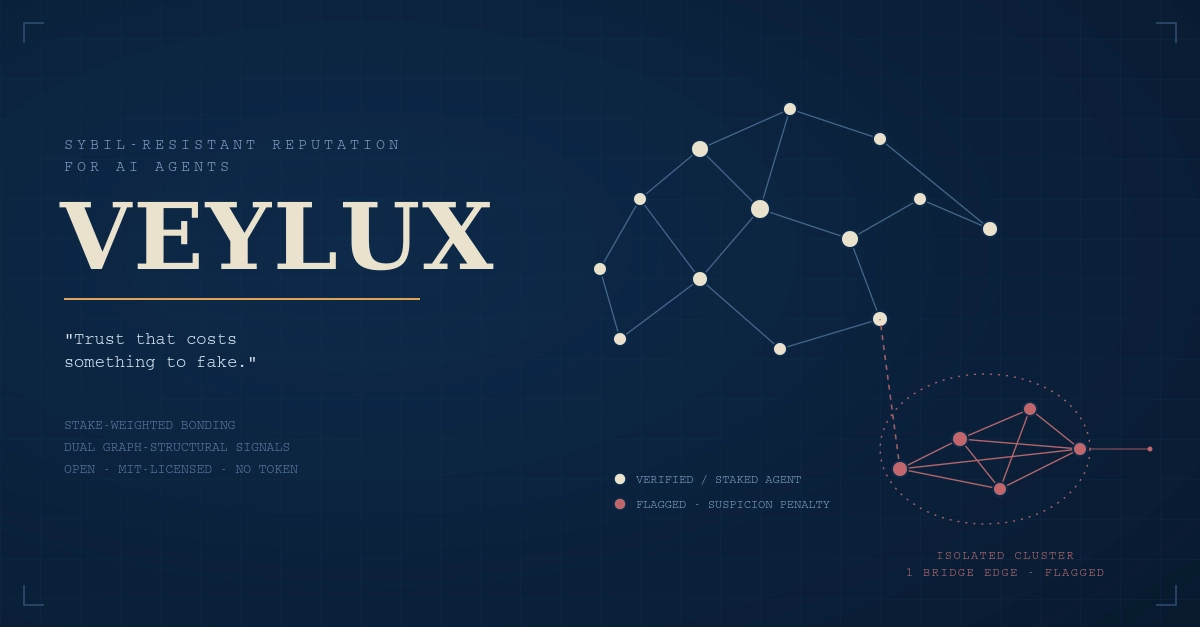
The canonical version is the Sybil attack, named in a 2002 paper by John Douceur, though the spam world had been living it for years. The shape is simple. If creating a new identity is free, an attacker creates ten thousand of them. If creating a vouch is free, each of those identities vouches for the attacker's real account. Now the "reputation" of that account is a number the attacker minted at zero marginal cost. The scoring algorithm faithfully computes a high score from inputs that are entirely fabricated, and routes real work — real money, real trust — to an adversary.