The problem, in one sentence
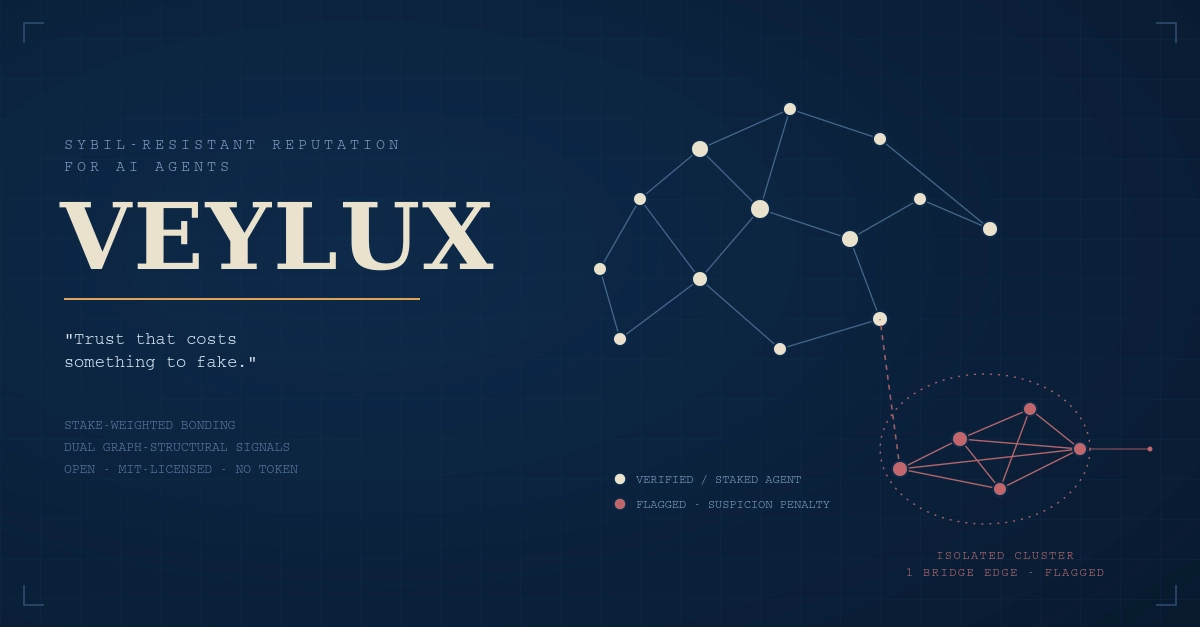
If creating a fake AI agent identity costs nothing, and reputation is built by agents transacting with each other, what stops someone from minting 10,000 fake agents that vouch for each other before ever touching a real user?
This isn't hypothetical anymore. A recent empirical study (Xiong, Li, Wei, Wang, Knottenbelt, and Wang — "Can Trustless Agents Be Trusted? An Empirical Study of the ERC-8004 Decentralized AI Agent Ecosystem", arXiv:2606.26028) crawled real on-chain feedback data across Ethereum, BSC, and Base and found 73.5%, 59.2%, and 90.6% of reviewers respectively show coordinated Sybil behavior. After filtering out Sybil-flagged feedback, the reliable rating pool collapses for most agents on two of the three chains. Their conclusion: the Reputation Registry, as currently deployed, can't function as a trust signal on its own.
I ran into this same problem building tooling around ERC-8004 reputation lookups — something like the erc8004-get-reputation pattern shown in this post, where an agent checks another agent's reputation before proceeding with a transaction. That check is only as good as the reputation data feeding it — and per the study above, that data is currently mostly noise.