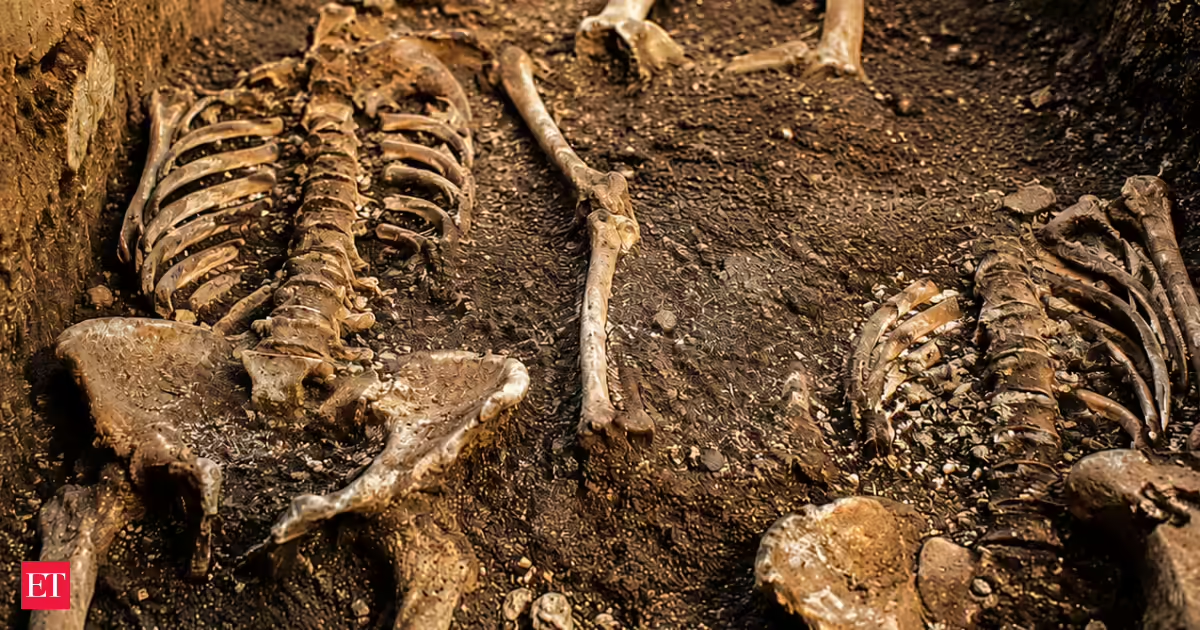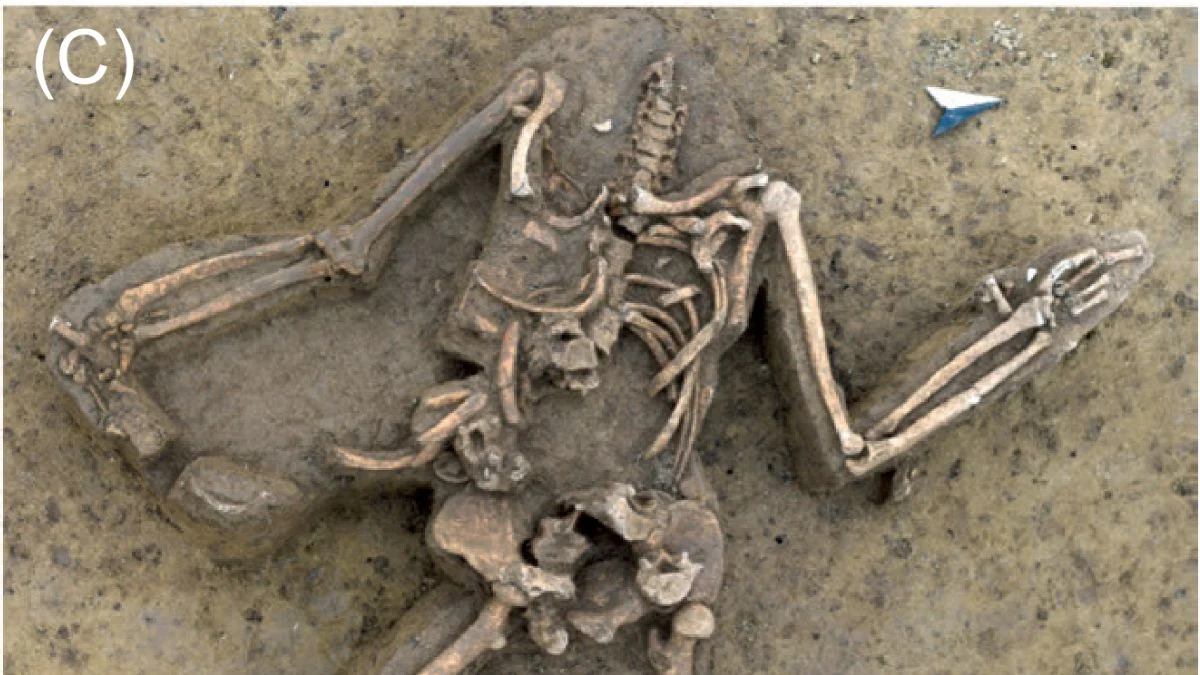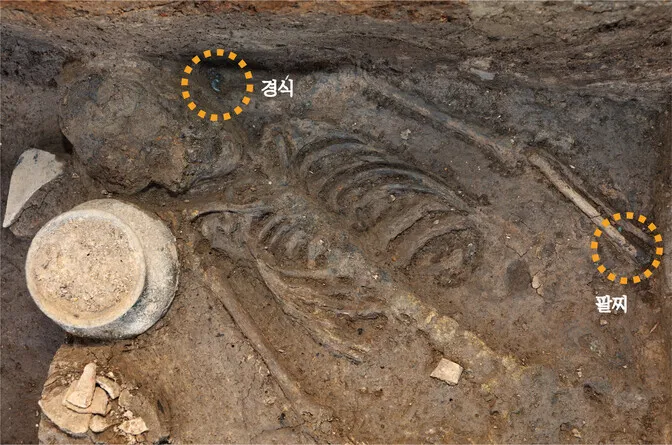
Remains of a woman recently discovered during additional surveys of Wolseong Palace’s western wall, in Gyeongju, are pictured. The two circles highlight a necklace and a bracelet. An earthen pot can be seen on the left. (provided by the Gyeongju National Research Institute of Cultural Heritage)
More human bones dating to the Silla Dynasty have been found in the walls of Wolseong Palace in Gyeongju, North Gyeongsang Province, which served as Silla’s royal palace compound for a millennium.In 2017, the bones of a young man and woman — bearing evidence of having been used as human sacrifices in Silla times — were excavated along with bear bones from the western wall of Wolseong Palace. Recently, more animal bones and the remains of a young woman also used as a sacrifice were discovered, the Gyeongju National Research Institute of Cultural Heritage announced Tuesday.The human bones unearthed from Wolseong Palace’s western walls are the only surviving evidence of rituals involving ancient Korean palace walls. Interestingly, no other examples of humans being sacrificed during wall construction have been found at other archaeological sites in Korea or Japan.
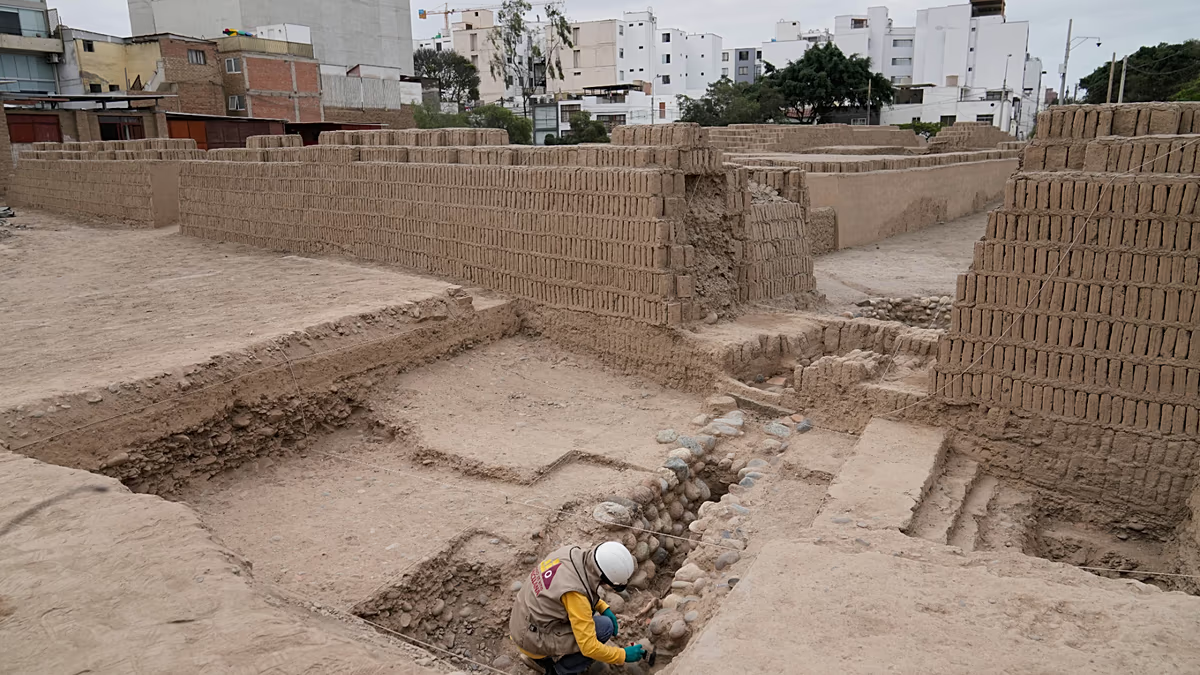
The wall running through the remains in the center is Wolseong Palace’s western wall. An endeavor to widen the wall can be seen, with stones stacked on one side, and covered in a layer of mud on the other. Two large pieces of paper on the basal bed below it show where remains of a woman were recently found, as well as the two remains found in 2017. (Roh Hyung-suk/The Hankyoreh)