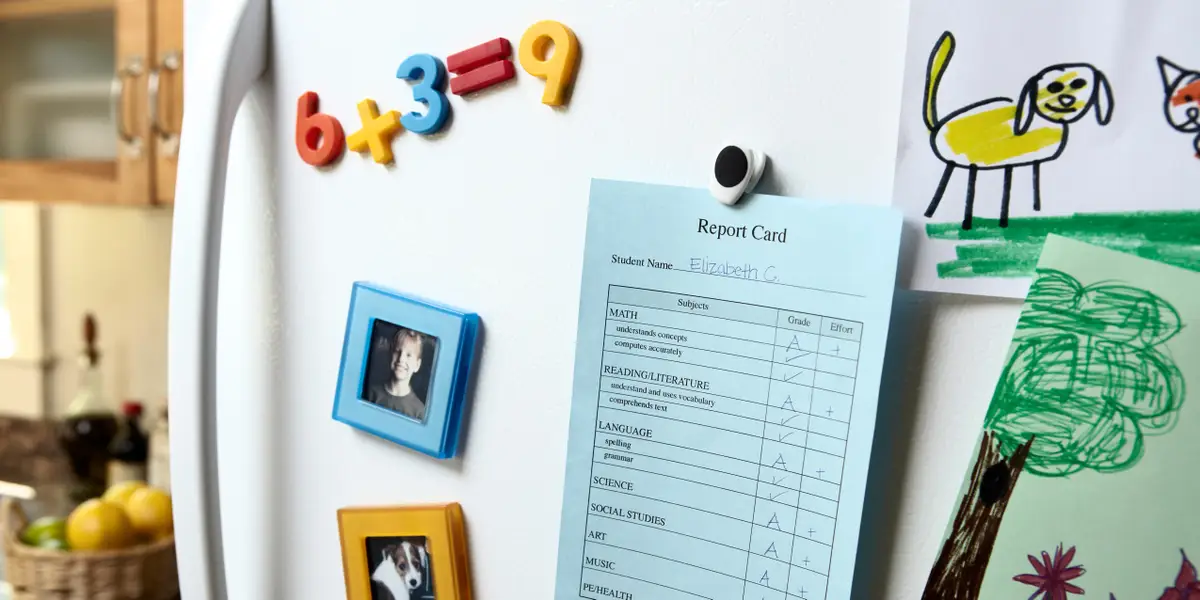
The author (not pictured) tells her sons about her failures.
Maskot/Getty Images/Maskot
For a long time, I thought I was doing what parents are supposed to do.Whenever one of my sons was struggling with school or feeling discouraged about not mastering a new skill, I'd reach into my personal archive of accomplishments for a helpful story. I'd tell them about getting inducted into the National Junior Honor Society. I'd mention becoming editor of the school newspaper. I'd share examples of goals I'd worked hard for and eventually achieved.In my mind, these stories were encouraging, evidence that effort pays off and that challenges can be overcome. My kids, however, seemed to hear something entirely different."I'm not as smart as you.""That's not something I'm good at."I finally understood that my success stories weren't landing the way I intended. What I saw as reassurance sounded like a comparison. They were hearing the polished happy-ever-after rather than the years of work, uncertainty, and even luck behind my accomplishments. They were comparing their messy middle to my finished product — and it was my fault for not giving them the full story.I started telling them about times I'd failed, and everything changedThen one night, I told them about the time I got a 10 on a physics test. Not 10 points off — 10 out of one hundred. My physics teacher joked that at least he knew I hadn't cheated off my friend sitting next to me, who had gotten 100. "Nancy did 10 times better than you," he said, when he handed me my test. It's a quote that sticks in my head decades later — and one that I shared with my teenagers. They thought it was hysterical.