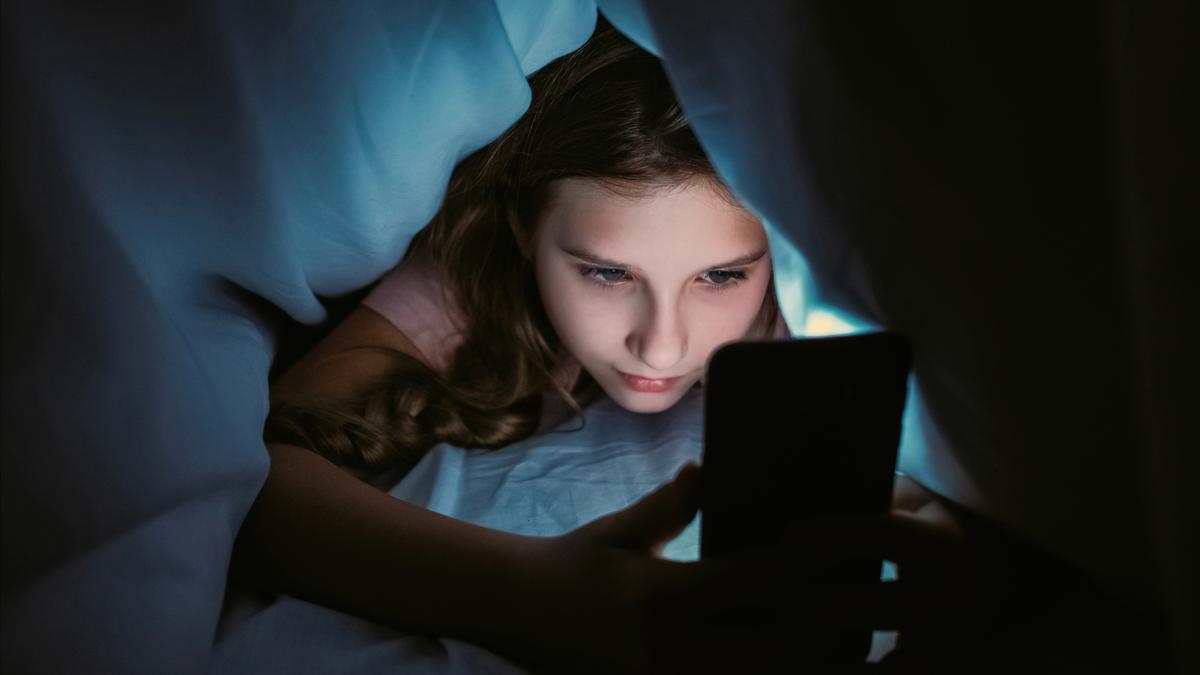
Today, discussions about education have increasingly focused on curriculum reform, digital learning, artificial intelligence in classrooms, and innovative pedagogical strategies. Yet an essential factor that profoundly influences and affects learning and academic productivity remains largely neglected: sleep.In an age dominated by smartphones and constant digital connectivity, the disruption of healthy sleep patterns — especially due to excessive gadget use at night — has emerged as a serious educational and public health concern. While researchers in neuroscience and medicine have documented the consequences of sleep deprivation, the academic community has not yet sufficiently integrated these insights into mainstream educational thinking.Crucial roleSleep plays a foundational role in cognitive functioning and learning. Educational psychology and neuroscience consistently demonstrate that sleep is essential for memory consolidation, attention, emotional regulation, problem-solving abilities, and to strengthen neural pathways associated with learning. Without adequate sleep, these processes are significantly impaired. Students who experience chronic sleep deprivation often struggle with concentration, information retention, and critical thinking that are fundamental to academic success.The challenge has intensified with the rapid expansion of digital technologies. Smartphones, tablets, and laptops have become indispensable tools for communication, education, and entertainment. Students increasingly spend more time interacting on social media, streaming content, gaming, or responding to messages, pushing sleep schedules later into the night.Scientific studies indicate that this behaviour directly interferes with the body’s circadian rhythm that regulates the sleep-wake cycle. Exposure to artificial light — particularly the blue light emitted by digital screens — suppresses the production of melatonin, the hormone responsible for initiating sleep. As a result, individuals take longer to fall asleep, experience reduced sleep quality, and often wake up feeling tired. Over time, this pattern leads to chronic sleep deprivation.Impact on learningFor educational institutions, the implications are profound. Research across universities and schools has repeatedly shown that students who use smartphones late at night report poorer academic performance compared to those who maintain healthier sleep routines. Classroom engagement declines, and they often struggle to absorb complex concepts. Even when they invest time in studying, the lack of sufficient sleep prevents the brain from properly consolidating the knowledge they acquire.Educators frequently attribute declining academic performance to factors such as lack of discipline, inadequate study strategies, or poor motivation. However, emerging research suggests that sleep disruption may be an underlying factor that has not received adequate attention. A student who is mentally exhausted is less capable of focusing during lectures, participating in discussions, or retaining information. The result is a cycle of reduced academic performance that cannot be solved simply through stricter study schedules.The issue extends beyond student populations. Faculty members and others are also affected by constant digital engagement. Academic work increasingly relies on digital communication, online meetings, and continuous connectivity. Emails, academic networking platforms, and digital resources create an environment where individuals feel compelled to be “always connected”, which can gradually erode the boundaries between work, rest, and personal time.From a broader educational perspective, the consequences are not limited to academic achievement alone. Sleep deprivation has significant effects on mental health, emotional stability, and long-term physical well-being. Numerous medical studies have linked chronic sleep deficiency to anxiety, depression, metabolic disorders, and cardiovascular problems. For students navigating the demanding environment of higher education, these risks can compound existing academic pressures and negatively influence overall well-being.Despite these well-documented consequences, sleep education remains strikingly absent from most academic curricula. Schools teach students about nutrition, hygiene, and physical fitness, yet the relationship between sleep and learning is rarely discussed in classrooms, teacher training programmes, or policy frameworks. As a result, students are often unaware that their digital habits at night may be undermining their academic potential.This gap highlights an important responsibility for educational institutions and policymakers. If education aims to nurture intellectual development and human productivity, then protecting sleep must become part of that mission. Integrating sleep literacy into health education programmes could significantly improve students’ understanding of how lifestyle choices affect learning. Institutions can also encourage healthier digital habits, promote balanced schedules, and raise awareness about the cognitive consequences of excessive night-time gadget use.Equally important is greater academic engagement with this issue. While medical researchers have extensively studied sleep disorders and circadian rhythms, interdisciplinary research connecting sleep science with education remains relatively limited. Scholars in education, psychology, and public health can collaborate to examine how digital lifestyles influence learning environments and academic outcomes. Such research can inform policy decisions and contribute to more holistic approaches to student development.Late-night gadget use represents one of the most subtle yet powerful challenges facing contemporary learners. Addressing this issue requires not only personal discipline but also institutional awareness and academic engagement.The writer is a Ph.D. scholar from VIT-Chennai who works on the effect of sleep deprivation in students’ academic life.
Why sleep literacy should be a part of all academic curricula
Discover why sleep literacy belongs in school curricula. Learn how sleep education boosts student mental health, academic performance, and lifelong well-being.
783 words~4 min read