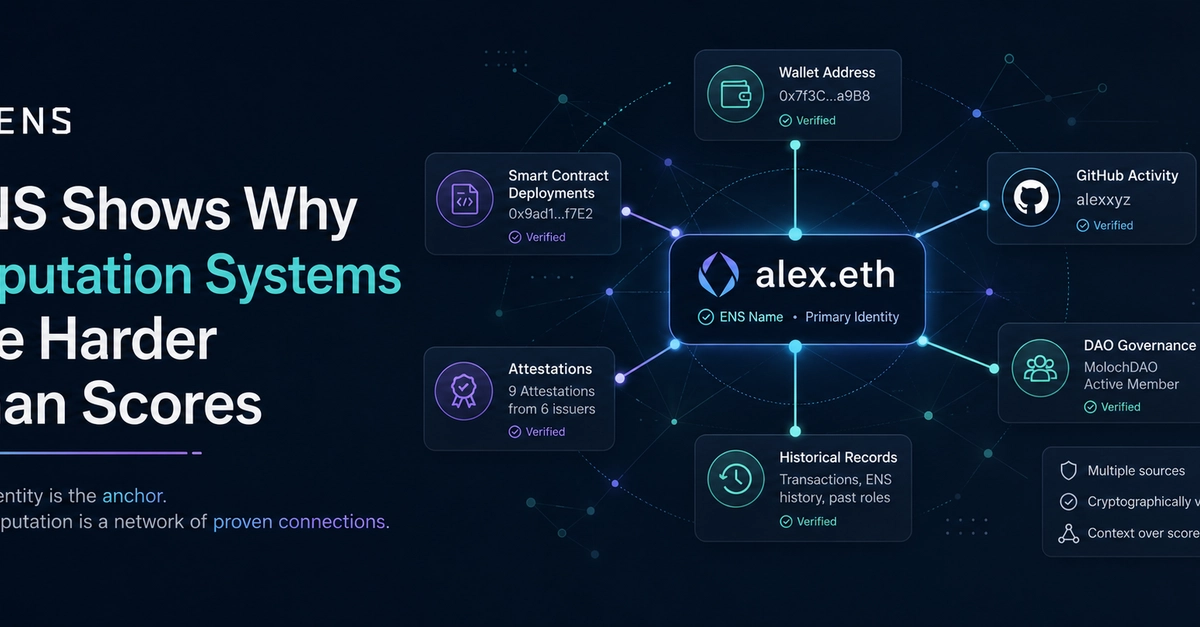
In an age where a researcher’s reputation is often built — and judged — online before a single conversation takes place, the integrity of one’s digital academic identity has become as critical as the research itself. Before a paper is read or a conversation begins, a quick online search often defines first impressions. Yet, the systems designed to track scholarly output are increasingly failing to present a coherent and accurate picture of researchers. What emerges instead is a fragmented, sometimes misleading digital persona. This raises an urgent question: Do we need systematic digital identity checks to prevent private digital mismatching of academic profiles? The answer is an unequivocal yes.Academic databases and professional platforms like ORCID (Open Researcher and Contributor ID), Scopus, LinkedIn, and others were designed to clarify scholarly contributions. Instead, they frequently generate a labyrinth of redundant profiles, misattributed publications, and incongruous affiliations. What was intended to improve visibility is, paradoxically, compromising accuracy.Digital mismatchDigital identity ambiguity often begins innocuously. While platforms such as ORCID, LinkedIn, and indexing databases and preprint servers all go to some lengths to distinguish between researchers who share the same name, they update according to their own schedules and have a variety of rules for their users. Even on a single platform, some details are captured more reliably than others. Scopus, for instance, receives information from the journals that it indexes, but the author profiles it produces do not always reflect a complete affiliation history.Occasionally, when a researcher changes their institution or affiliation, they neglect to update their profile. Over time, these distortions emerge as major issues in the profiling of researchers. In a study conducted at the University of Bath, the U.K., it was observed that empty ORCID records, duplicate profiles, missing publications, and incorrect citation counts were widespread. One of the faculty members’ citations, which was hidden in a duplicate profile, doubled from 5,500 to over 12,000 once his profile was merged. In today’s academic environment, driven by metrics, discrepancies are not merely technical errors; they shape how researchers are perceived.There is a common perception that digital technologies facilitate easy verification. Given the abundance of material available online, how challenging is it to verify a researcher’s credentials? A simple name search can yield numerous profiles and in the absence of a standardised identity or coherent metadata, differentiating one individual from another is a challenge. Even seasoned evaluators may find it difficult to ascertain which profile accurately reflects the “authentic” researcher. Thus, an increase in data does not inherently lead to enhanced comprehension.Identity checksDigital identity verification is a straightforward yet impactful measure guaranteeing that the online version of a researcher’s academic trajectory is accurately represented. Moreover, it reinstates the individual’s autonomy within a system that frequently operates outside their immediate supervision. Three pragmatic measures can markedly enhance digital coherence:An updated ORCID profile: Most researchers have a unique ORCID throughout their lifetime. Even when a researcher changes affiliations, this remains the same. The profile should be linked to PURE and Scopus. Keeping affiliations and research output up to date makes one’s ORCID page a stable reference point. Moreover, including the ORCID identifier when submitting papers allows publishers to add work to your record once it is published.Institutional profile: Linking ORCID with institutional systems like PURE or the Indian Research Information Network System (IRINS) allows verified data such as publications and affiliations to be synchronised automatically.Audit external platforms: Regularly checking profiles in databases such as Scopus, Web of Science, and Google Scholar helps identify duplicates, correct misattributions, and merge fragmented records.Although personal attentiveness is crucial, academic institutions, publishers, and database providers must collaborate to develop interoperable systems that mitigate fragmentation. Standardised IDs, enhanced integration across platforms, and proactive error-detection methods ought to be standard practice rather than anomalies.A researcher’s digital identity influences visibility, credibility, and opportunity. In contrast to a conventional CV, which is meticulously crafted and fixed, a digital profile is fluid, broadly available, and frequently outside direct oversight. This also endures beyond the individual and serves as a lasting documentation of a career, referenced by future partners, institutions, and historians of science. Ensuring its truth transcends personal advantage; it pertains to academic honesty.The path aheadAs the quantity of academic data proliferates, the likelihood of misrepresentation concurrently increases. The resolution resides in awareness, regular maintenance, and structural reform, as your profile speaks for you, not just your study.The writer is the Dean-Academic Affairs, Garden City University, Bengaluru, and an adjunct faculty at the National Institute of Advanced Studies, Bengaluru. E-mail: bijudharmapalan@gmail.com
Why we need digital identity checks in academic life
How digital identity serves as a formidable emblem of academic contribution
TL;DRAI
Academic profiles fragment across ORCID, Scopus, and LinkedIn into duplicates and misattributed work; one researcher's citations jumped from 5,500 to 12,000 after merging duplicate profiles. Digital identity fragmentation exposes governance and trust risks in federated data ecosystems, affecting recruitment validation and organizational credibility.
746 words~3 min read