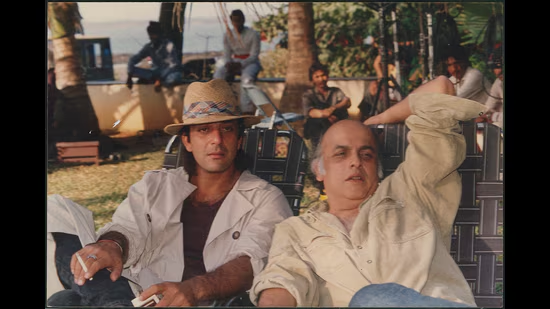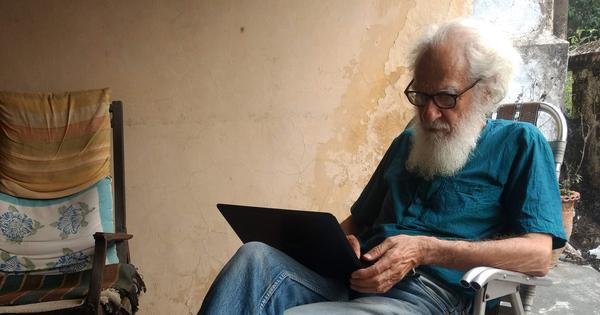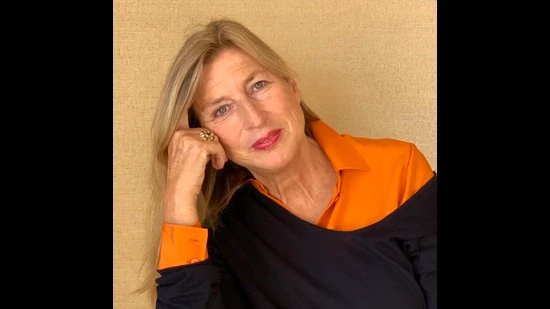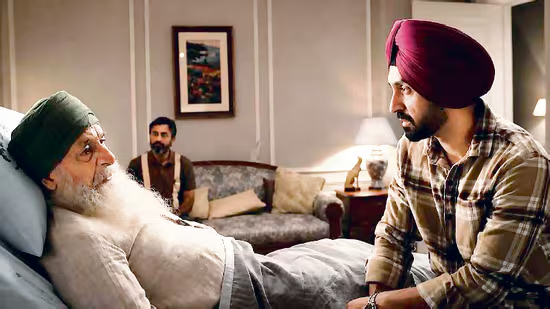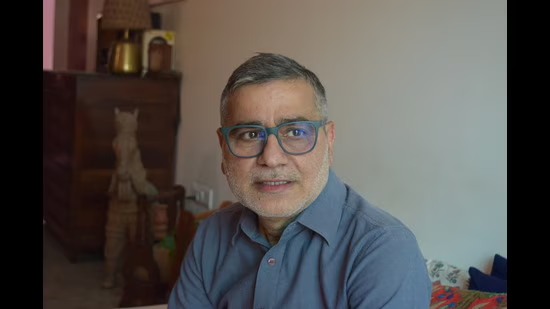
The author of Awtar Kaul: The (In)Complete Story on memory, cinema and reconstructing the life of his uncle whose only film, 27 Down, continues to have an impact Why did you think that Awtar Kaul’s story needed to become a book rather than remain a family memory?Author Vinod Kaul (Courtesy the subject)The journey towards this book was remarkably organic. I never consciously decided that I would one day write a book about Awtar Kaul. In fact, the process began less as a literary project and more as a lifelong effort to understand someone whose absence had shaped my family history.I was only 10 years old when Awtar passed away. On the same day that news arrived of 27 Down winning a National Award, news also arrived of his death. Even as a child, the collision of those two events left a deep impression on me. For a while, his name and his film continued to appear in newspapers, magazines, and conversations. Gradually, however, both faded from public memory. Even within the family, recollections became less frequent as people tried to move on from the loss.My own curiosity never disappeared. Over the years, I collected photographs, articles, reviews, documents, and memorabilia connected with him. What began as a personal archive slowly became an attempt to reconstruct a life. I realised that many aspects of Awtar’s journey remained unknown not only to me but even to members of his family. Different phases of his life had unfolded in different places — his childhood in Srinagar, his years in Delhi, his time in America, and finally his life in Bombay as a filmmaker. No single person possessed the complete picture.258pp, ₹365; Publication DivisionThe deeper I researched, the more I realised how difficult it would be to piece together his story. It required years of conversations, archival work, and visits to institutions such as the Ministry of Information and Broadcasting, the NFDC, the Photo Division, the RNI, and the Publications Division. Slowly, I gathered rare photographs, National Award records, Film Finance Corporation documents, and testimonies from people who had known him.A significant turning point came around the fiftieth anniversary of both 27 Down and Awtar’s passing. The milestone made me feel that if his story was not told now, it might never be told. My family encouraged me to share what I had gathered, whether as a documentary or a book. Journalists, scholars, and researchers I met during the process reinforced that belief.The research eventually led to a special screening of 27 Down at IFFI Goa in 2024 to commemorate both anniversaries. Around the same time, the Publications Division encouraged me to submit a book proposal. By then, I had become convinced that a book was the most enduring way to preserve his legacy. Human memory is fragile, but books can keep a life and its work alive across generations. In many ways, writing this book became both a personal quest and a small act of repayment to an artist whose contribution deserved to be remembered.What remains incomplete about Awtar Kaul’s story? How did that shape your writing?The idea of incompleteness lies at the heart of both Awtar Kaul’s life and this book.Writing about someone who belongs to your own family is already difficult. Reconstructing that life through fragments of memory and archival material makes it even more challenging. Throughout the research process, I constantly encountered gaps, dead ends, and unanswered questions. Those absences became part of the narrative itself.When I look at Awtar’s life, a pattern emerges. Many of its defining chapters remained unfinished. His education, career, films, family life, and ultimately his life itself all carry a sense of incompletion.He left secure surroundings at a young age to pursue independence. Despite being academically gifted, financial constraints limited his opportunities. Throughout his life he struggled with uncertainty, temporary work, and economic hardship. Later, he had the possibility of a comfortable life in America but chose instead to return and pursue filmmaking. Again and again, he abandoned security in favour of conviction.What strikes me most is that he consistently chose difficult paths. He was not someone who remained on safe shores. He preferred risk, experimentation, and the pursuit of dreams, even when the consequences were uncertain. That quality defined both his life and his work.His death at 35 made the incompleteness impossible to ignore. He never witnessed the full impact of 27 Down. He never received the recognition that might have come from a longer career. As an artist, much of his potential remained unrealised.That lingering sense of incompletion influenced the way I approached the book. Rather than presenting a definitive account, I wanted to acknowledge that no biography can fully capture a life. In Awtar’s case, the challenge was even greater because new information kept emerging throughout my research. Even today, I feel that I have only scratched the surface.For me, his remains an unfinished story — not simply because his life ended prematurely, but because our understanding of him continues to evolve. Some chapters have been recovered, some are still being uncovered, and others may remain hidden forever.Awtar Kaul (Courtesy Vinod Kaul)Was there any discovery that fundamentally changed your understanding of Awtar as a person?For nearly two decades I have been piecing together Awtar Kaul’s life. Every conversation, photograph, article, or memory revealed something new about him.Before I understood him as a filmmaker, I knew him as my uncle. I knew he cared deeply for his family, loved children, and struggled through difficult circumstances before making 27 Down. Yet, I always had questions. Why did he leave Kashmir? Why did he leave a government job and go to America to study film? Why did he later abandon security to pursue cinema in Bombay? What drove him?As I searched for answers, a clearer picture began to emerge. I realised that Awtar possessed an unusual combination of independence, courage, and self-respect. Difficulties did not simply happen to him; he repeatedly chose paths that invited uncertainty.As a young man, he left the comfort of his maternal home in Srinagar to build a life for himself in Delhi. When disagreements arose at home, he chose independence over compliance. Later, despite having opportunities for stability abroad, he followed his dream of filmmaking instead.What gradually became clear was that he was not someone who avoided hardship. He confronted it directly. He seemed to believe that growth lay beyond safety.Even accounts surrounding his death reflect that aspect of his personality. Faced with danger, he chose to act rather than protect himself. Family memories gathered during my research reinforced this image of a person who valued conviction and self-reliance above comfort.One of the most moving aspects of the project is that I continue to discover new pieces of his story even now. After the book was published, fresh memories surfaced from relatives that added new dimensions to my understanding of him. In that sense, the process of getting to know Awtar remains ongoing.The irony, however, is profound. The same fearlessness that enabled him to pursue his dreams also exposed him to risks throughout his life. The qualities that helped define his artistic identity were, in some ways, inseparable from the circumstances that led to his premature death.To what extent is 27 Down an artistic reflection of Awtar’s own life?I do not believe that 27 Down is a direct autobiography. However, it undoubtedly contains echoes of Awtar’s experiences, concerns, and emotional landscape.His decision to adapt Ramesh Bakshi’s relatively obscure novel, Atharah Suraj Ke Paudhe, reflects sensibilities that were deeply personal to him. The themes of alienation, aspiration, authority, and identity clearly resonated with his own experiences.The film’s characters — the authoritarian father, the subdued mother, Sanjay’s artistic longings, and Shalini’s role as a source of hope — contain emotional parallels to situations Awtar had encountered. Yet, it would be misleading to treat them as direct representations of real people.What is particularly interesting is what he chose to exclude. Awtar’s own life contained episodes of hardship, conflict, and emotional turmoil that could easily have been transformed into dramatic cinema. Instead, he deliberately avoided melodrama.The tone of 27 Down remains restrained, introspective, and humane. Rather than turning personal suffering into spectacle, he transformed experience into something more universal. The film speaks not only about one individual but about broader social and emotional realities experienced by many people navigating modern urban life.At the same time, there is evidence that Awtar hoped one day to make a film directly inspired by his own life. According to MK Raina, he had even discussed an autobiographical project in which Raina would play him. Like many of his ambitions, however, that film remained unrealised.During the making of 27 Down. (Courtesy Vinod Kaul)Why was it important to foreground Anne Kaul’s role?For me, understanding Awtar also meant understanding Anne. She was not simply his wife; she was an essential part of his life and journey.Throughout my research, I hoped to meet her. I wanted to hear her memories, understand her contribution to 27 Down, and reconnect with a family member whom I had barely known as a child. Unfortunately, by the time I reached that stage of my research, the opportunity had passed. That loss became another example of the incompleteness that runs throughout this story.Yet everyone I spoke to remembered Anne with remarkable warmth. Her kindness, intelligence, and generosity left a lasting impression on all who knew her. In many ways, she emerges from the memories of others as one of the central figures in Awtar’s life.Anne was a trained clinical psychologist who could easily have pursued a successful independent career. Instead, she chose to support Awtar’s ambitions and share in his dream of making films. Her contribution was not merely emotional. Together, they invested their savings in the making of 27 Down and dedicated themselves completely to the project.The tragedy is that after Awtar’s death she lost almost everything at once — her husband, her financial security, and the future they had imagined together. Yet her sacrifices and partnership remain largely absent from conventional accounts of the film.I felt it was important to restore her presence to the story because 27 Down could not have existed without her. She was not a peripheral figure but a collaborator in the broadest sense — someone who helped sustain both the filmmaker and the dream.Why has Awtar Kaul remained relatively unknown despite the acclaim of 27 Down?Awtar Kaul’s relative obscurity remains one of the most unfortunate stories in Indian cinema.27 Down won major honours and earned recognition both nationally and internationally. Yet despite its achievements, the film never entered broader public consciousness in the way many lesser works have.The most obvious reason is his untimely death. Just as his career was beginning, it ended. Had he lived to make more films, his name would almost certainly occupy a far more prominent place in discussions of Indian cinema.But the issue extends beyond one individual. It raises larger questions about how cultural memory functions. Do we preserve artists because of the quality of their work, or because they remain visible long enough to build careers, institutions, and public profiles around themselves?For nearly 50 years, there were few major commemorations, retrospectives, lectures, or public discussions dedicated to his legacy. Once he was gone, the structures needed to sustain public memory were largely absent.At the same time, responsibility does not lie solely with institutions. Preserving cultural memory is a collective task involving scholars, filmmakers, critics, educators, and audiences. When an artist disappears from public discourse, we lose more than an individual; we lose part of our cultural history.Awtar Kaul represents one of those rare talents whose contribution far exceeded the length of his career. Remembering him is not simply about honouring a forgotten filmmaker. It is about ensuring that Indian cinema makes space for artists whose work mattered, even if time did not allow them a long life.Arun AK is an independent journalist. Twitter: @arunusual
Vinod Kaul: “No biography can fully capture a life”
The author of Awtar Kaul: The (In)Complete Story on memory, cinema and reconstructing the life of his uncle whose only film, 27 Down, continues to have an impact
1,980 words~9 min read