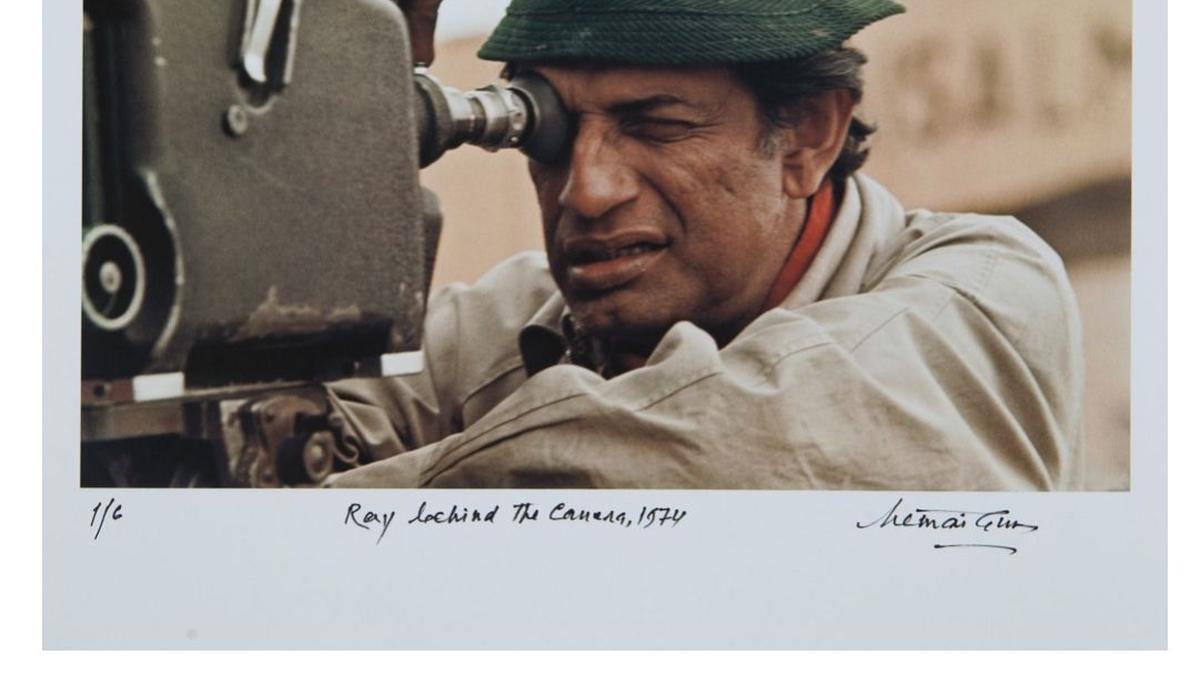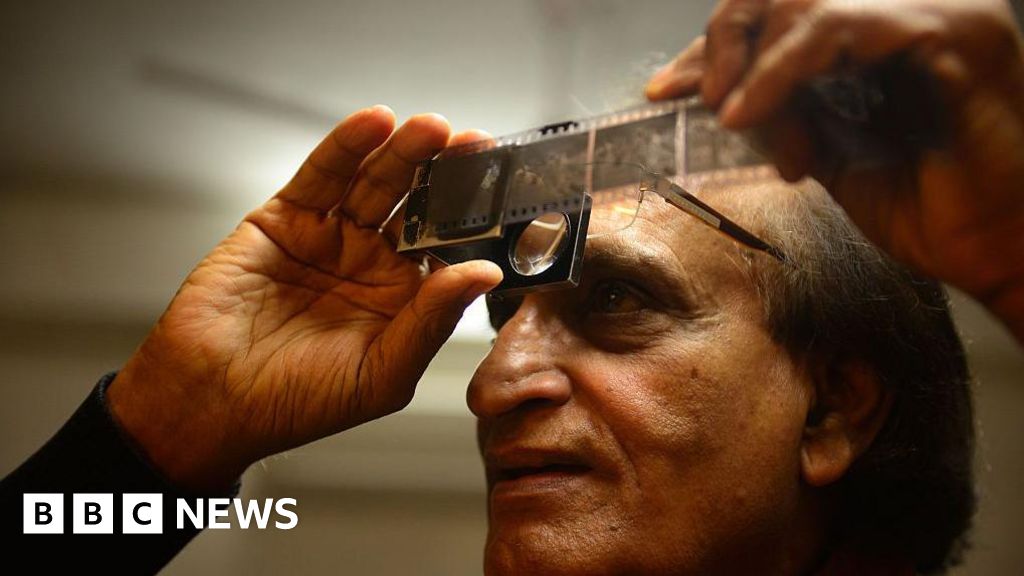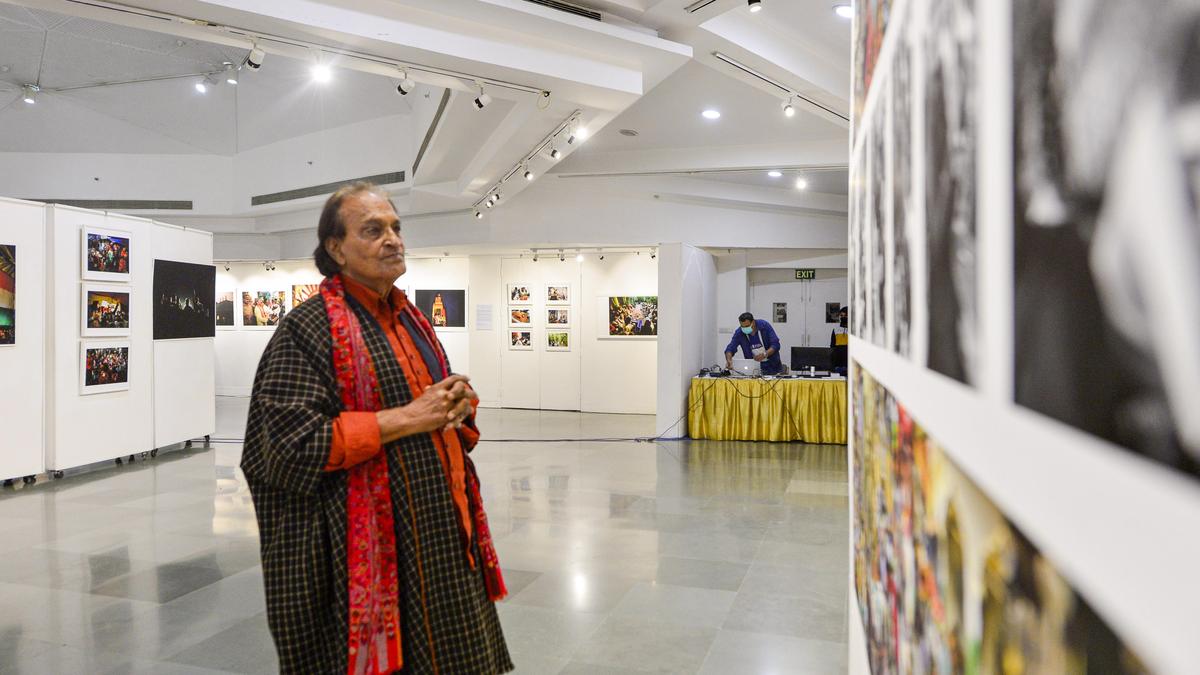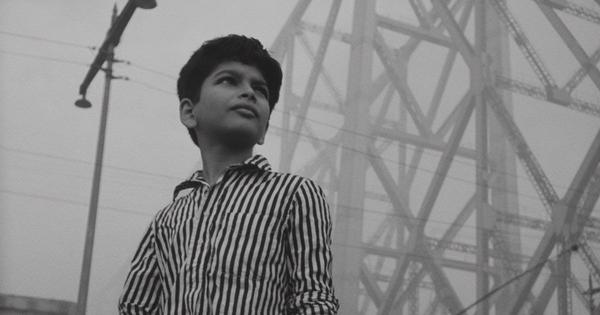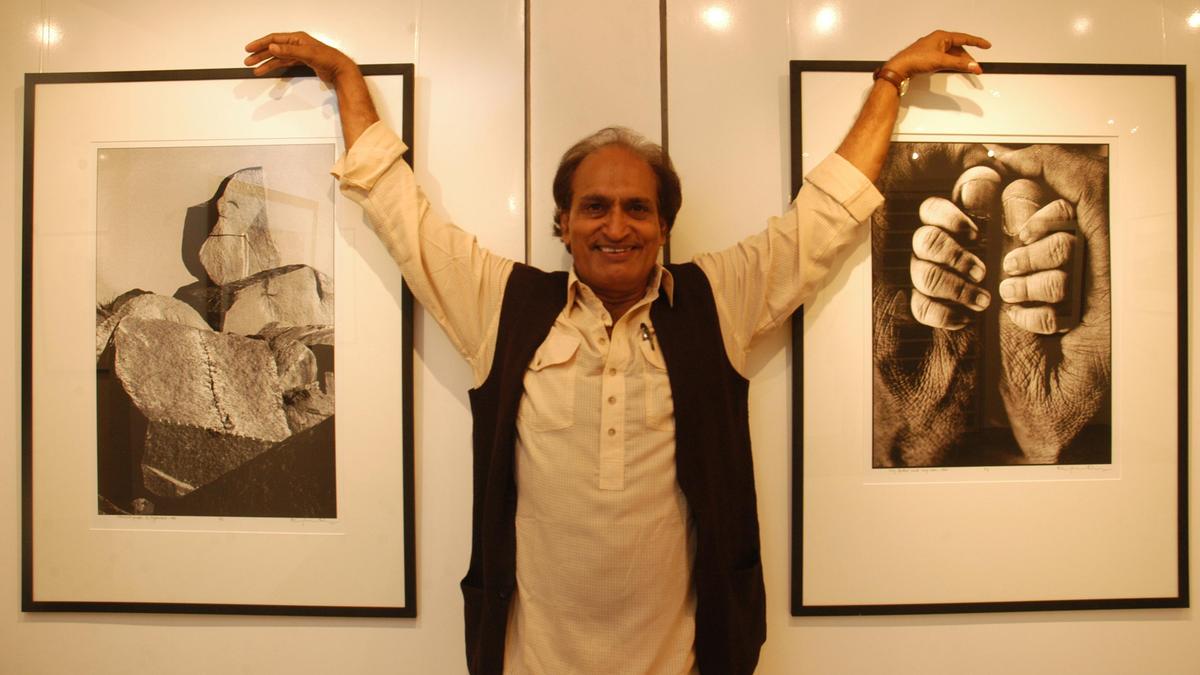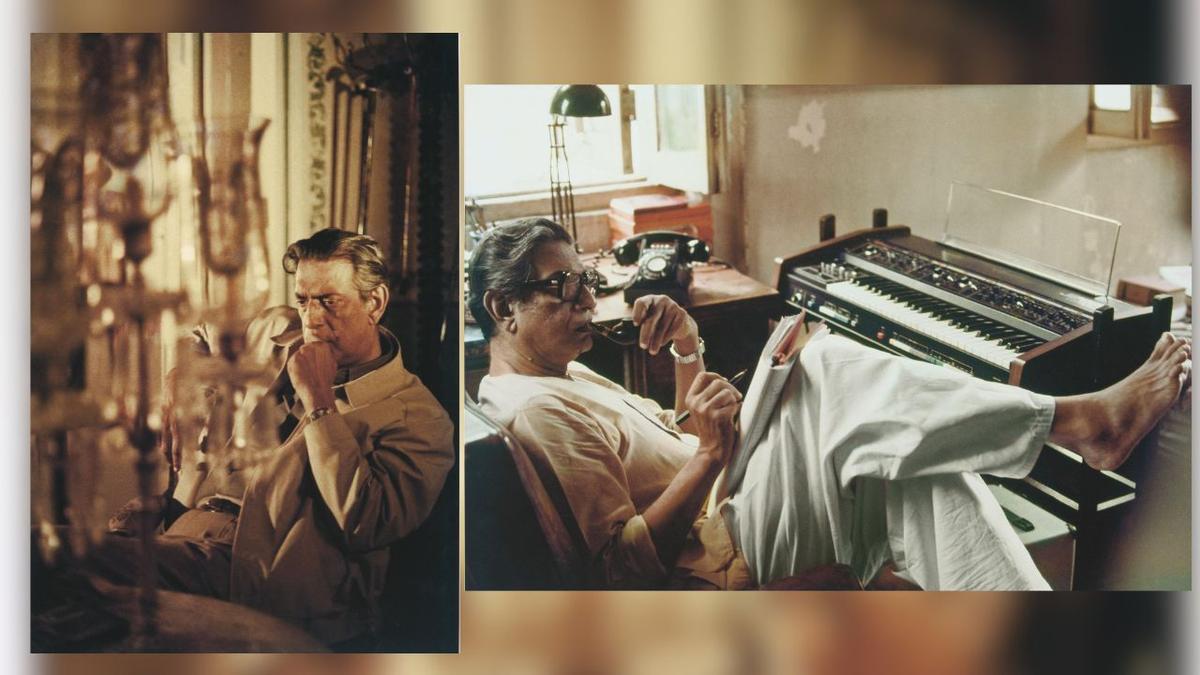
The photography of Nemai Ghosh, once an actor in Little Theatre, the theatre company of actor-director Utpal Dutt, and best known for his photo-biography of auteur Satyajit Ray, captured over 23 years, has busy, layered frames. Yet, as in the best of still photography, the focus is always on eloquent moments. Take one image from Faces and Facets: Satyajit Ray in Colour, an ongoing exhibition of 126 colour photos taken by him of Ray at work between 1970 and 1991, also the subject of DAG’s eponymous book released in 2020.In one photo clicked on the sets of Ghare Baire (1984), Ray is directing lead actress Swatilekha Sengupta in front of a mirror. The actress seems to be taking in instructions as the director himself, looking down, fingers placed against the mirror, is focussed intensely on a gesture or detail that he wants in the frame. Ghosh’s lens is as focussed on Ray’s face and hands as Ray’s is on how to perfect that scene or frame.Ghare Baire (1983)
| Photo Credit:
Courtesy DAG
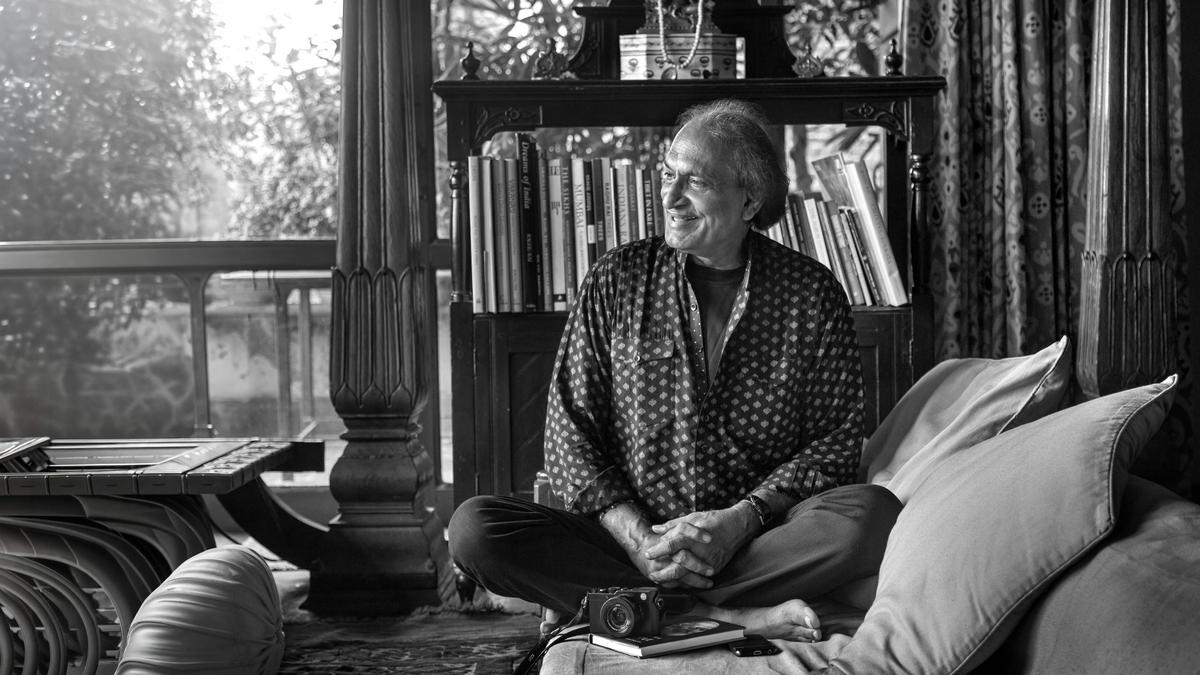
Ghosh was Ray’s friend-cum-biographer, destined to a life in photography after a friend gave him a Canonet QL17 fixed-lens camera found left behind in a taxi. He started using it to chronicle Calcutta, among other things. A few years later, in 1968, Ray’s art director Bansi Chandragupta asked him to join the production unit as a still photographer.The exhibition, part of DAG’s collection of Ghosh’s images of Ray, celebrates the photographer’s legacy — and, of course, his subject, the most well-known Indian filmmaker around the world both critically and historically, and recently a subject of an Instagram debate around the quality of Indian cinema audiences. But more importantly for the Artificial Intelligence (AI) age, the show offers the meditative and nuanced experience of looking at analogue photography. Analogue is a lifestyle movement today, and wellness aspiration. And photography as an art form is at the heart of it.Influencer from a pre-influencer eraRay doesn’t go out of fashion. Recently, an archival clip of Ray defending his anti-religious dogma stance in his 1960 film Devi became viral. In the interview, in his cut-glass English, Ray says: Indian audiences are “fairly backward” and “unsophisticated”. That quickly turned into a polarising debate about what is good cinema. Bollywood and populism supremacists even used director Aditya Dhar’s words to argue that Ray, who would have been 105 this year, was elitist and disconnected from mass audiences. Defending his superhit Dhurandhar (2025) against those who found it propagandist, Dhar had said, “The Indian audience is actually very very smart.”But what’s striking about this show is the work behind the fixed-lens camera of Ghosh.Ghare Baire (1983)