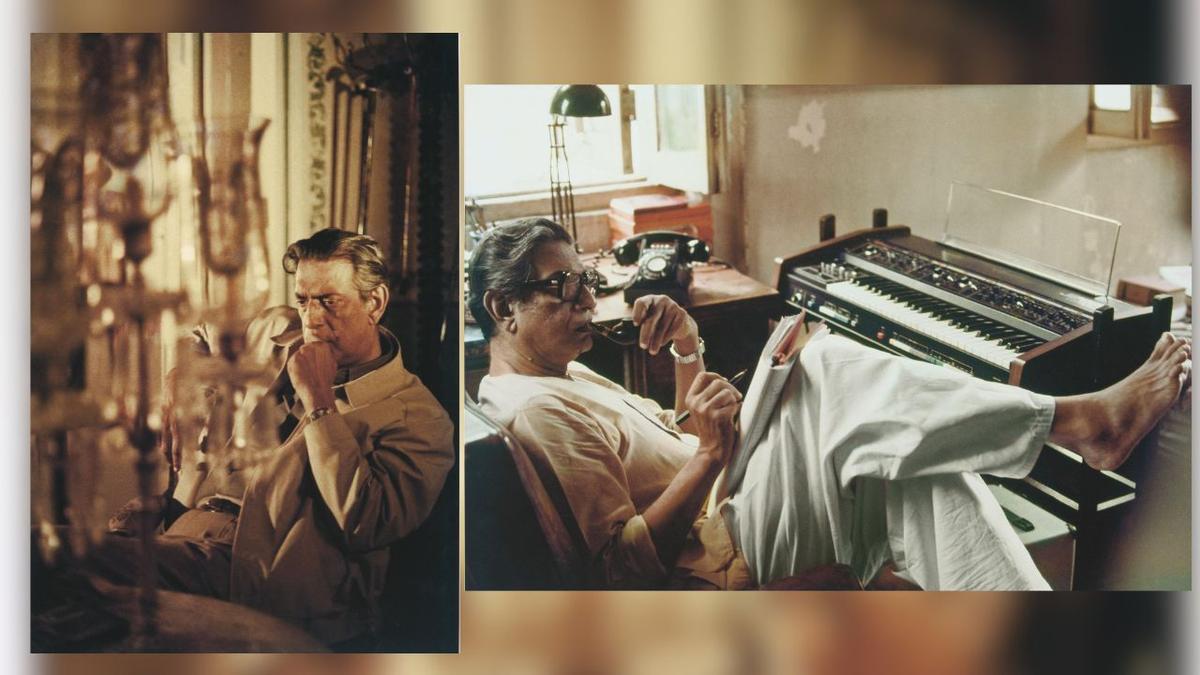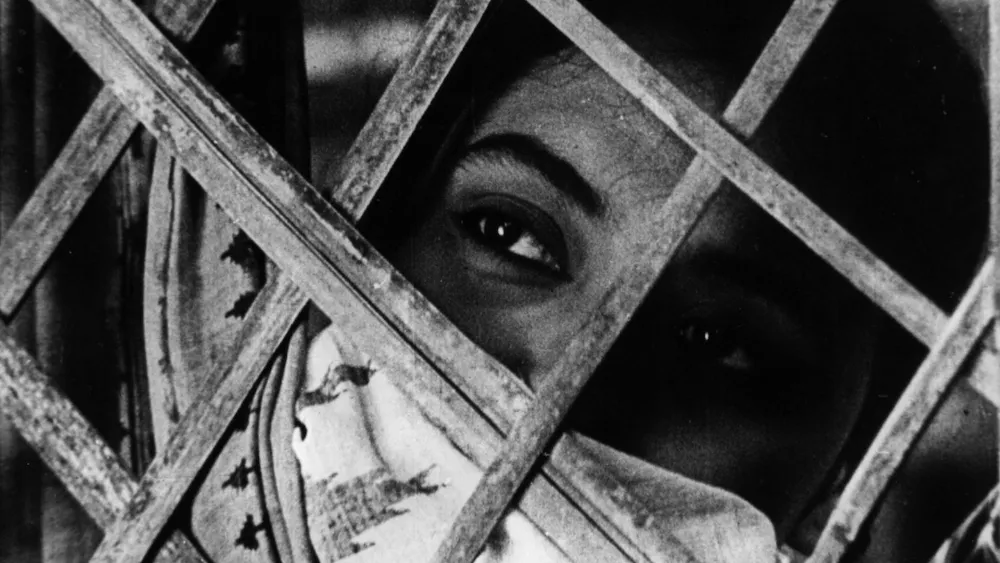
For generations, Satyajit Ray has lived in public memory in shades of black-and-white. The celebrated filmmaker appears in iconic portraits with his trademark spectacles, directing actors on set, smoking thoughtfully between takes or gazing into the distance with characteristic intensity. These images, etched in India’s cultural imagination, seem inseparable from the man himself.
Nemai became Ray’s shadow, capturing every moment
| Photo Credit:
Courtesy: DAG
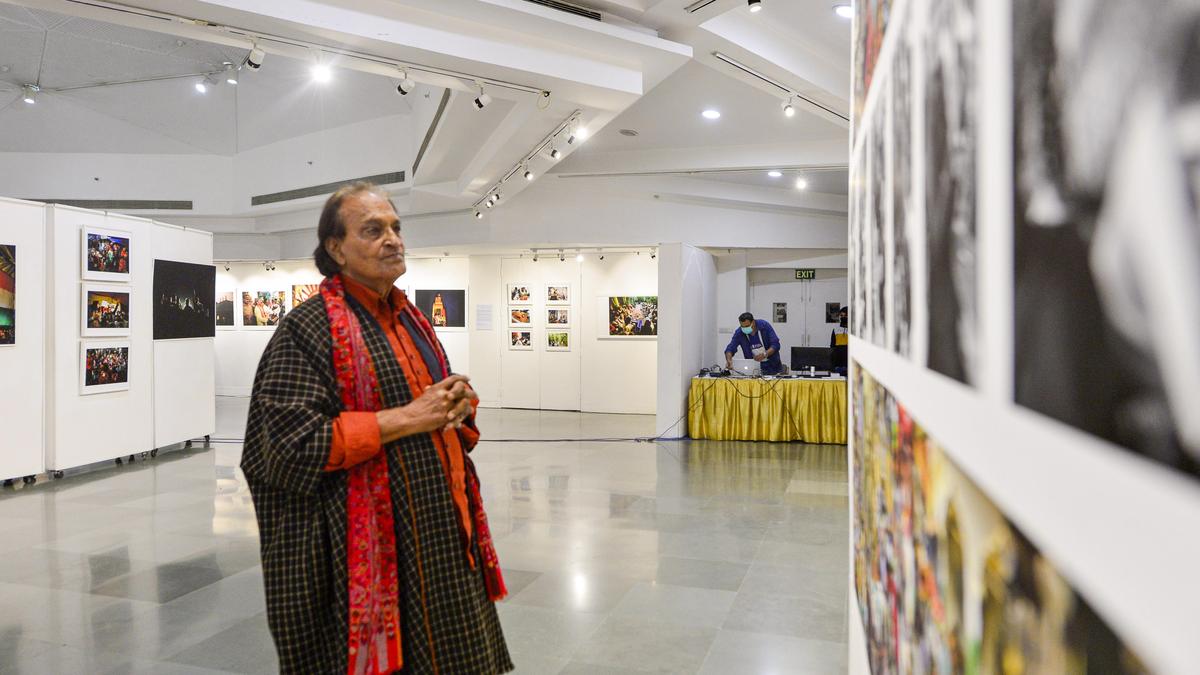
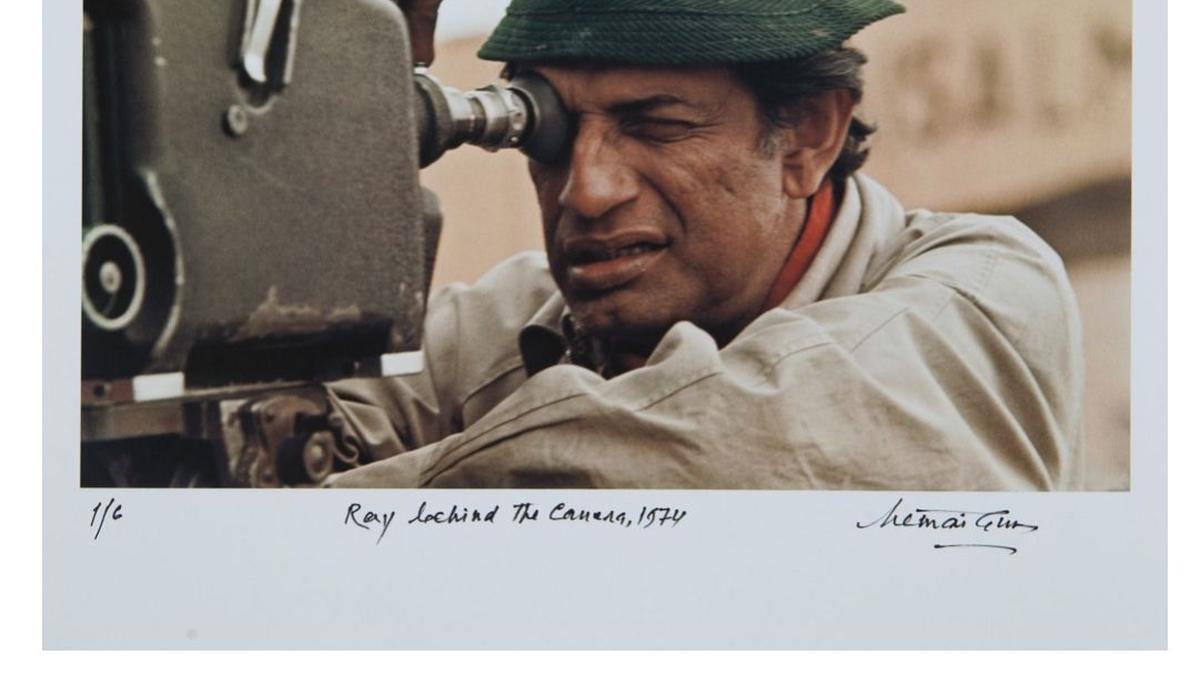
Yet, a remarkable exhibition at Delhi Art Gallery (DAG) is challenging that familiar image. Faces and Facets; Satyajit Ray in Color, on view till July 4, presents the filmmaker through a series of rarely-seen colour photographs by Nemai Ghosh, who documented Ray’s life and work for over two decades. The exhibition offers something rare: a chance to encounter one of the world’s most-studied filmmakers anew.The exhibition is a collection of photographs by Ghosh, Ray’s trusted collaborator and principal still photographer. Beginning with Goopy Gyne Bagha Byne in 1968, Nemai documented the filmmaker with rare access, eventually creating an archive of thousands of images. The display at DAG draws from that vast groundswell revealing not only the celebrated filmmaker; but also the man behind the lens.Interestingly, photography was not Ghosh’s first calling. As a young man, he was immersed in theatre, performing with Utpal Dutt’s Little Theatre in Calcutta and starring in the landmark 1959 production Angar. His entry into photography was accidental. A friend who owed him ₹240 showed him a Canonette QL-16 camera that had been left behind in a taxi. Ghosh immediately asked for it in lieu of repayment — an act that altered the course of his life.On a trip to Burdwan with friends, he carried the camera to the set of Ray’s Goopy Gyne Bagha Byne and took several photographs with no particular intention. Seeing them, art director Bansi Chandragupta took Ghosh to Ray, who was impressed by his photographic skills and invited him to join his unit in 1968 — beginning a collaboration that lasted until the filmmaker’s passing in 1992.Over the years, Ghosh distilled his extraordinary archive into a series of books including Satyajit Ray at 70 (1991, featuring a foreword by Henri Cartier-Bresson); Satyajit Ray: A Vision of Cinema (2005, co-authored with Andrew Robinson); Manik-Da: Memories of Satyajit Ray (2011); Satyajit Ray and Beyond (2013); and Faces and Facets: Ray in Color (2020). Beyond Ray, he also documented the streets, people and the evolving character of Calcutta with remarkable sensitivity, while also undertaking significant photographic studies of indigenous communities across India.