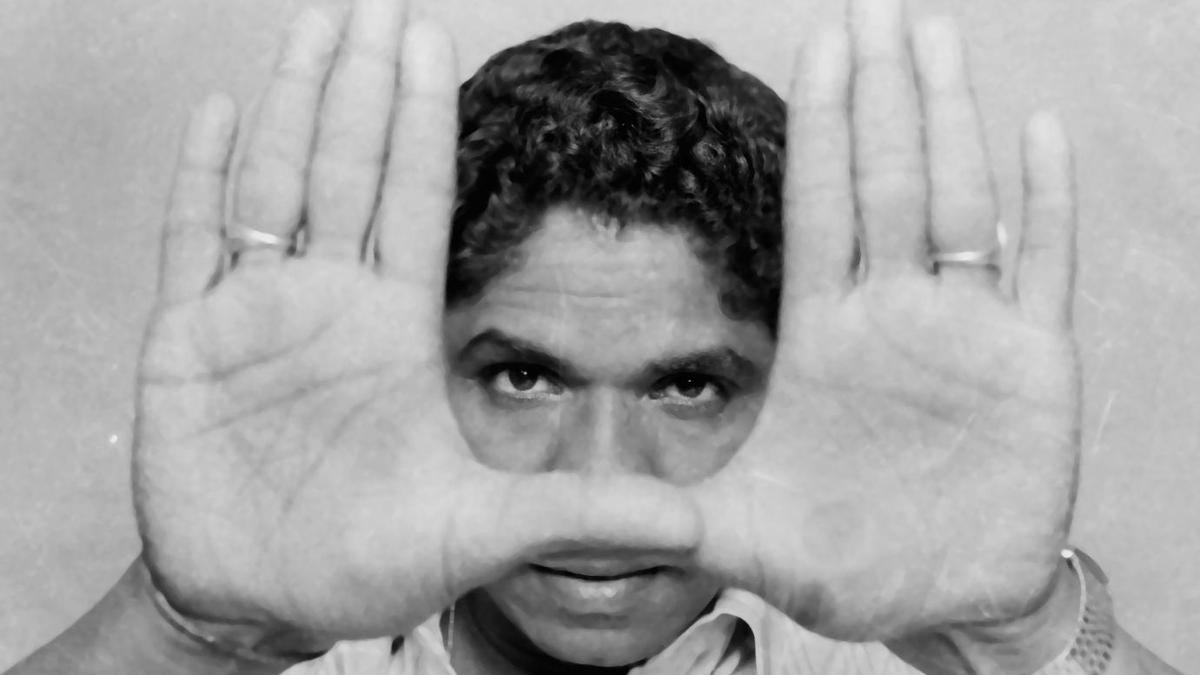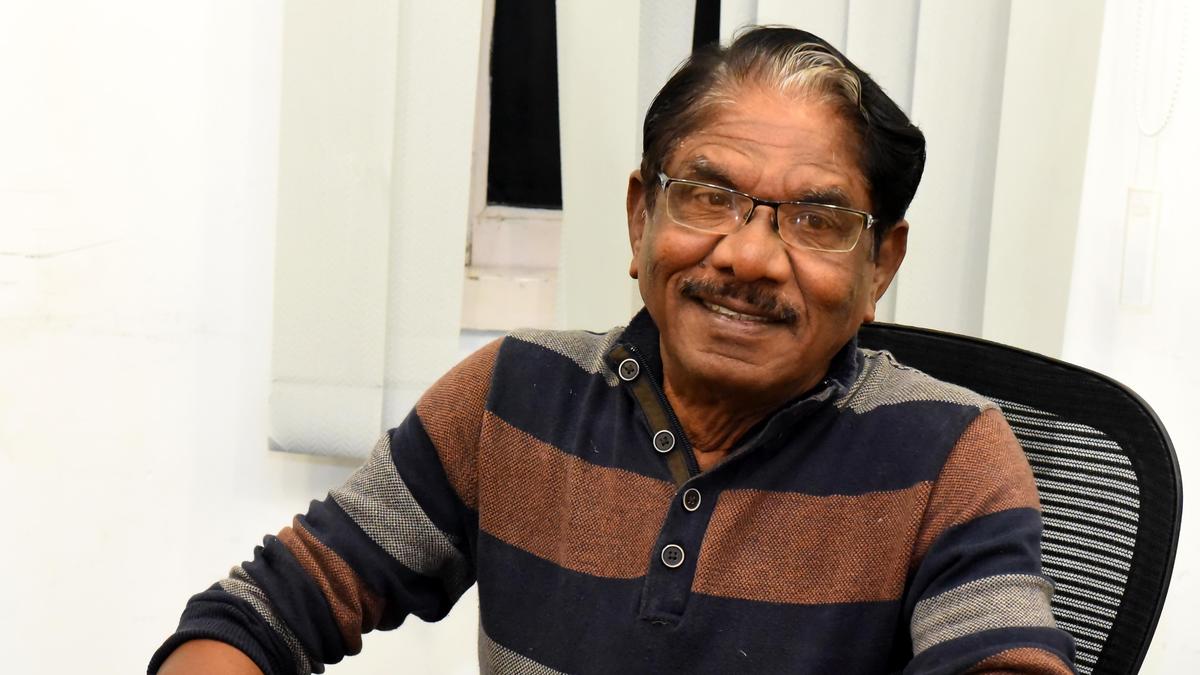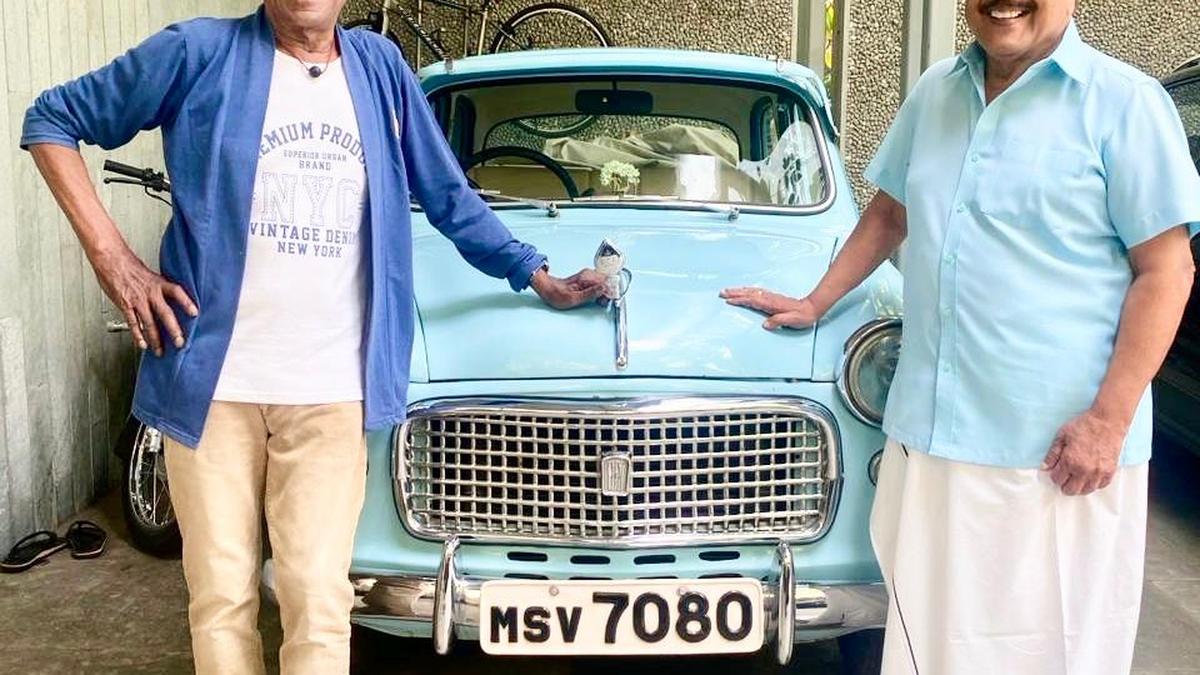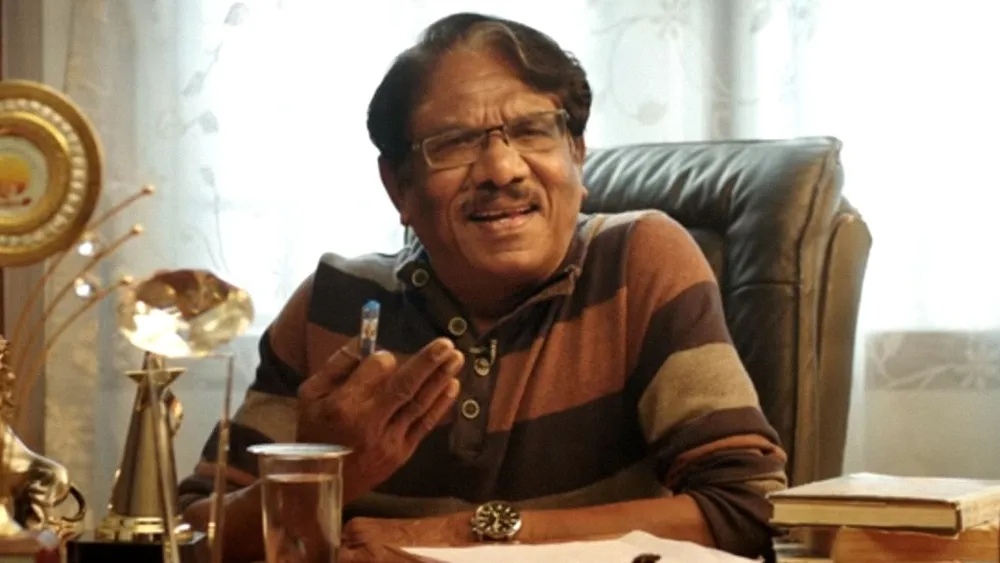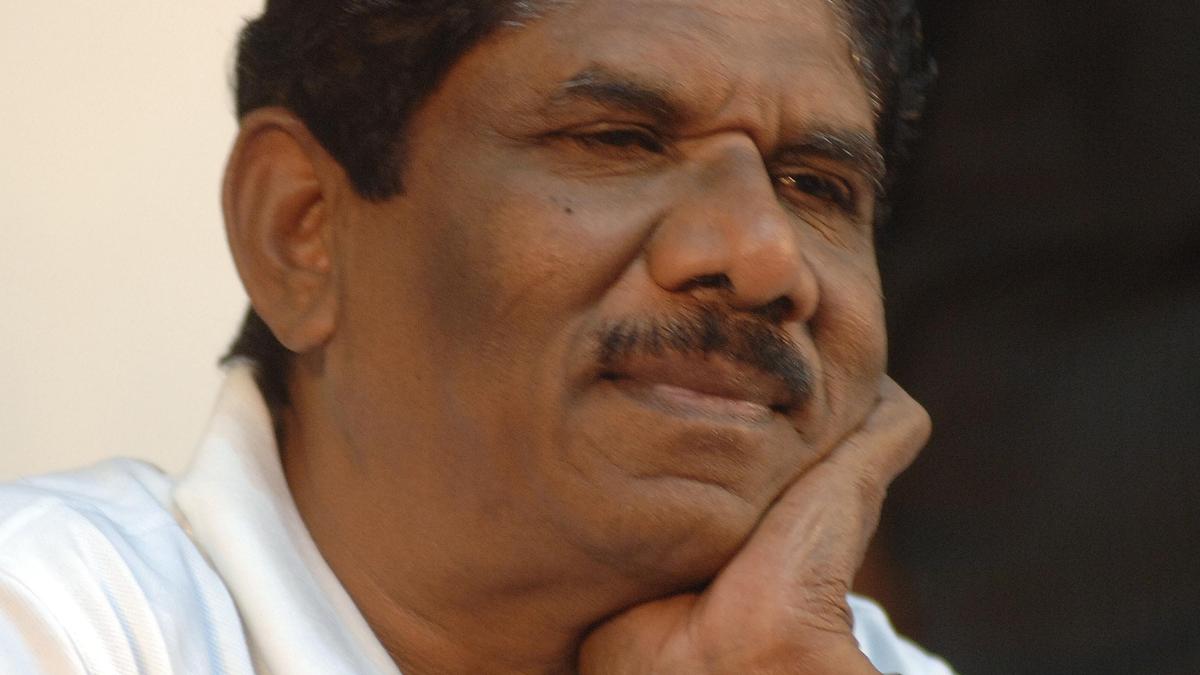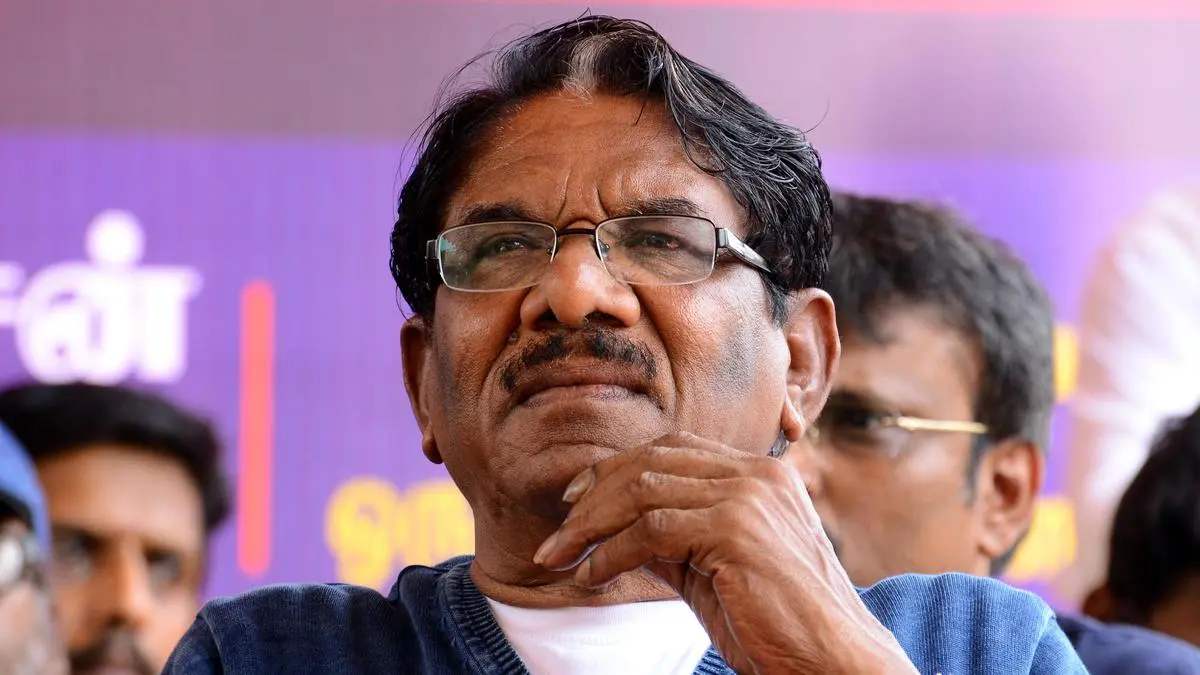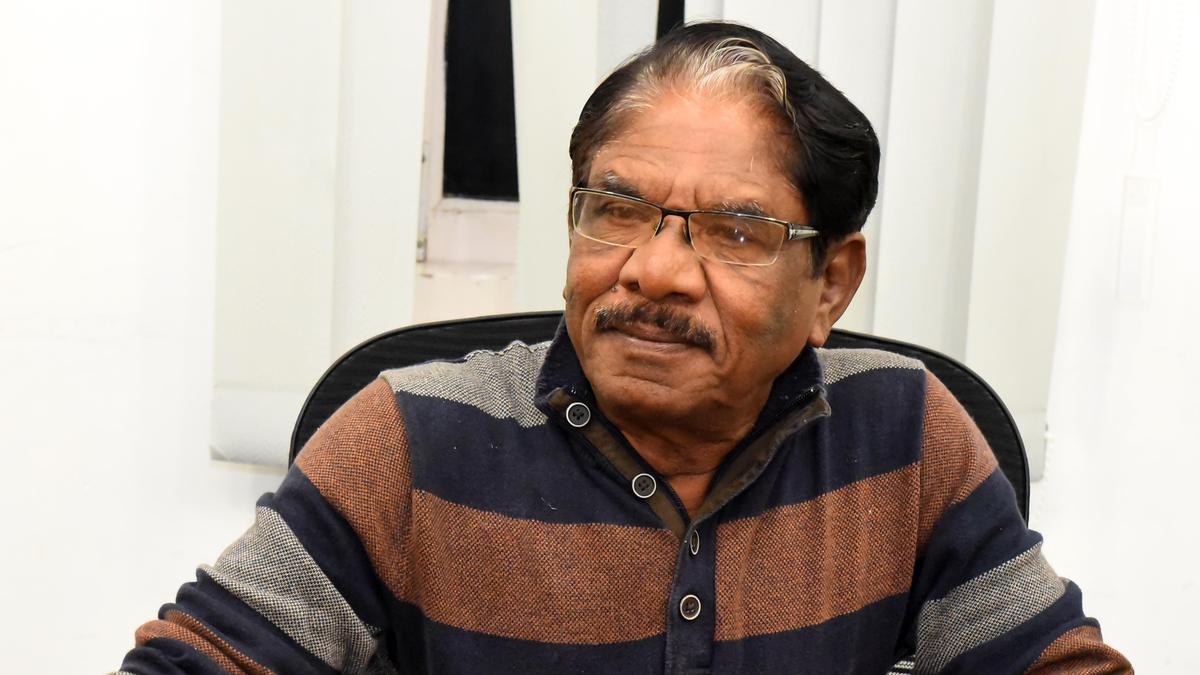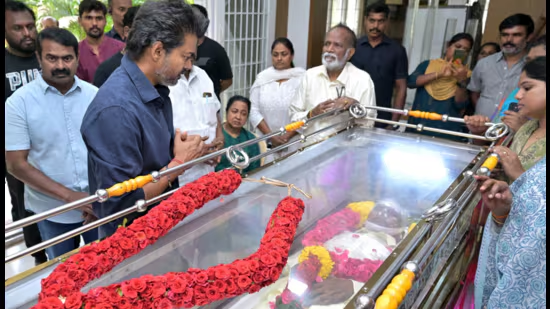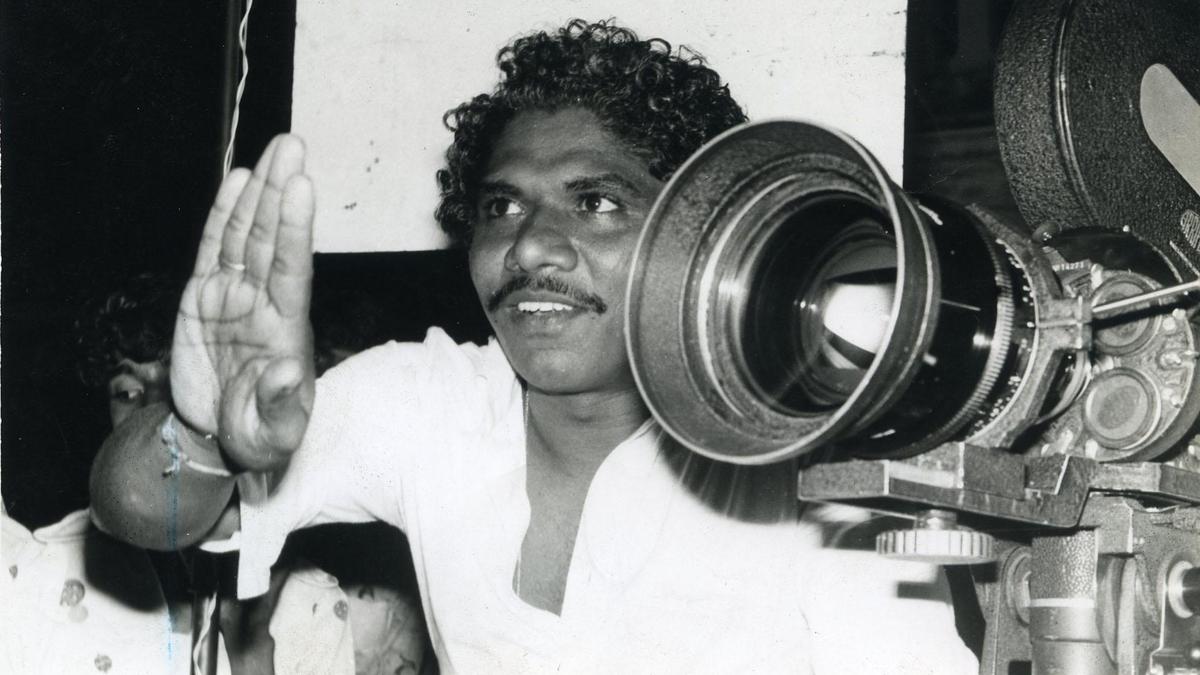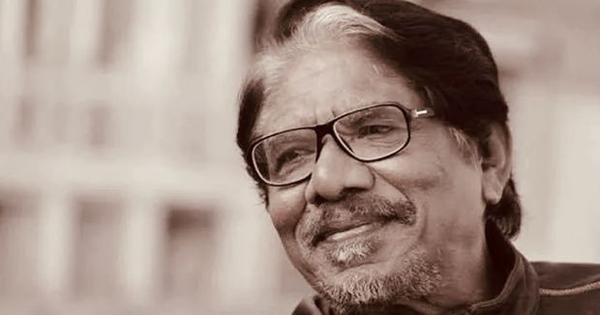
The poet whose name Bharathiraja took for his own once sang of finding his dark god everywhere the world had taught itself not to look – Subramania Bharati, in “Nandalala,” discovering Krishna's colour in the black sheen of a crow's wing, his touch in the scald of fire. And 2,000 years before Bharati, a singer of the Kurunthokai, remembered only by the eponym his own image earned him – Sembula Peyaneerar, “the poet of red earth and pouring rain” – had already given Tamil its founding image of love: two hearts mingled past all parting, as red earth and pouring rain.Between those two poets – the ancient voice of the red soil and the modern voice of the disregarded – runs the entire cinema of Bharathiraja. On the morning of June 10, 2026, at his home in Chennai, after a prolonged illness, that cinema came to rest. He was eighty-four.“Poongatru Thirumbuma” – will the soft breeze turn back this way? – his most haunted song had asked. On Wednesday, Tamil Nadu learned the answer of all elegies: the breeze does not return; only the fragrance stays.The Tamil Film Producers Council, which he once led as president, confirmed the news; the state announced full honours; an industry that has spent half a century arguing with him, imitating him and being remade by him fell, for a moment, into the sort of silence his own films knew how to hold, even if momentarily between the beats of his great collaborator, Ilaiyaraaja. The rain has gone back into the sky; the red earth keeps what it was given.Bharathiraja is survived by his wife, Chandraleela, and his daughter, Janani. His son, the actor Manoj Bharathiraja, predeceased him in 2025, a grief from which those close to the director say he never fully recovered.A filmmaker’s obituary is usually a ledger of titles and awards, and Bharathiraja's ledger is formidable: more than 40 films spanning five decades, six National Film Awards, the Padma Shri, and the honorific by which Tamil Nadu knew him – Iyakkunar Imayam, the Himalaya of directors. But to tally Bharathiraja is to miss him.What died in Chennai wasn’t simply a director but a cartography: a way of locating Tamil cinema in the Tamil earth. Before him, the village existed in Tamil film as a painted flat, a studio pastoral through which stars in unsoiled veshtis strolled toward the interval. After him – after a single film in 1977 – the village became the screen’s native country, and the studio became the exile.The Soil as SignatureHe was born Chinnasamy on July 17, 1941, in Theni Allinagaram, in what was then the Madurai district of the Madras Presidency. This fact is worth dwelling on because Bharathiraja is among the rare auteurs whose biography and aesthetic are the same sentence.The dry southern districts, with their palmyra silhouettes, their red and black soil, their tank bunds and threshing floors, were not locations he discovered. They were the body into which he was born.His apprenticeship took him through the workshops of Puttanna Kanagal, P Pullaiah, M Krishnan Nair, Avinasi Mani and A Jagannathan. From Kanagal, in particular, Bharathiraja absorbed the conviction that melodrama and psychological acuity were not enemies. But the decisive education preceded all of this. It was the education of having stood in a field at noon and known what the light does to a face that works under it.This is why it is right – and the burden of this obituary – to read Bharathiraja as the very symbol of the rural in Tamil cinema, despite the inconvenient brilliance of his urban detours. Sigappu Rojakkal (1978), his chilling psychosexual study of a misogynist killer prowling a modern Madras, remains one of Tamil cinema’s most formally daring thrillers. Tik Tik Tik (1981) extended that urban noir idiom.These films succeeded, and they matter. Yet they read, in the long arc of his career, as proofs of range rather than declarations of identity – a poet demonstrating that he can also write prose.The city in Bharathiraja’s cinema is a place of pathology, anonymity and predation; the village, even at its cruelest, is a place of relation. His camera in the city observes; his camera in the village belongs.When critics speak of the “Bharathiraja village,” they do not mean a setting. They mean a dramaturgy: the community as chorus and tribunal, the landscape as moral witness, rumour as weather, caste as gravity, and desire as the seed that the soil will either nourish or bury. The fields, the dusty roads, the village square and the sea in his cinema were never backdrops; they were characters – sometimes quiet observers, sometimes accusers, sometimes the only mourners left.Bharathiraja changed, too, the very faces that the screen permitted. Against an industry wedded to studio pallor, he photographed dark or brown-skinned heroines and simple heroes, men without pancake and women without porcelain, and insisted that the Tamil sun be allowed to show its work. It was an aesthetic decision that was also unmistakably political: a quiet repatriation of beauty.The Trendsetter After SridharTamil cinema has had many successful directors but very few genuine trendsetters, filmmakers after whom the medium’s default settings change. CV Sridhar was one.In the late 1950s and 1960s, Sridhar gave Tamil film a new romantic idiom, a lightness of touch and an urbane elegance, shooting Nenjil Or Aalayam (1962) in a matter of weeks on a single hospital set, and launching newcomers with the confidence of a man who trusted his own grammar more than the star system, for instance, romance juxtaposed with modernity in studio spaces and actual locales: Gemini Ganesan and the bi-cycler Saroja Devi in Kalyana Parisu (1959), and Ravichandran and Kanchana in Kadhalikka Neramillai (1964).CV Sridhar. Courtesy Stills Gnanam.If Sridhar was the first true trendsetter in this strict sense – one who alters the industry’sreflexes and replenishes its bloodstream with new ideas and new people – then Bharathiraja was the second, and arguably the more total. Sridhar changed how Tamil cinema loved; Bharathiraja changed where it lived, whom it photographed, and who got to make it.The roll call of careers Bharathiraja began reads like a census of two generations in Tamil cinema. Among the leads he introduced were Karthik and Radha, both debuting in Alaigal Oivathillai (1981); Radhika, in Kizhakke Pogum Rail (1978); Revathi, in Mann Vasanai (1983); Rati Agnihotri, in Puthiya Vaarpugal (1979); Rekha, in Kadalora Kavithigal (1986), and Sukanya, in Puthu Nellu Puthu Naathu (1991), to name a few. The character-actor bench Bharathiraja assembled – Janagaraj, Vadivukkarasi, Chandrasekhar, Pandiyan (introduced as a hero in Mann Vasanai), Napoleon, Nizhalgal Ravi (whose very screen name bears the title of the Bharathiraja film that made him), Goundamani in an early supporting turn – became the connective tissue of Tamil cinema for decades. And Bharathiraja was the director with the wit to look at Sathyaraj, then typecast as a swaggering villain, and see a romantic lead capable of startling vulnerability.More remarkable still was his habit, almost an experimental method, of pushing his own crew in front of the camera. K Bhagyaraj came to him as a writing assistant and left as a star and a major director, given his first lead in Puthiya Vaarpugal. Manivannan, who joined his unit as an assistant and story-writer on Nizhalgal (1980), became one of Tamil cinema’s most prolific director-actors.Manobala, Ponvannan and Thiagarajan travelled the same corridor from clapboard to credit. Behind the camera, Bharathiraja’s long partnership with acclaimed cinematographers PS Nivas and B Kannan – whom the industry called “Bharathiraja’s eyes” – trained a way of seeing that an entire school of rural filmmakers, from the 1980s to the present resurgence of southern-soil cinema, has inherited.CV Sridhar opened a door; Bharathiraja dismantled the wall. That is the difference between a stylist and a trendsetter in the true sense of the term, and Bharathiraja was the truest Tamil cinema has known.16 Vayathinile (1977): The Threshold Film16 Vayathinile was conceived, by Bharathiraja’s own account, as a black-and-white art film to be made with the assistance of the National Film Development Corporation. It emerged instead as a colour film and a commercial triumph, and in that accident lies its historical meaning.
Bharathiraja (1941-2026): The earth remembers its own
Every dark-skinned lead photographed without apology, every village rendered as a moral organism rather than a postcard walks a path cut by Bharathiraja.
3,800 words~17 min read