Nigeria risks being locked out of a rapidly growing pool of global institutional capital worth more than $120 trillion unless companies accelerate compliance with emerging sustainability disclosure standards, according to a new report by advisory and assurance firm A4S Limited.
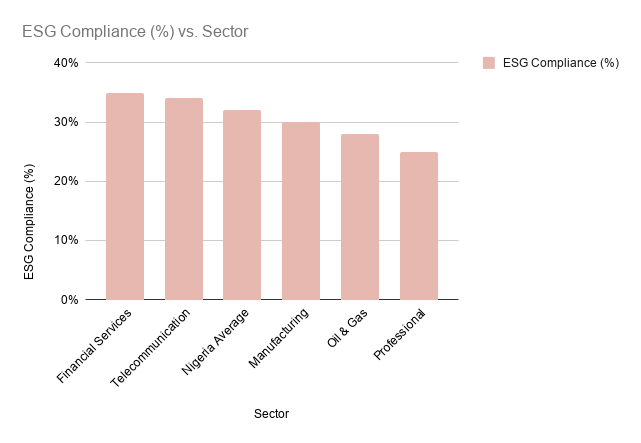
The firm’s 2026 Resilience Report reveals that across Nigeria’s sustainability performance and corporate disclosure readiness, fewer than eight percent of Nigerian companies currently possess disclosure frameworks aligned with IFRS S1 and IFRS S2 sustainability reporting standards.
The report argues that this disclosure deficit is emerging as a significant economic vulnerability, particularly as the Securities and Exchange Commission (SEC) and the Financial Reporting Council (FRC) prepare to implement mandatory sustainability reporting requirements between 2026 and 2027.
According to A4S, the shift marks a transition from voluntary sustainability reporting to an era in which environmental, social, and governance (ESG) disclosures increasingly influence access to capital, investor confidence, and corporate valuations.
“The question Nigerian boards must now answer is not whether they are doing sustainable things, it is whether they can prove it, to a standard that survives third-party scrutiny and capital market due diligence,” said Olaoluwa Agboola, research director, research and insights at A4S Limited.