Nigeria can no longer rely on foreign capital alone to finance its development objectives as global investment flows become more selective and geopolitical tensions reshape trade and capital allocation, according to Boston Consulting Group (BCG).
Speaking at the firm’s 10th anniversary forum in Lagos, Tolu Aina, partner at BCG, said countries that succeed in the next phase of global economic growth will be those able to mobilise domestic savings, strengthen local capital markets and finance a larger share of their investment needs internally.
The remarks come as Nigeria competes for capital to finance infrastructure, industrial expansion and job creation, even as global investment flows become more selective and countries adjust to shifting geopolitical and trade dynamics.
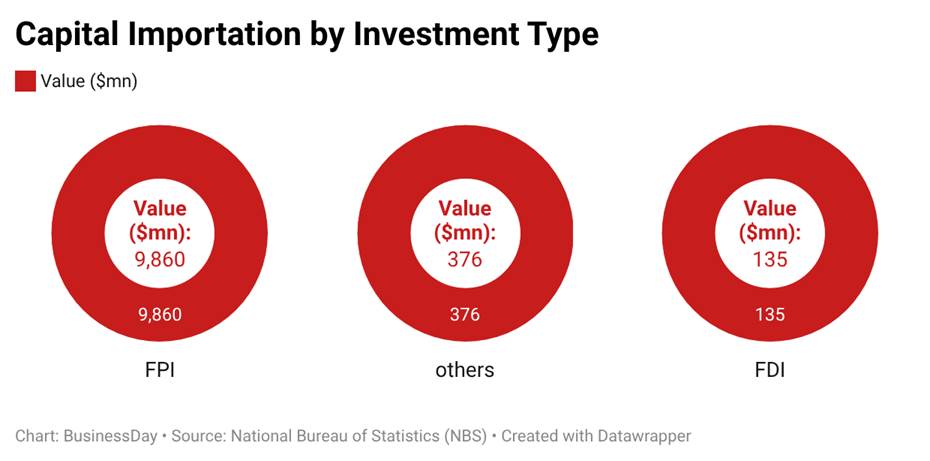
Despite this backdrop, Nigeria recorded a sharp increase in capital importation in the first quarter of 2026, suggesting a short-term rebound in investor appetite.
Data from the National Bureau of Statistics show capital importation rose to $10.37 billion in the first quarter of 2026, representing an increase of 83.83 percent from $5.64 billion recorded in the corresponding period of 2025.