Nigeria attracted $10.37 billion in foreign capital during the first quarter of 2026, almost double the $5.64 billion recorded a year earlier and one of the strongest quarterly performances in recent history. At first glance, the numbers appear to validate the government’s economic reforms.
After two years of currency liberalisation, fuel-subsidy removal and aggressive monetary tightening, foreign investors are returning. But they are not returning in the way policymakers would ideally want.
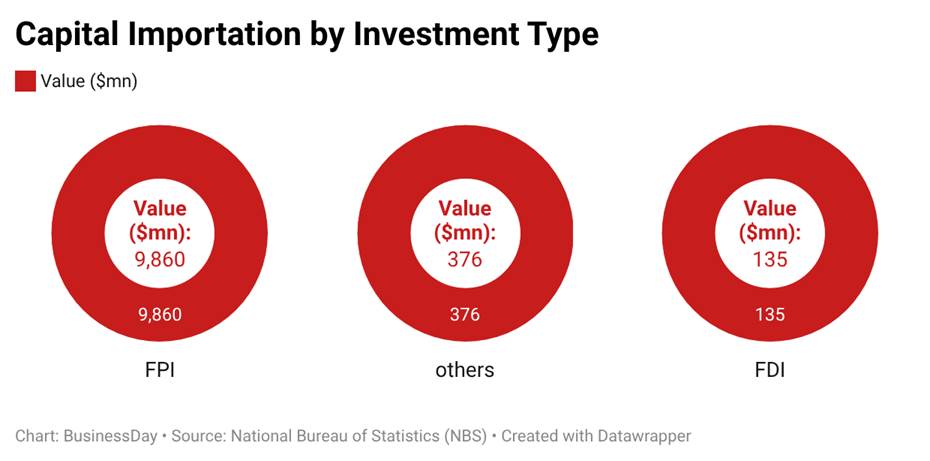
Nearly 95 percent of total capital importation came as foreign portfolio investment, according to National Bureau of Statistics data. Foreign direct investment accounted for just $135.08 million, representing barely 1.3 percent of total inflows. That distinction may be the most important story hidden beneath the headline numbers.
Muda Yusuf, chief executive officer of the Centre for the Promotion of Private Enterprise (CPPE), has consistently argued that while portfolio inflows can strengthen liquidity and improve investor confidence, sustainable economic transformation ultimately depends on productive investment.
For a country with a population exceeding 220 million people and growing by roughly five million annually, that distinction is critical. Nigeria does not simply need capital.