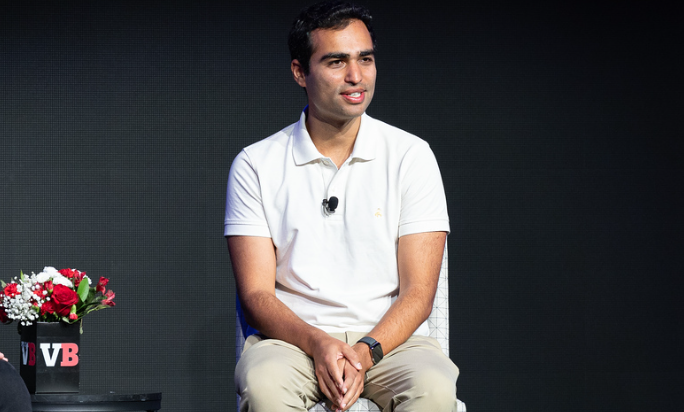
Shourya Vir Jain is CEO at RamAIn, which enables automating any UI task with natural language.gettyOne number kept coming up in conversations with operations leaders during my time at McKinsey: 45% of companies deal with their bots breaking at least once a week. Not companies that are falling behind. In many cases, these are the same large organizations that made RPA a top investment priority years ago.Most leaders reach for a technical explanation. The actual failure is strategic—and it comes down to two specific problems that most organizations have never properly separated.First, RPA only works when inputs are perfectly clean and follow rigid rules, which is almost never true in enterprise environments. Second, and more importantly, the people building and maintaining these automations are developers, not the people who actually run the processes being automated. When something breaks (and it always does), the analyst files a ticket, the developer tries to reconstruct business logic he never understood and the same cycle starts again two weeks later.The Judgment Tax Nobody Accounts ForI call this the judgment tax. It is what happens when your most skilled operators spend their time as a human safety net, catching errors and handling exceptions because the automation is too brittle to handle real-world variation. Because the people who understand the nuances of the work are not allowed to touch the automation itself, every small deviation becomes a bottleneck. Companies that went deep on RPA a decade ago built a significant maintenance liability they are still paying down today.Forrester Research found that 79% of organizations say their RPA programs still require advanced programming skills just to keep things running. Deloitte's Intelligent Automation Survey points to process fragmentation and IT bottlenecks as the biggest barriers to scaling these tools. These are not two separate problems. Both point to the same ownership gap that was built into the original model.The Shift Isn't AI—It's OwnershipWhat has changed is who gets to build and fix the automation.UI agents—AI that can interact with screens, forms and applications the way a human does—address the first issue by handling messy inputs that rigid scripts cannot. But the more significant shift is the second one: They put the automation in the hands of the people who actually understand the work. A compliance lead can now configure an agent using plain language, in an afternoon, without filing a single IT ticket. That sounds like a minor operational improvement. In practice, it fundamentally changes how a business functions.When Process Experts Control The AutomationWe saw this at a mid-sized mortgage bank. The company used UI agents to fill out guideline forms—a task RPA could not handle reliably because the screen layouts changed too often for a static script to keep up. A team of 50 people had been doing this manually, which took three to five days per cycle. Once agents handled the first pass, that time dropped to a few hours. But the speed gain was not the most significant part. The operations team—the people who understood which form variations mattered and when a human needed to step in—was now the one tuning the agent directly. The gap between the people with the knowledge and the people with the automation was finally closed.McKinsey Global Institute estimates that current technology could automate roughly 57% of work hours in the U.S., and it attributes 44% of that specifically to UI-layer interactions. The reason that number is as high as it is? Agents can handle work requiring judgment and unstructured information, not just the clean rules-based tasks RPA was designed for.Three Places To Find Immediate OpportunitiesIf you are trying to figure out where to start, there are three things worth looking for. In my experience, organizations that apply all three move faster and waste less time on pilots that do not convert.1. Your Failed RPA Projects: These are often the best places to begin, because the business case is already proven and you already know exactly why the rigid rules did not work. A process that was attempted with RPA and abandoned is not a dead end—it is a documented problem statement with a clear successor. Go back to it with fresh tools and different assumptions about who owns the build.2. The Judgment Tax Itself: Find any workflow where your best people are acting as a human bridge between a messy input and a finished output. This tends to appear in a specific pattern: The automation handles 80% of cases well, and a senior analyst handles the other 20% manually, every time. That analyst's involvement is the tax. The real question is not whether you can afford to keep paying it. It is whether you are giving that analyst the tools to eliminate it on their own—not by filing a request with engineering but by training the agent directly and defining how exceptions should be handled, in their own words.3. A combination Of Three Signals: These signals, when they appear together, usually mean you do not need a long pilot to see results: high volume, significant variation in the inputs and an existing human review step at the end of the process. The volume gives you measurable ROI quickly. The variation is exactly what makes agents more effective than scripts. And the existing review step tells you that the business already knows how to define quality—which is the hardest part of building a reliable automation in the first place.Automation Becomes An Operational CapabilityThe organizations moving fastest right now are not necessarily the ones with the most sophisticated tools. They are the ones that have given their analysts and operations managers the ability to build and adjust automations themselves—and have stopped treating automation as an IT project rather than an operational capability.RPA was a model that pushed out the people who actually understood the work. The more productive question for operations leaders today is not which technology to adopt next. It is which process would benefit most from giving ownership back to the people running it—and how quickly you can make that happen.Forbes Technology Council is an invitation-only community for world-class CIOs, CTOs and technology executives. Do I qualify?
The Judgment Tax: How AI Agents Are Rewriting UI Process Automation
Agents can handle work requiring judgment and unstructured information, not just the clean rules-based tasks RPA was designed for.
1,018 words~5 min read