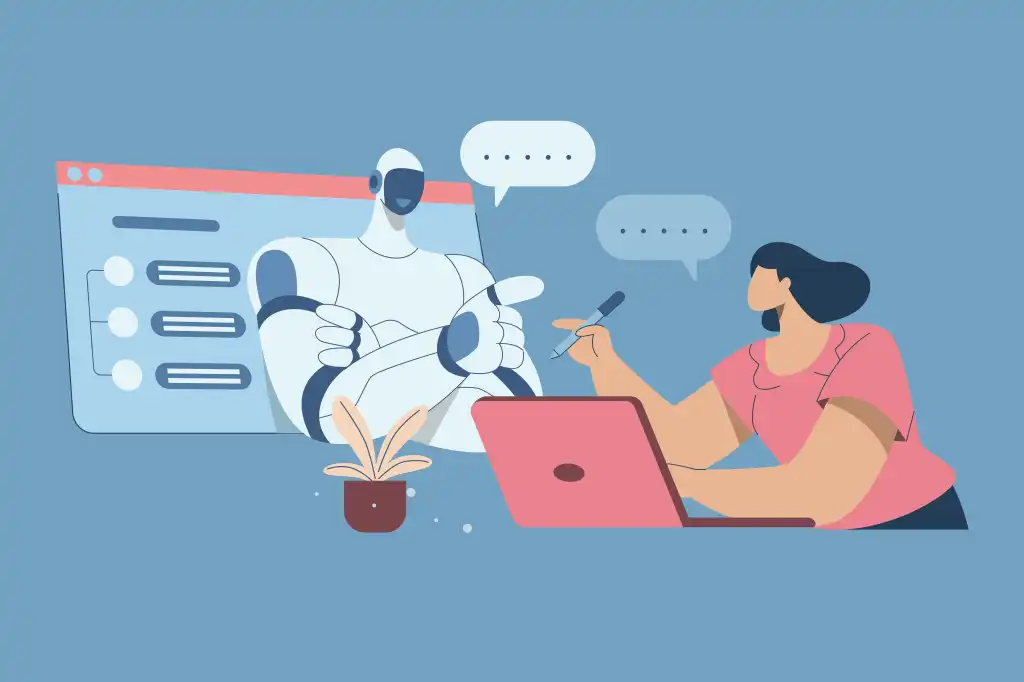
While AI is proliferating across the workplace, it is introducing a new productivity paradox: While the technology makes work feel faster, it actually pushes more burden onto employees to provide context, perform quality checks, then rinse and repeat across numerous disparate tools.
This, according to a new survey of 6,000 full-time digital workers by Glean’s Work AI Institute, results in two emerging behaviors: “botsitting,” all the unrecognized work that goes into making AI actually usable; and “botshitting,” shipping AI-generated work that is unverified, not that well understood, or perhaps not even trustworthy. The survey report was co-authored by experts from Work AI Institute, Emory University, Stanford University, UC Berkeley, UC Santa Barbara, UNC Charlotte, University College London, and University of Notre Dame.
“It’s definitely in many ways a vicious cycle that feeds itself,” said Rebecca Hinds, head of Glean’s research center the Work AI Institute, a research collaborative of AI experts. Enterprises need to begin understanding and addressing the “massive, massive human labor that’s at the core of this.”
Workers are using AI more, getting more frustrated
There’s no doubt that AI is quickly becoming a central teammate in the workplace. Glean’s Work AI Institute found that 87% of digital workers are using AI: It is already automating more than a quarter of their work and saving about 11 hours a week.