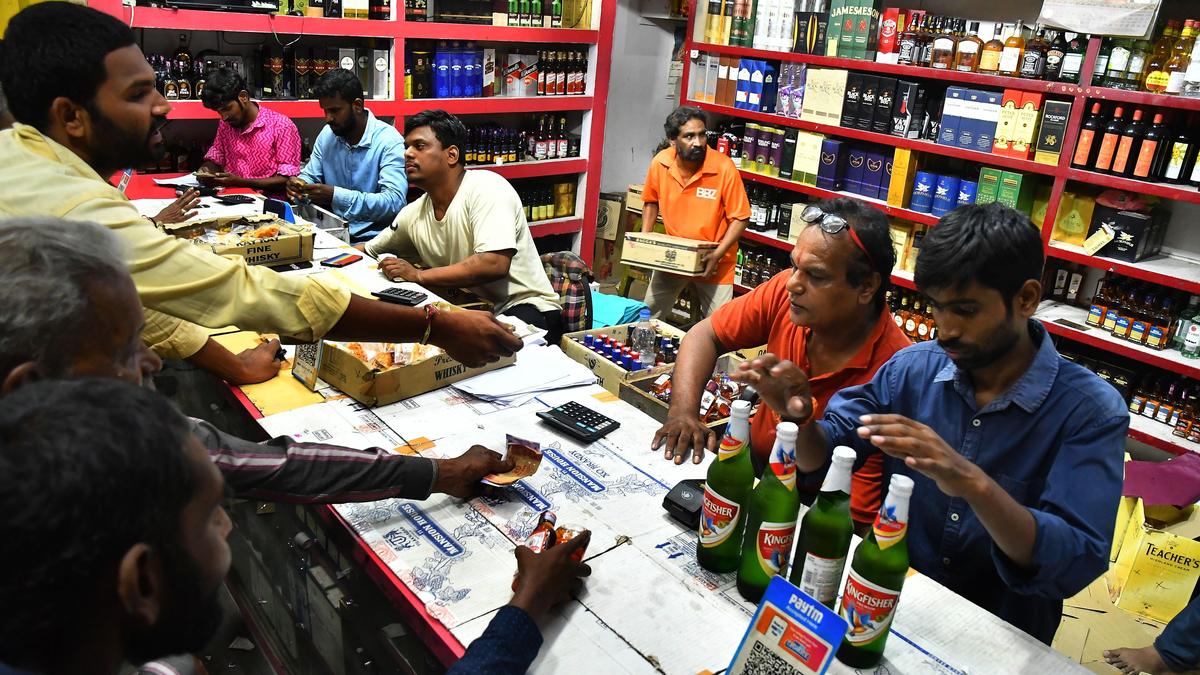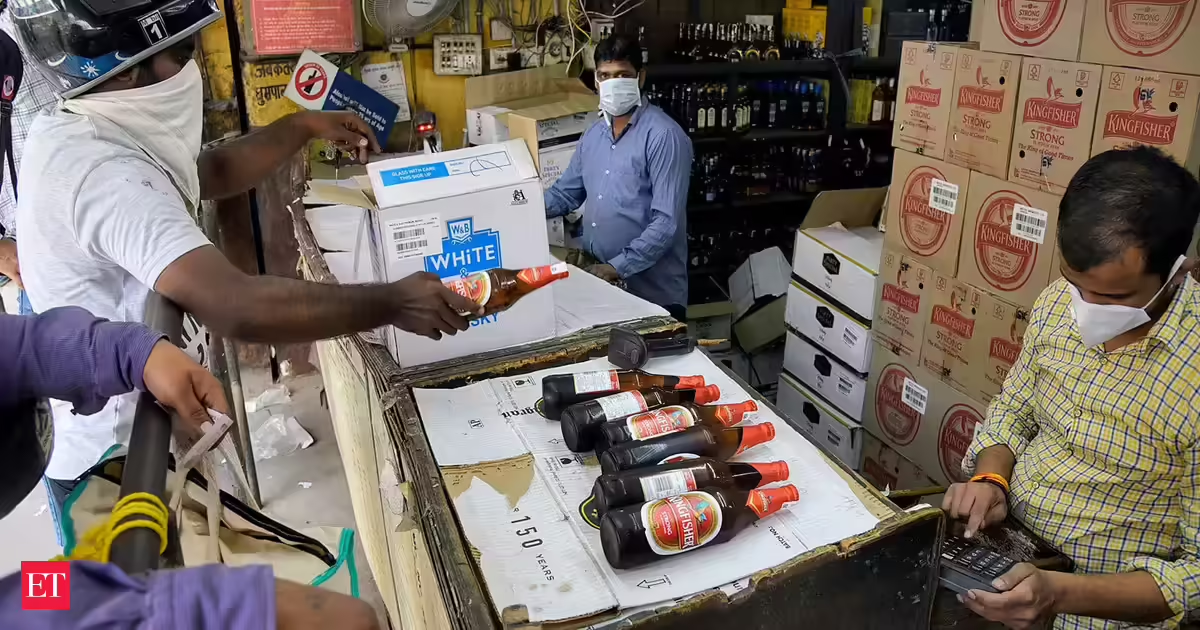
Even as the State Government had begun making payments for recent dues, the old dues of over ₹3,700 crore for the period from December 2025 to April 2026 still remained outstanding.
| Photo Credit:
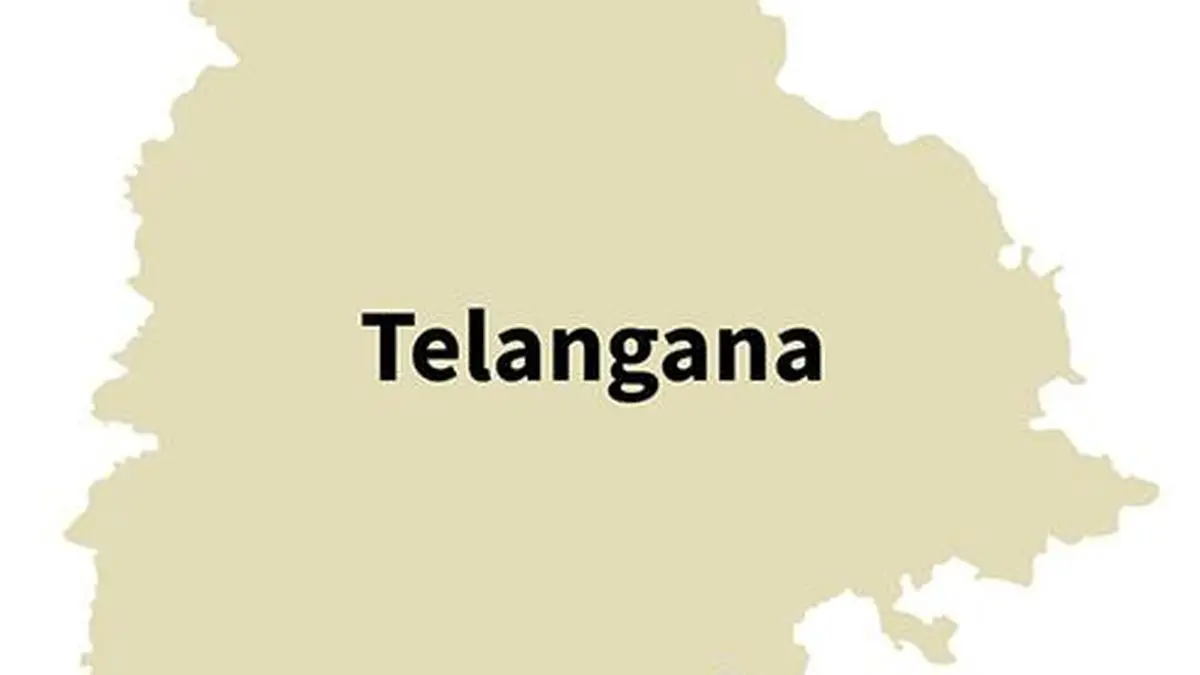
The Brewers Association of India (BAI), the International Spirits and Wines Association of India (ISWAI), and the Confederation of Indian Alcoholic Beverage Companies (CIABC), which collectively account for over 80 percent of the liquor, beer and wines sold in the country, have raised concerns on a new system of Telangana’s decision to start paying for supply of alcoholic beverages after 15 days upon a deduction of 2 percent cash discount.The Government of Telangana has started a new payment mechanism with effect from 1st June 2026, under which payments for alcoholic beverages supplied to Telangana State beverage Corporation (TGBCL) in the month of May 26 have been made after 15 days upon deduction of an early payment cash discount of 2- 2.75 per cent .In a representation sent to the State Government, the industry associations pointed out that while the cash discount was a part of the tender conditions, it was intended to be exercised at the request of suppliers, not the buyer i.e. the Government and was against the standard accounting practices. Even as the State Government had begun making payments for recent dues, the old dues of over ₹3,700 crore for the period from December 2025 to April 2026 still remained outstanding. Settling newer dues before clearing older ones “defies established commercial norms and could expose companies to serious scrutiny from auditors,’’ the associations said. Monthly payoutsThe associations were also concerned that the government might divert its monthly payouts towards clearing new dues in order to earn the cash discount, while older outstandings continue to remain unpaid. Over time, this could result in legitimate receivables turning into bad debt, creating massive financial burden and risk for the industry, they said in a letter sent to the Government. “We urge you to kindly release payments on the basis of chronological order, and not implement any such proposals as may have been contemplated,” the letter said.Published on June 12, 2026