Story audio is generated using AI
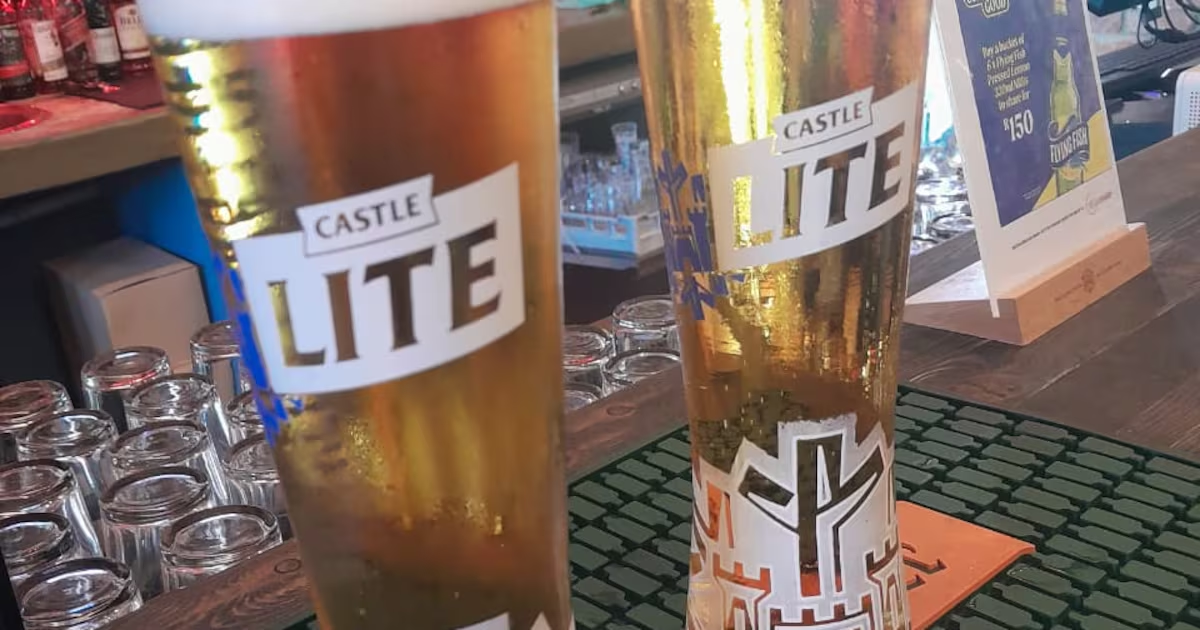
South Africa is reckoning with its excessive drinking problem — with the National Treasury walking a fine line between public health and the ever-increasing needs of the fiscus. Concerns over the relationship between harm caused by alcohol use and the appropriate level of taxation to reduce its consumption have prompted many jurisdictions around the world to hike taxes in a bid to reduce binge drinking.South Africa, among the countries with the highest levels of alcohol and substance abuse, is proposing a hefty 20% tax on beers with more than 4% alcohol by volume (ABV) — the metric that measures the percentage of pure ethanol in a beverage.The proposal by the Treasury will see prices of popular SAB brands — including Castle Lager, Black Label, Hansa Pilsner and Castle Milk Stout — shoot through the roof.The proposal has drawn sharply divided reactions. The alcohol industry has cried foul, claiming the proposed tax will only fuel sales of illicit products, said to already be 37% cheaper than legal ones.Kashifa Ancer, project lead for the Rethink Your Drink campaign, an alcohol harm reduction initiative supported by the DG Murray Trust, said South Africa faces a substantial burden from alcohol-related problems, and the costs are borne not only by drinkers but also by families, communities and taxpayers.She shot down the illicit trade concerns raised by industry majors South African Breweries (SAB) and Heineken.“The suggestion that stronger alcohol control measures will inevitably fuel illicit trade overlooks the fact that many countries have successfully implemented taxation and other evidence-based alcohol policies while simultaneously strengthening enforcement against illegal products,” Ancer said.“The alcohol industry frequently argues that regulation will drive consumers towards illicit alternatives. Yet this perspective assumes that government is incapable of enforcing the law and ignores the substantial evidence showing that pricing, availability and marketing regulations can reduce alcohol-related harm.“The appropriate response to illicit alcohol is stronger enforcement, improved border controls, better intelligence-led investigations and more effective prosecution of criminal operators. It is not abandoning or weakening policies that are designed to protect public health.”South Africa is no stranger to an illicit industry displacing the legal one; multinational cigarette major British American Tobacco (BAT) earlier in 2026 announced the wind-down of its only plant in South Africa.The decision came after the JSE-listed group said illegal cigarettes now account for 75% of the market — having found favour with consumers after the ban on sales of tobacco and liquor products during the Covid-19 lockdown.BAT’s Heidelberg plant, once the eighth largest in its global network, also exports to several countries in the wider Southern African region. Today it is operating at just 35% of total capacity, making it unsustainable.SAB, the dominant player in the market, has warned that the liquor industry might head down the same route if the government implements its decision.“When tax policy increases the cost of legal products without addressing illicit supply, it does not reduce consumption; it redirects it underground. The growing illicit alcohol market risks undermining both public health objectives and government revenue. In particular, SAB is deeply concerned by the proposed 20% increase in standard beer in the current environment,” SAB said.Corné van Walbeek and Nicole Vellios from Econ3x3, an economic policy firm, said policy debates on alcohol taxation should be grounded in transparent and credible evidence, not in selectively constructed industry narratives.“The alcohol industry’s claims about illicit trade are not supported by available data. By repeatedly raising the alarm about illicit trade, the industry seeks to create a narrative (and ultimately a public perception) that illicit alcohol trade is widespread and growing,” they said in a research note.“If that perception becomes entrenched, it will make it politically harder for the National Treasury to raise excise taxes on alcohol. An easy accusation to direct at the Treasury is: ‘How can you justify raising excise taxes when illicit trade is flooding the market?’“Of course, the government should not ignore illicit trade. Although there is currently little evidence that it is a significant problem in the alcohol sector, authorities should strengthen monitoring and enforcement to prevent it from emerging. Illicit trade is driven primarily by criminal activity rather than by excise tax increases.”The World Health Organisation has identified alcohol taxation as one of the most effective policies to prevent noncommunicable diseases and reduce trauma, with some studies showing that raising the price of alcohol directly correlates with a decline in alcohol-related hospitalisations and deaths.Burkina Faso and Ivory Coast serve as African case studies of governments deploying the powerful tax tools at their disposal to clamp down on alcohol abuse.Ivory Coast slapped a 17% tax on beer, 45% on spirits and 35% on wine. Neighbouring Burkina Faso imposed a hefty 70% tax on wine and 30% on beer.Business Times