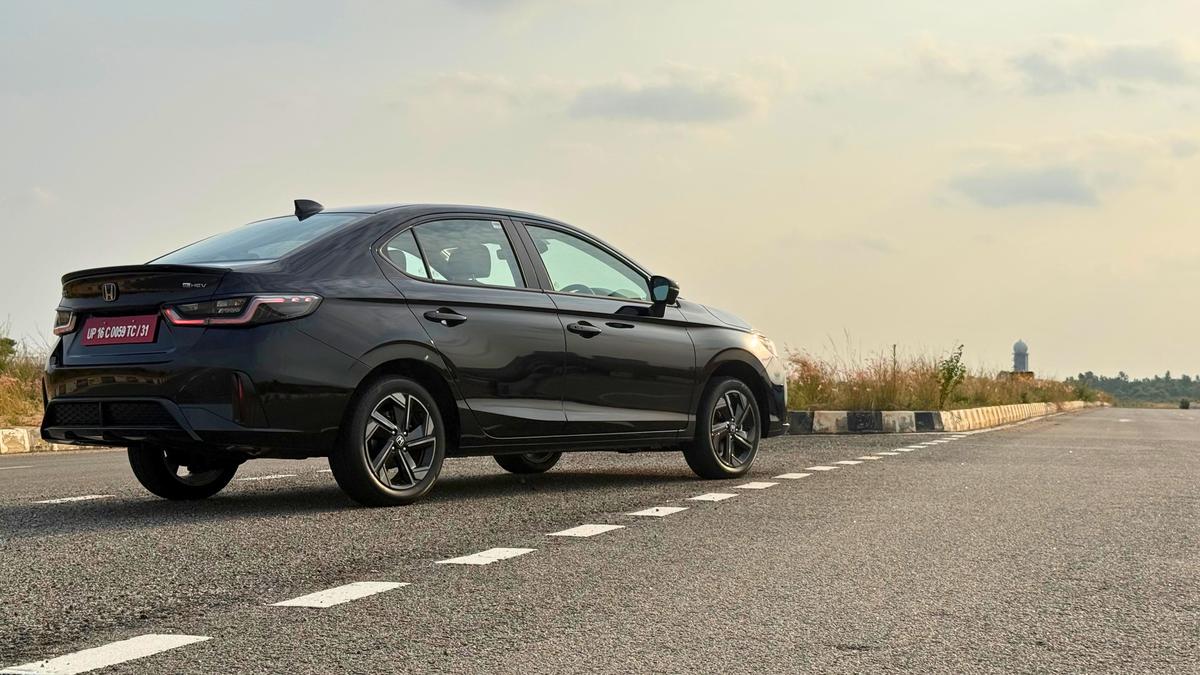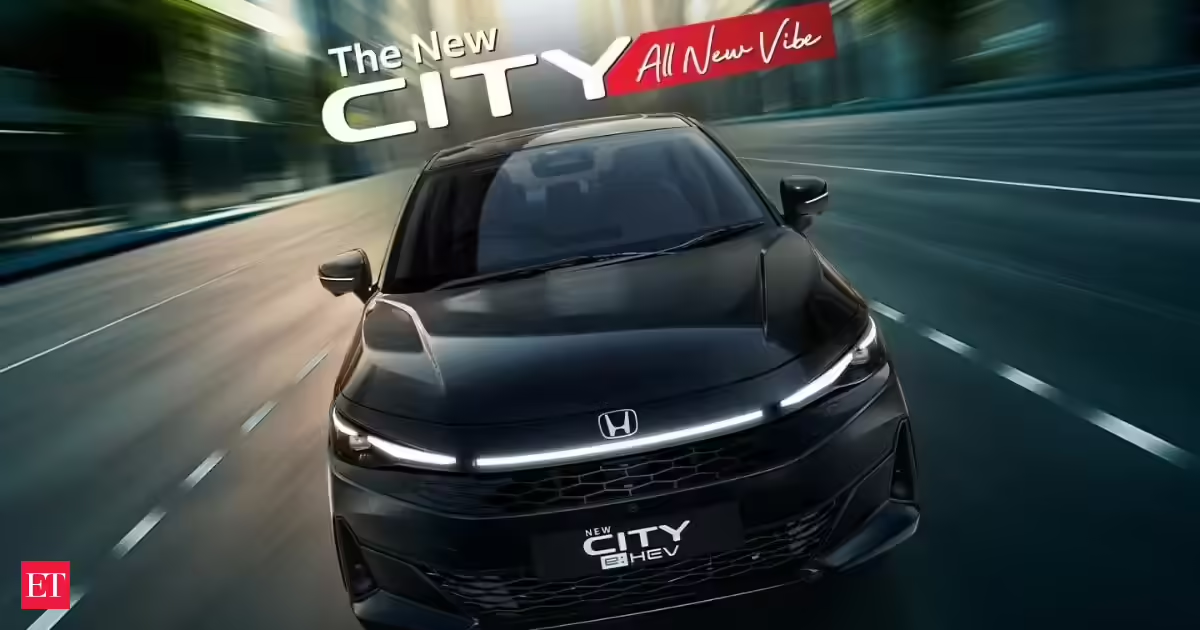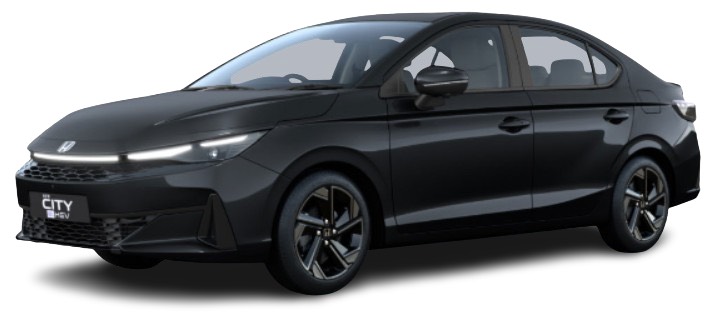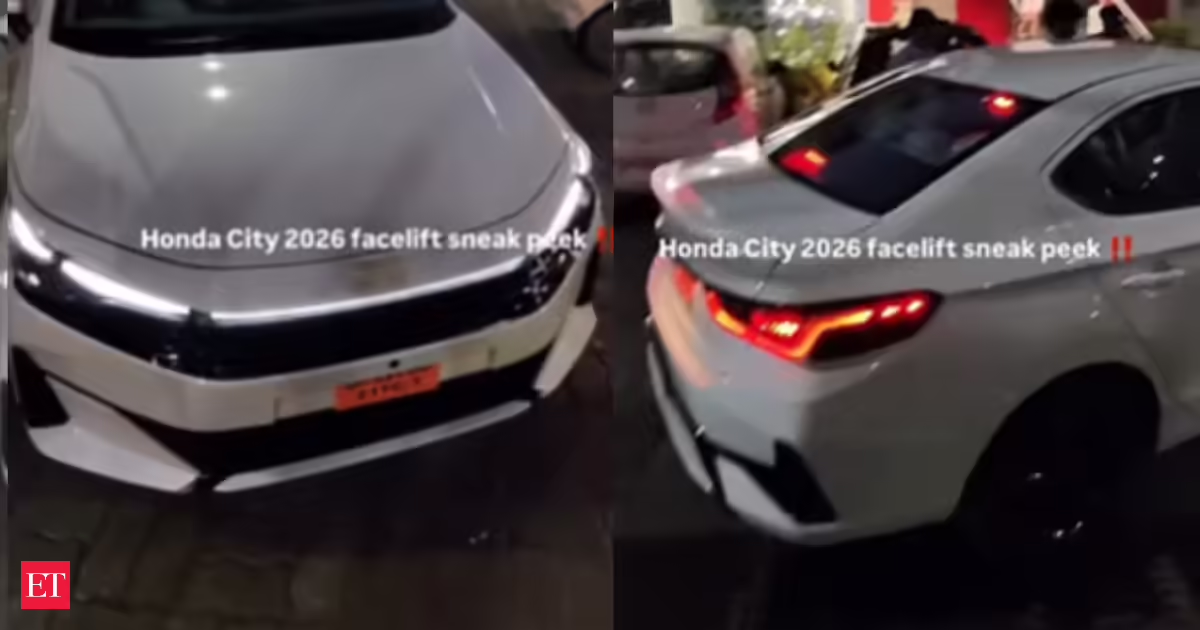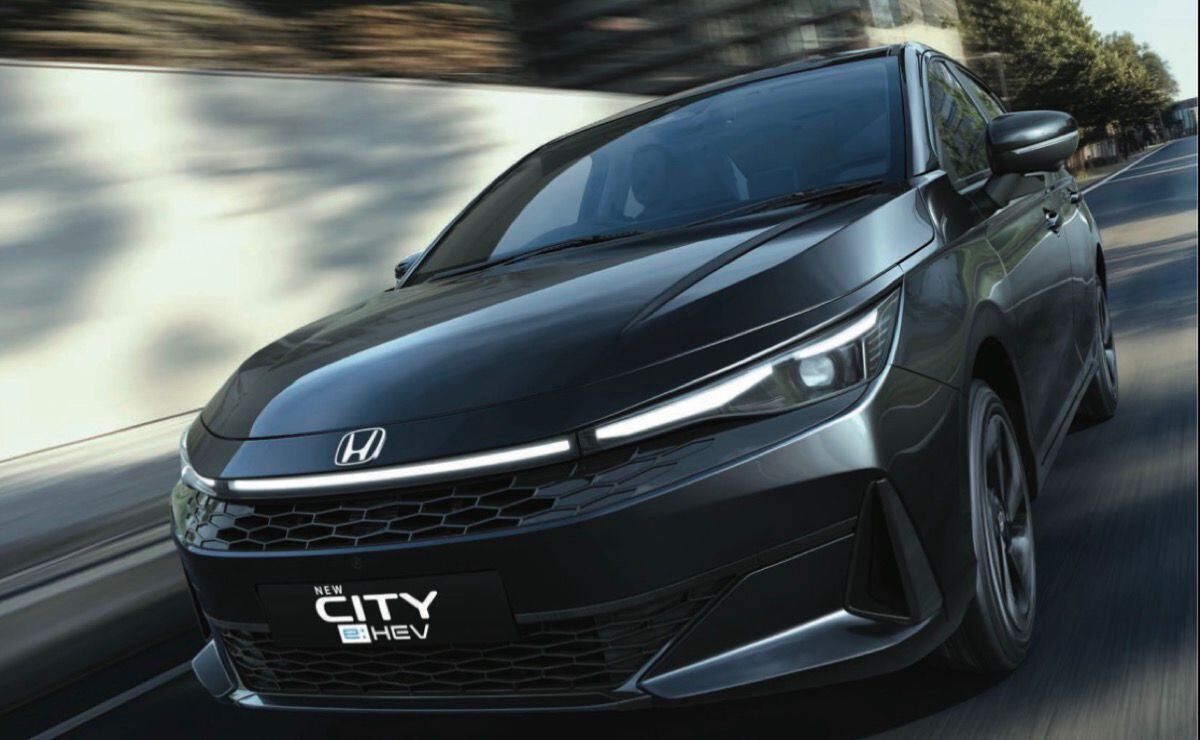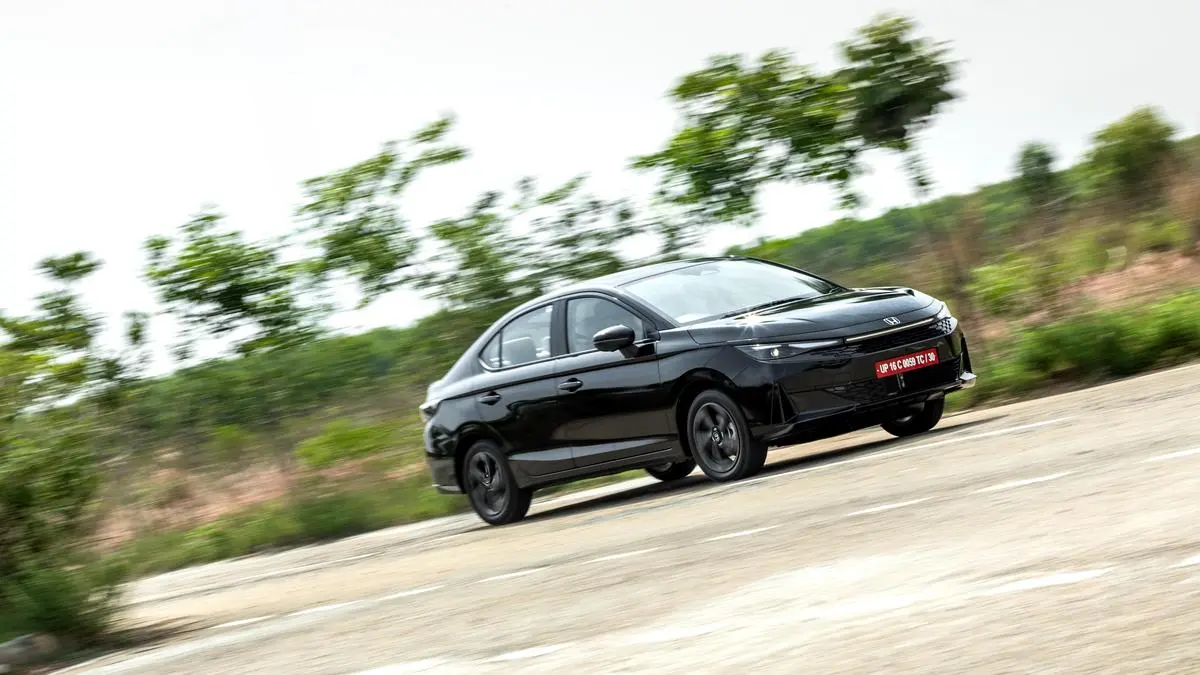
For an elaborate moment, we were traversing through a field. The navigation app had insisted this was a road and yet it clearly wasn’t. We were on an off-road course of the kind that would make most compact SUVs quiver. Behind the wheel of the updated Honda City e:HEV, I was cautious and keen on not scraping its underside. It was no place to drive, a low-slung sedan or otherwise. That we emerged incident-free was not merely a matter of luck.The Honda City is a car that wears India on its sleeve. Once upon a time, not long ago, it served as an important milestone of India’s automotive aspirations and to a few, it remains so. But, of course, we live in the age of the SUV now and three-box sedans such as the City are rapidly losing relevance. Where’s the appeal in a car that actually looks like one, right?To counter this, Honda has attempted to give the City a comprehensive visual makeover and thrown in a few feature updates as well. Riding on the credibility of its naturally-aspirated powertrain and e:HEV tech, the 2026 City aims to be more compelling than ever before. Is it, though?CITY SLICKERFor sure, it’s an appealing design especially in the flesh, with its clean and minimalist front end with a prominent connected light bar, a sporty-ish stance in profile and the revised rear end with clear lens tail-lamps, and a diffuser integrated into the bumper. The 16-inch aero-style alloys (there’s a space-saver in the boot) gel well with the rest of the car, too. Youthful? Sure. Enough to make you forego your SUV dreams? Subjective.That responsibility is shouldered by the cabin which is of the sort that grows on you with its simplicity and understated premiumness. It isn’t perhaps instantly impressive or sensational, but over the tenure of ownership, here’s a cabin you’ll find yourself very comfortable in. The steering wheel (not flat- bottomed) has a smooth, soft rim to it, the plastics for the steering-mounted controls feel good and it’s only the hub, with its dated, textured plastic, that’s a bit visually underwhelming.The revised dashboard layout is rather tasteful, with the two layers (black/beige) being separated by a strip of grey trim that conceals the ambient lighting (also featured in the doors and footwell). The touchscreen, however, is just odd, courtesy its upward-angled orientation. This not only makes daytime reading difficult but also makes the far ends of the screen quite challenging to access on the move. Since screen-dependence for driving functions is non-existent (as it should be), it isn’t a complete red flag, though. The digital information cluster retains its simple design, and quickly disables its ADAS functions using the steering-mounted controls is quick and easy.The climate control stack, for one, looks as good as it feels to use and the three rotary clickers feel great to operate while being super intuitive in their layout. There’s a compact shelf for your phone, a pair of cupholders, all finished in a sort of hard-wearing plastic, and there’s even a wireless charger slotted in under the armrest. Oh, and I love that Honda continues to dedicate a large, round physical button to the sole purpose of dimming the instrument cluster; that’s just very insightful. The City also features a retractable sunshade for the rear windscreen, which is a very thoughtful touch. There’s a sunroof, too, of course.The seats up front are just right. I was surprised to see the lack of electronic adjustability — that’s a shocker! — but, having found my ideal driving position, I soon forgot about this feature miss; perhaps that says something about its utility from a single-user perspective? Moving on, outward visibility is really quite good and while the 360-degree camera’s display output is laughably low-res, this isn’t a car you’ll struggle with in traffic or trying to slot into a tight parking space. This is further accentuated by the light steering which really feels soothing, even for longer stints in traffic. Really, why are we so SUV-crazy?!The backseat is comfortable but not exceptional. Legroom is decent, headroom feels somewhat constrained and underthigh support seems average. It’s no departure from earlier models of the City but rather a sign of why SUVs tend to win favour among the masses today. A small oversight is the armrest design, which is hinged so as to fold down all the way to the seat base, requiring a bit of a lean-in for you to actually be able to use it. Could be better!NATURAL RESOURCESHonda has remained bullish on naturally-aspirated engines, in this case a 1.5-litre four-cylinder unit that produces a combined 107.5 bhp (98.6 bhp from the engine, with the surplus supplied by the hybrid motor) and is paired to an e-CVT. The non-hybrid produces 119.3 bhp and gets the option of either a 6-speed manual or a CVT. The former configuration works really well for those of you looking for a seamless no-nonsense runabout that delivers great efficiency (Honda claims 27.26 kpl as per CMVR guidelines) and gets the job done.If a sporty flavour is what you’re looking for, though, you’ll have to look elsewhere. The eCVT certainly feels laborious under aggressive driving, although on the whole, the City’s powertrain feels smooth and refined. On balance, this configuration sure may have its cost advantages, especially in terms of maintenance and long-term reliability. If that matters to you, then you’ll have to learn to love its character.On the dynamics front, the City is just delightful. Braking and stability are both really good, and the handling is really enjoyable. Spirited cornering comes naturally to the City, although the Bridgestone Ecopia tyres seem to underplay its true potential. Ride quality is, just like on the earlier City, very pliant and the suspension adds a surprising dose of toughness to the mix, something Honda will do well to advertise! As I found out over my misadventure mentioned at the beginning of this story, the City really can cope with some properly bad roads.To summarise, the City is a pleasant car with a nice cabin, good features, a great boot, impressive efficiency and the promise of long-term dependability. Why, then, must you not consider it? For one, the top-spec’s ₹21.07 lakh (ex-showroom, Delhi) price tag is a tad too steep, especially in comparison to what else that kind of money can buy you today. You can, however, have the base City (petrol, manual) at ₹12.07 lakh or the base automatic, which starts from ₹14.37 lakh. Does it make sense to buy the non-hybrid for far less and consider the savings as fuel money? I’d think so. Just try walking right past that Elevate, though.@TheMotorGramPublished on June 12, 2026
Honda City e:HEV: Talk of the Town
Discover if the refreshed Honda City e:HEV can remain relevant in today's SUV-dominated market with its new features and design.
1,113 words~5 min read