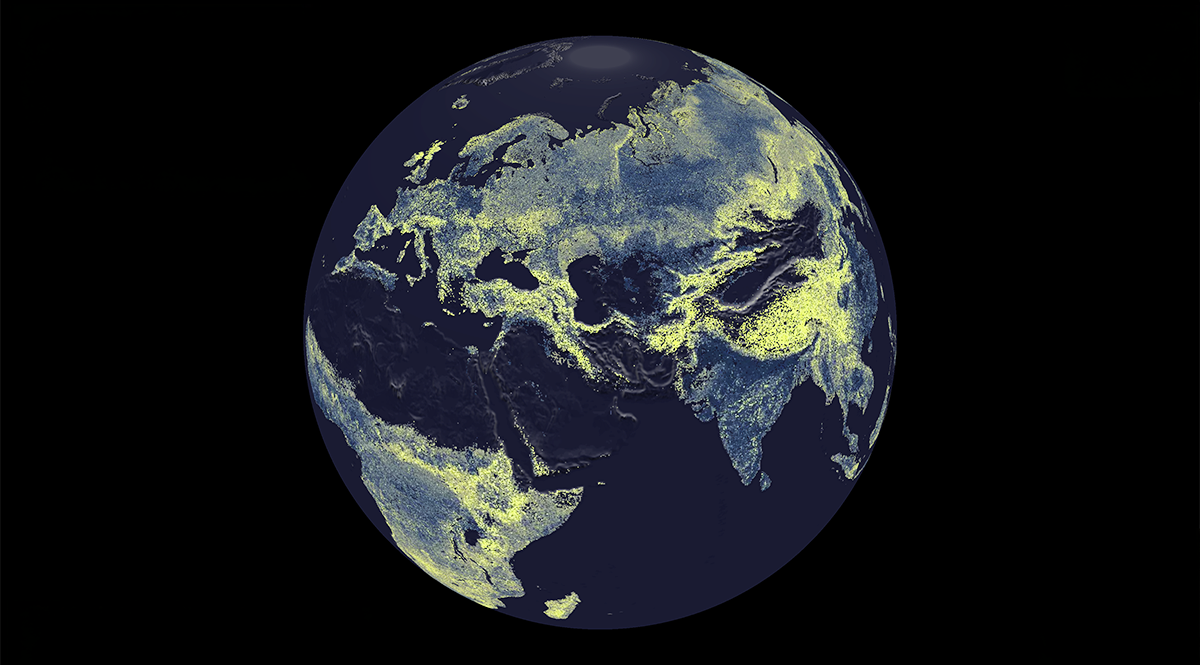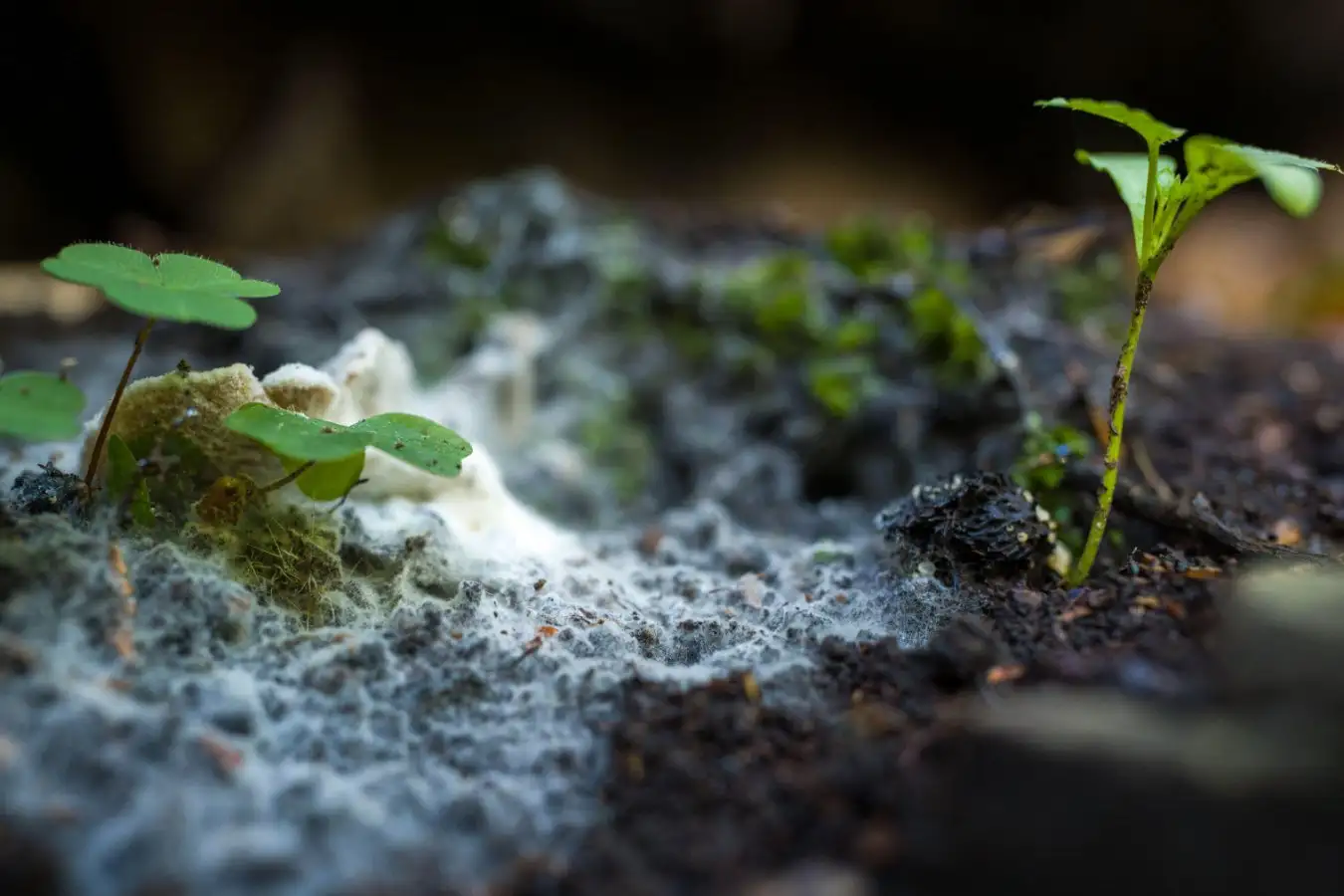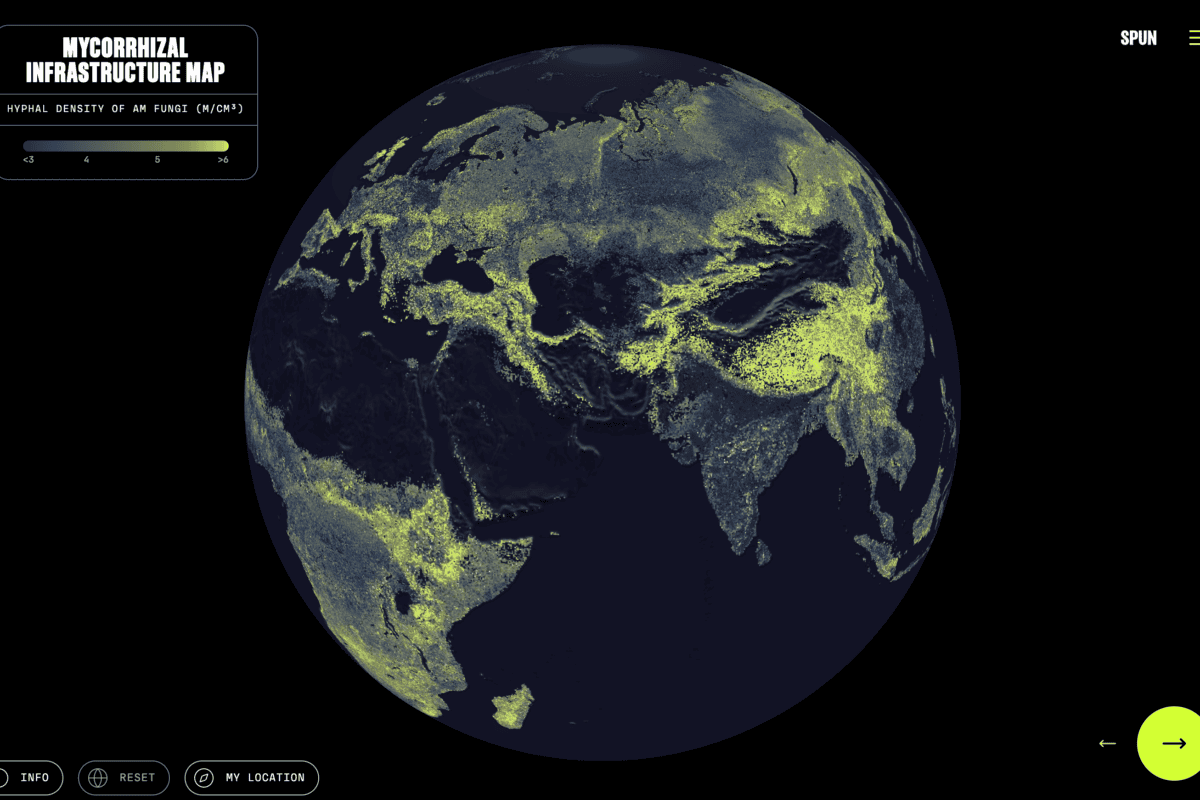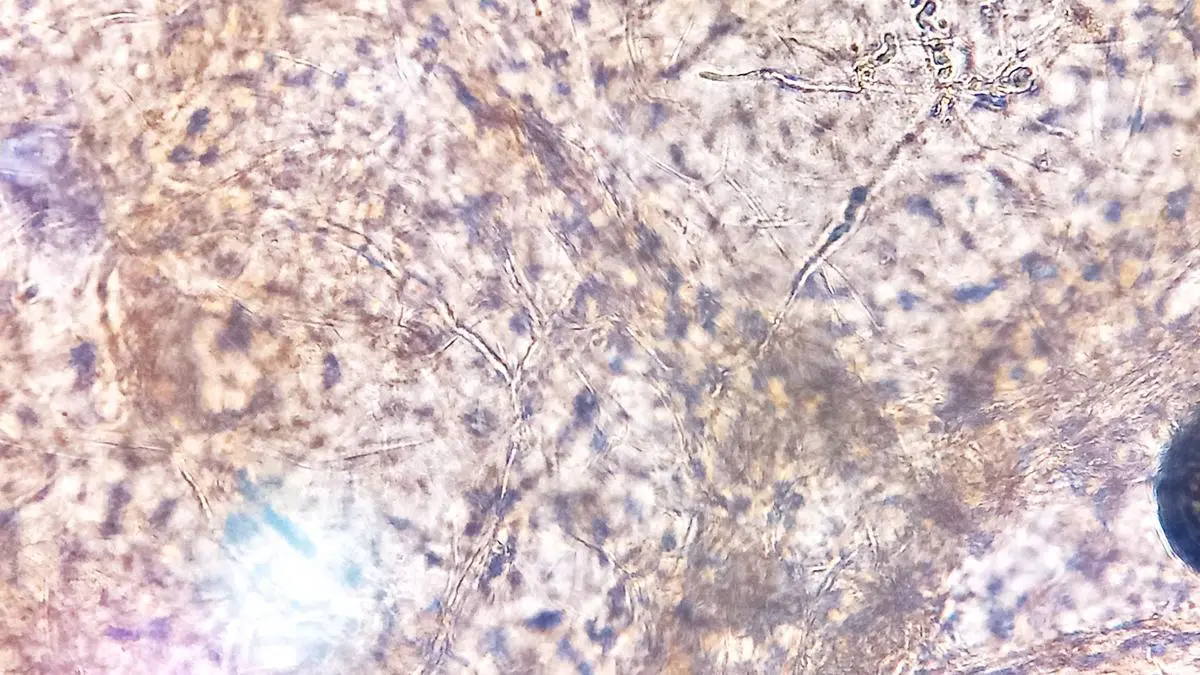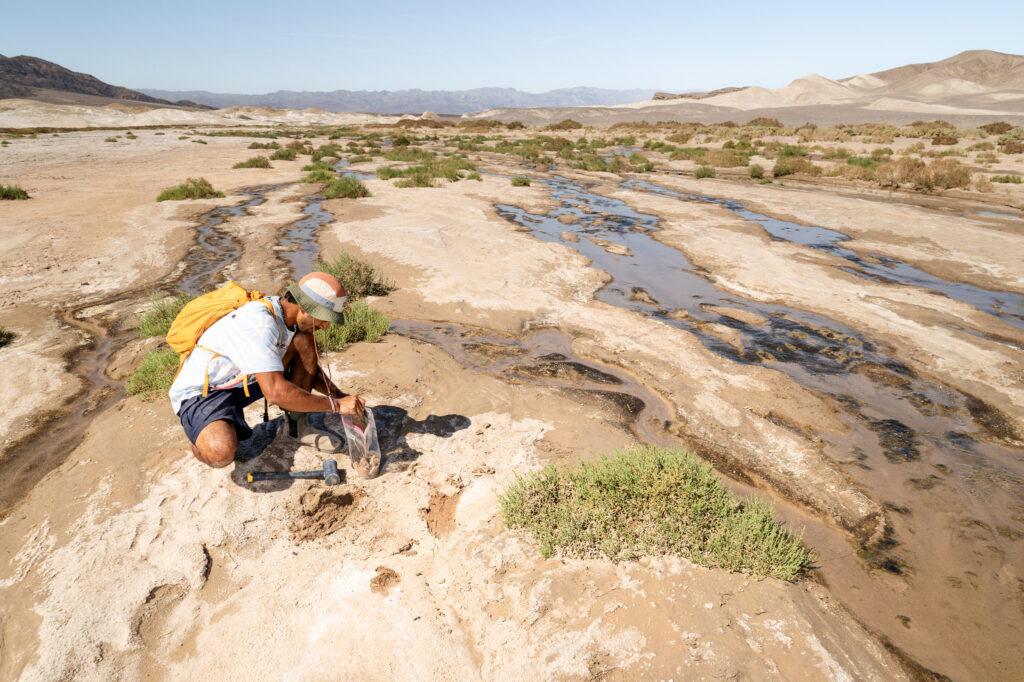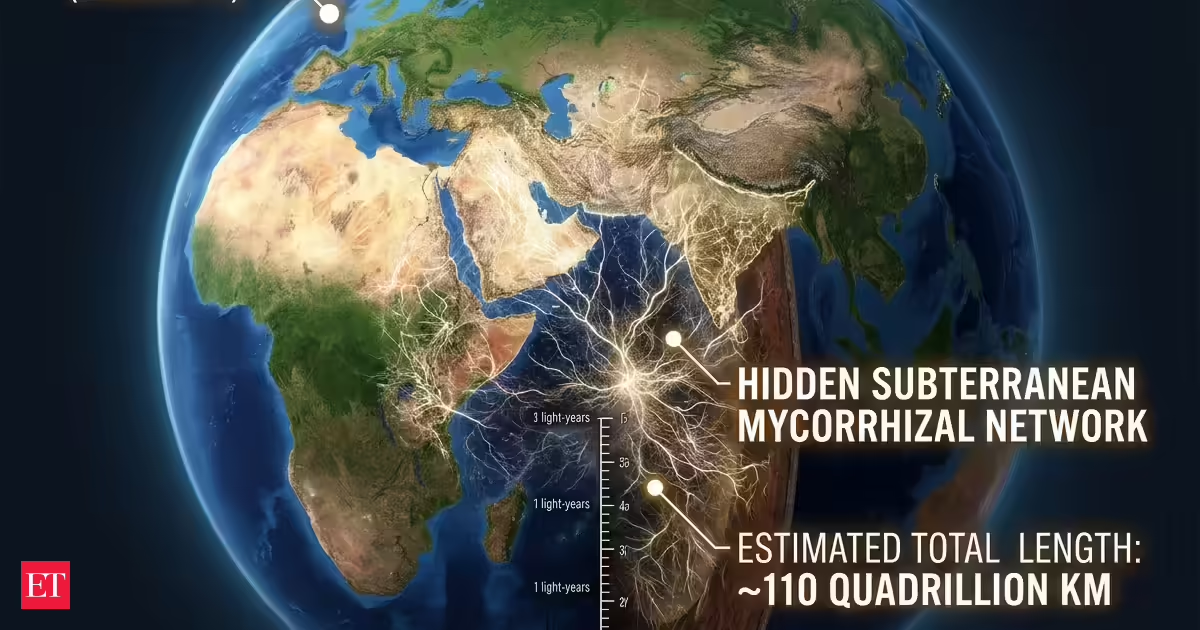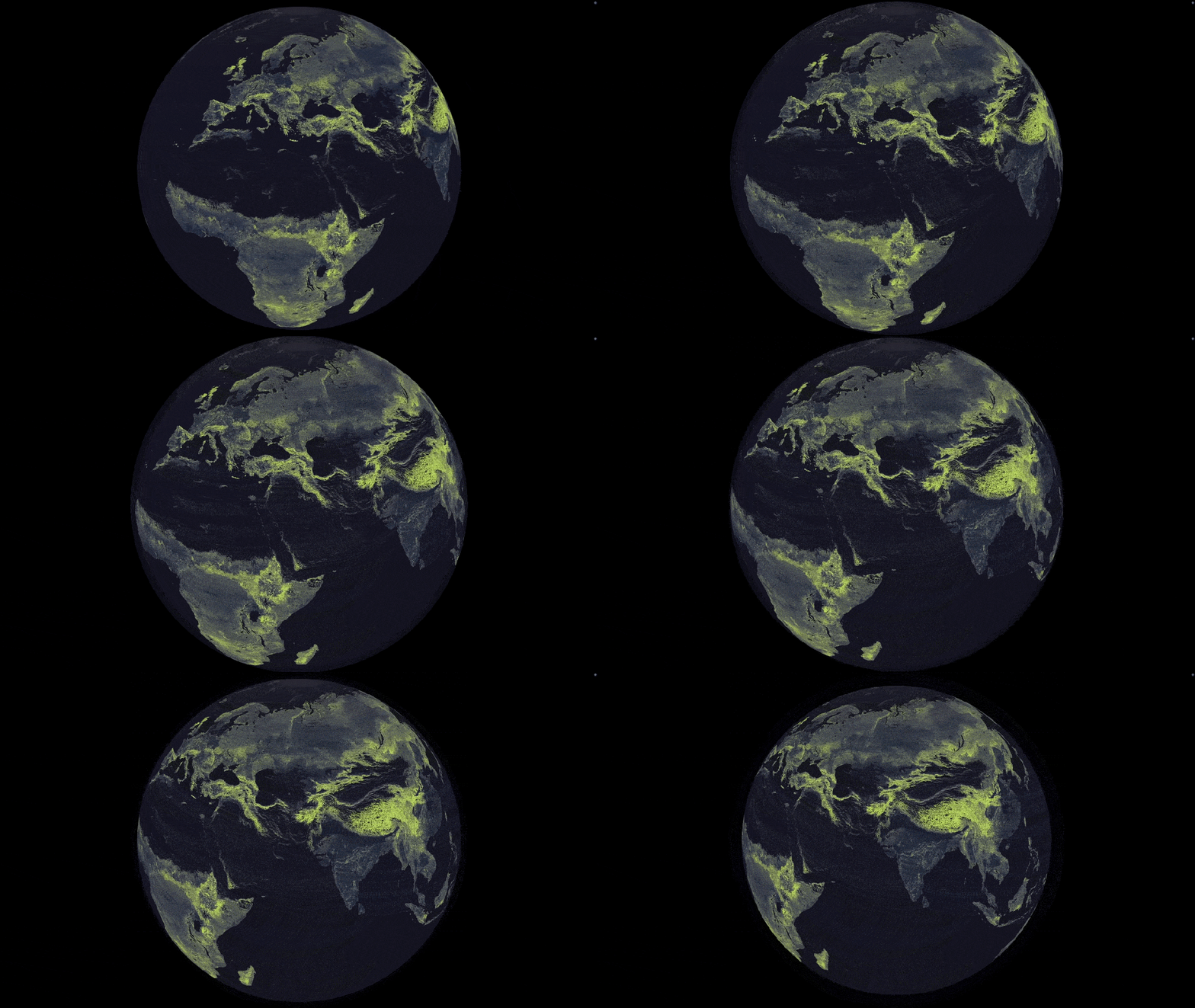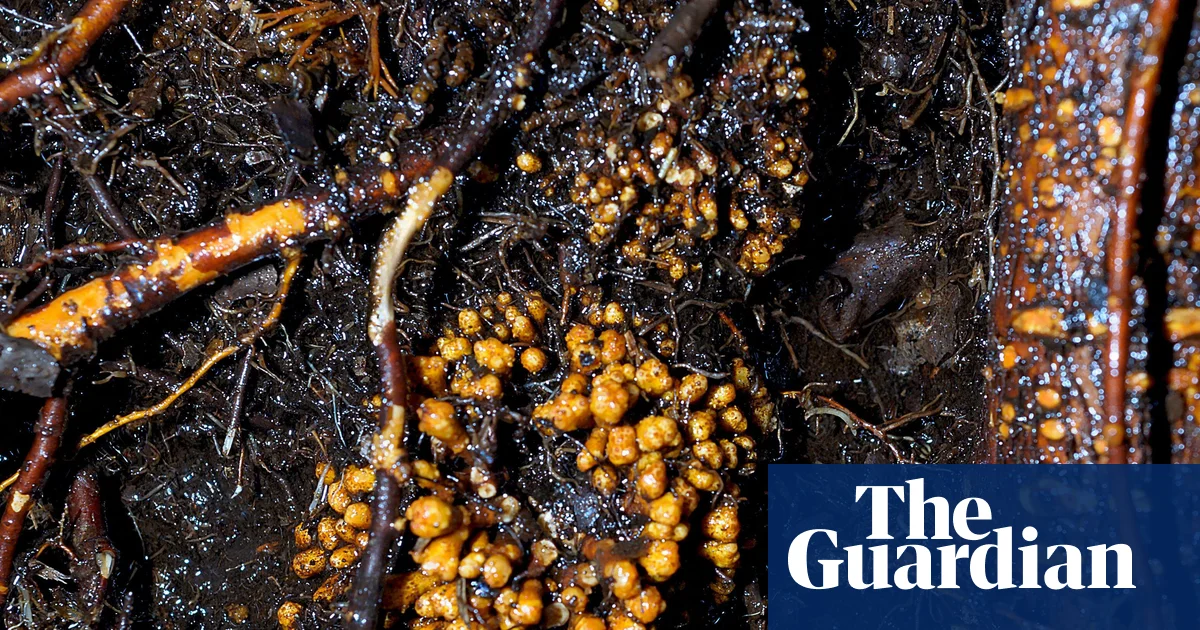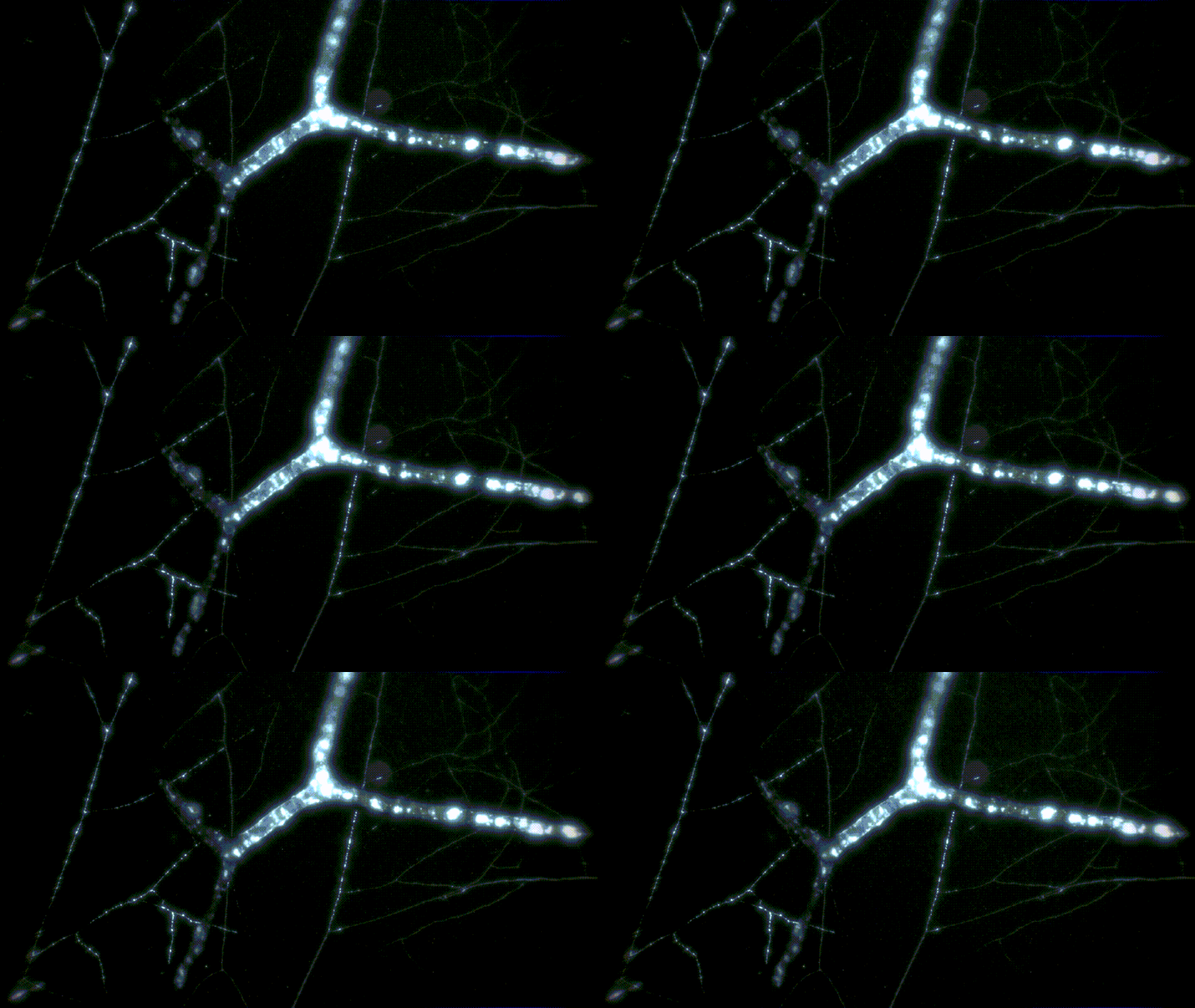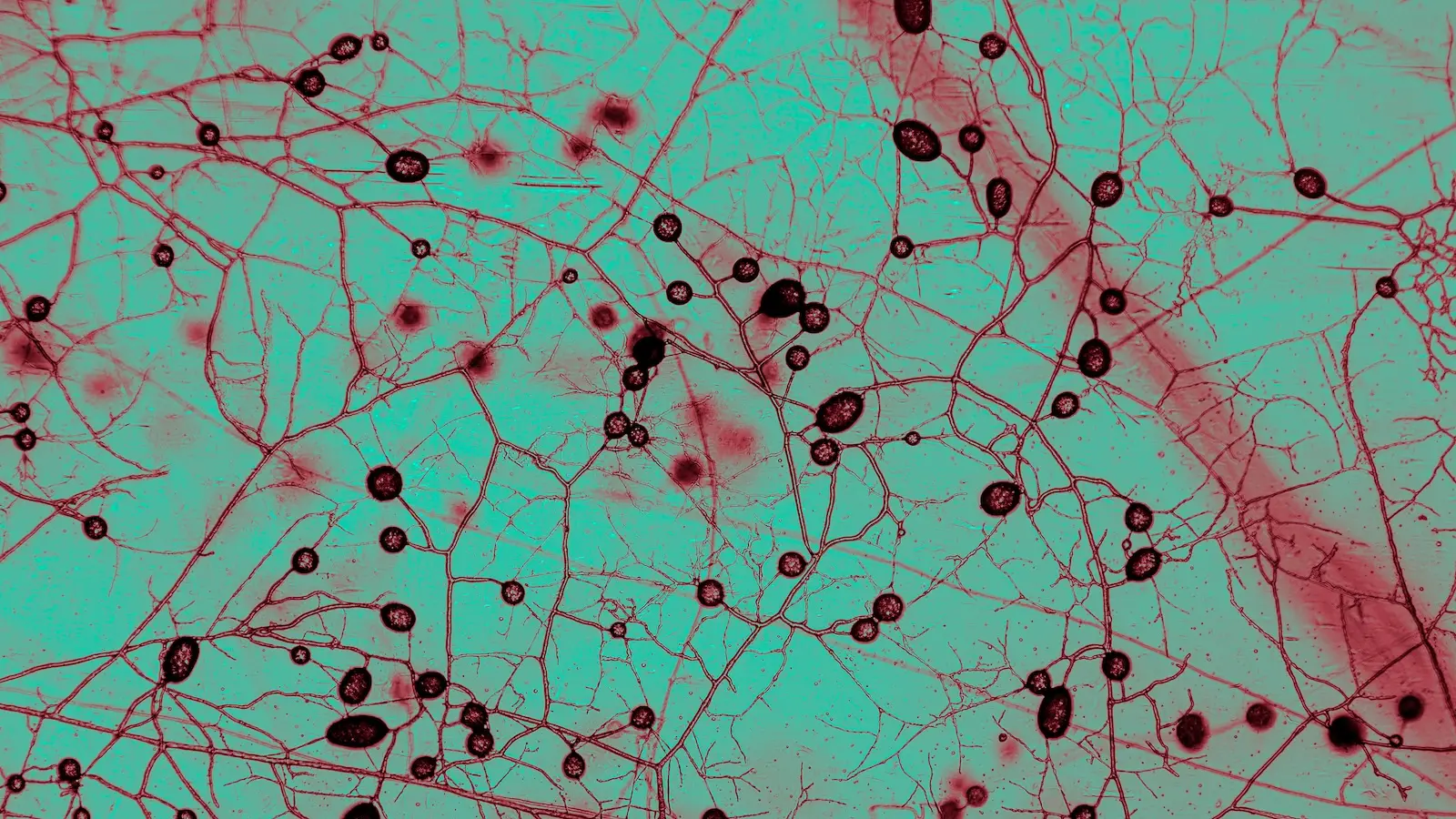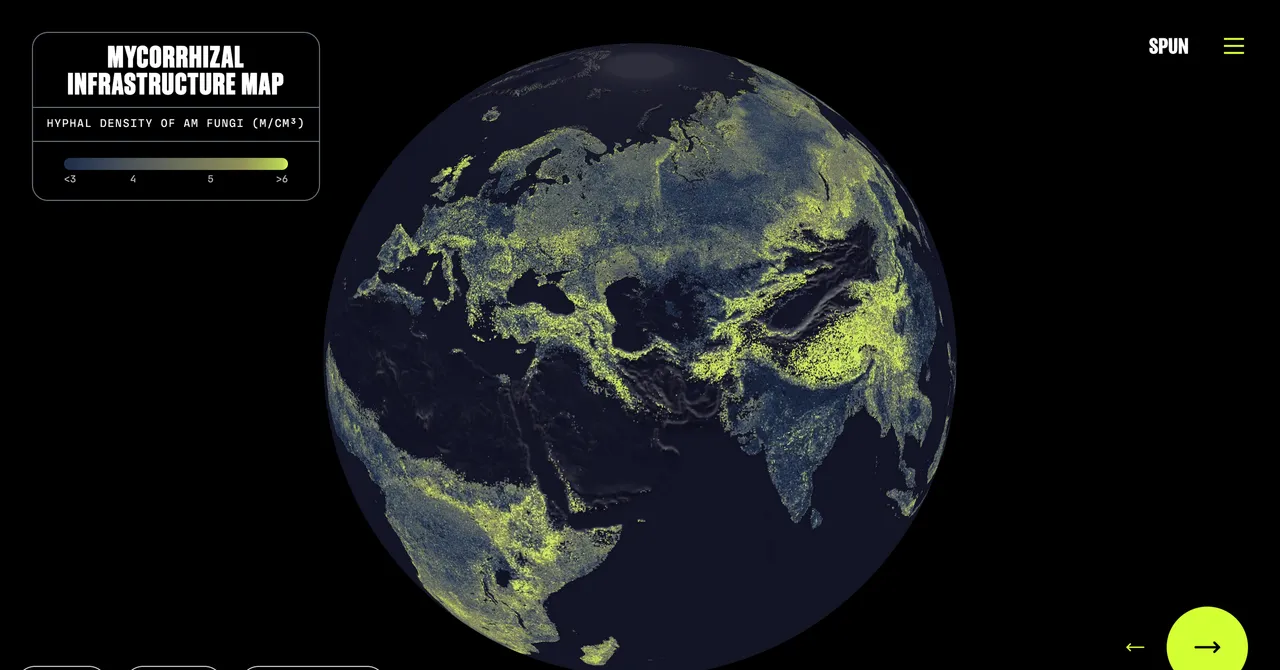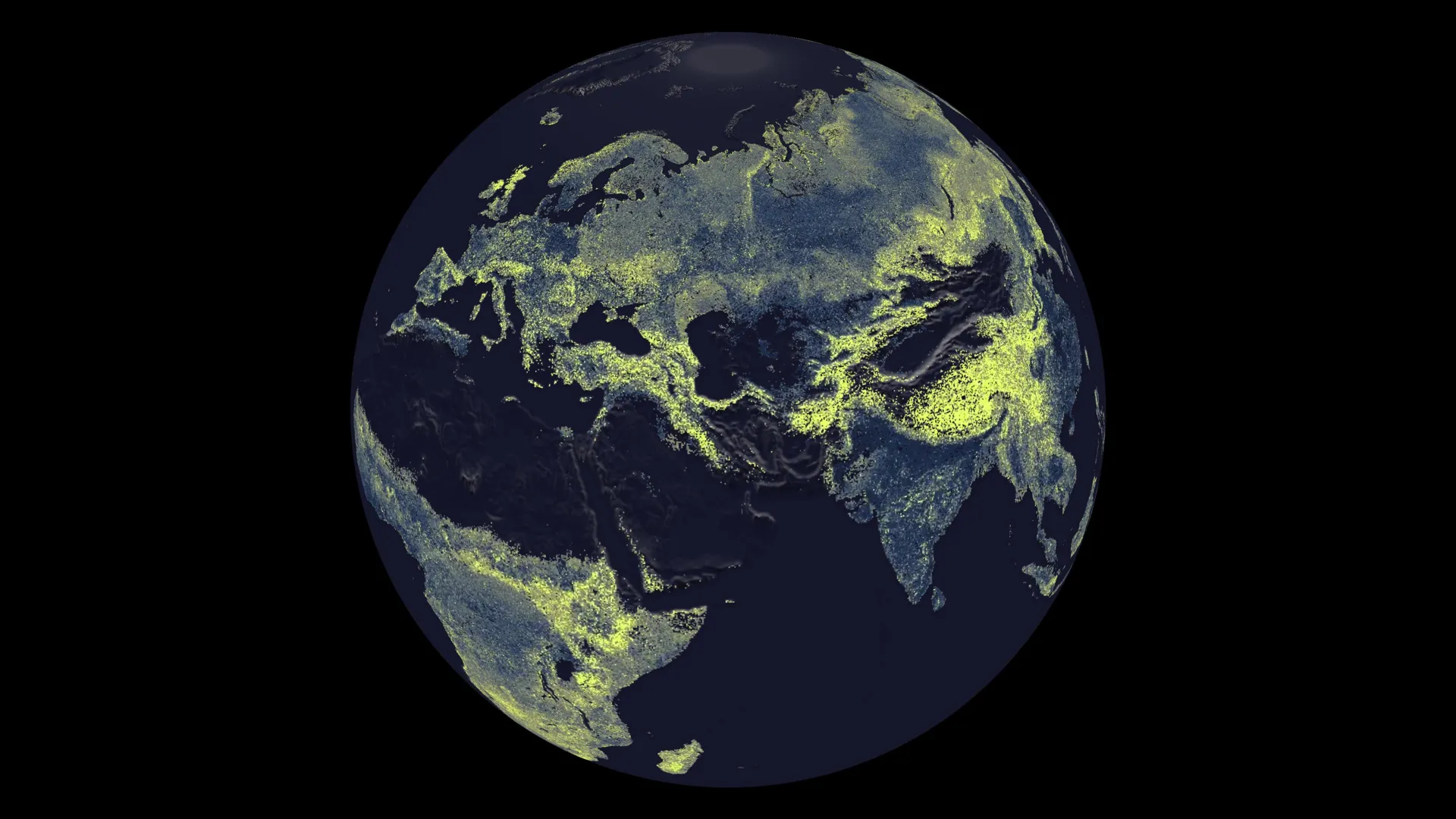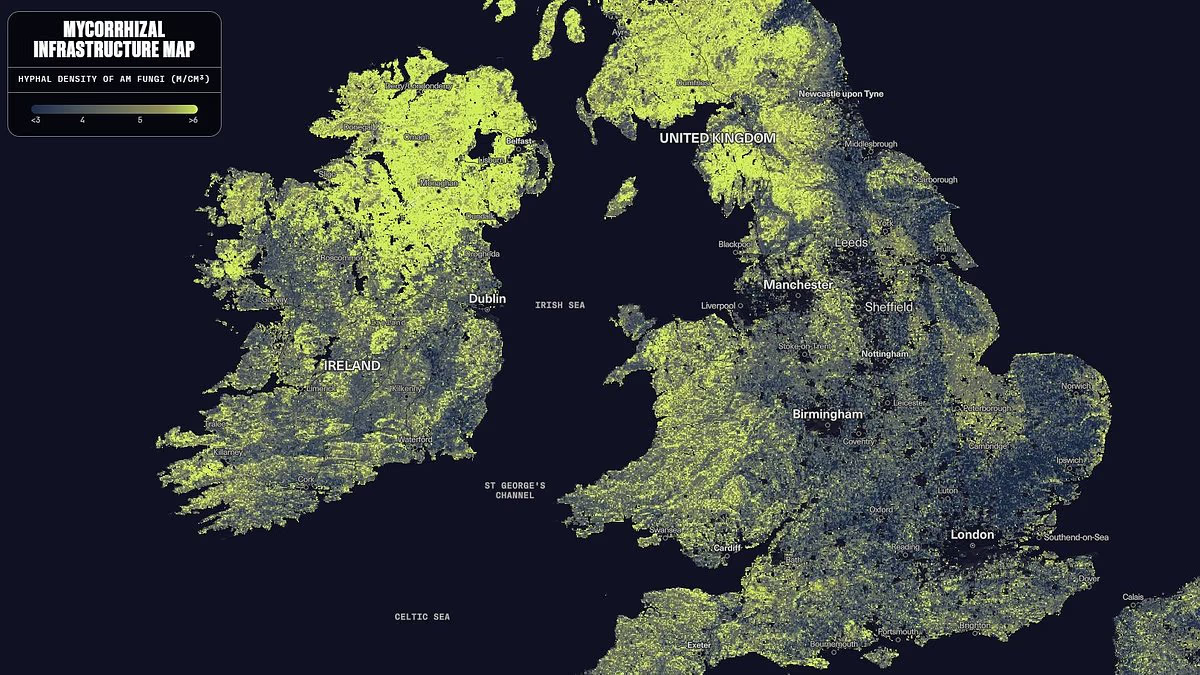
It might sound like something out of The Last of Us, but scientists have uncovered a hidden fungal network lurking beneath our feet.Almost every part of the Earth's surface is criss–crossed by tiny living threads known as arbuscular mycorrhizal (AM) fungi.Now, a study has calculated just how colossal this secret web really is.Placed end–to–end, scientists say Earth's fungi network stretches over 68.35 quadrillion miles (110 quadrillion km).That's long enough to circle the planet 2.7 trillion times, or to cover the distance from the Earth to the sun one billion times over.Researchers also found that the network contains approximately 300 megatonnes of carbon – about five times the weight of all living humans on Earth put together.Lead author Dr Justin Stewart, with the Society for the Protection of Underground Networks (SPUN), says: 'It is hard to overstate the importance and enormity of these fungi.'There could be up to 10 meters (33 feet) of mycorrhizal network in just a teaspoon of soil.' Scientists have mapped a vast hidden network of fungi beneath our feet, which could stretch 2.7 trillion times around the Earth Stretched end to end, these complex networks would cover the distance from the Earth to the sun over one billion times over Besides frozen ice caps, AM fungi can be found in almost every corner of the world.They live among plant roots and thrive in the first 15 inches (40 cm) of soil, but can be found even in the deepest soil layers up to 26 feet (eight metres) beneath the surface.These networks might be totally invisible to the naked eye, but they are one of the most important aspects of the world's ecosystem.Threadlike structures called hyphae fill the soil, connecting to plants via their roots and creating complex symbiotic relationships.Scientists estimate that these fungi form 'trade relationships' with 70 per cent of all plant species on Earth, exchanging nutrients like nitrogen and phosphorus for carbon.Studies have shown that plants get up to 80 per cent of their phosphorus from these relationships, as well as 20 per cent of their nitrogen.To see exactly where these fungal threads can be found, scientists from SPUN attempted to calculate the biomass of the entire world–spanning network.They started by gathering over 1,600 soil samples from 4,000 sites around the world, measuring the length of all the hyphae in a given amount of soil. AM fungi consist of thread–like structures called hyphae, which burrow into plant roots to establish complex 'trading relationships', exchanging nutrients for carbon Researchers found that the network contains approximately 300 megatonnes of carbon – about five times the weight of all living humans on Earth put together What are arbuscular mycorrhizal fungi? Arbuscular mycorrhizal (AM) fungi are extremely ancient forms of life that thrive inside the soil.They consist mainly of thread–like structures called hyphae, which spread through the ground.These fungi form symbiotic relationships with around 70 per cent of all known plant species, burrowing into their root networks to trade nutrients.They also play a key role in trapping carbon from the air, absorbing around four billion tonnes of CO2 each year. This information was combined with global data on climate, soil chemistry, and vegetation and used to train machine learning models to predict fungal density across every terrestrial ecosystem.To work out how much biomass this translates to, the team also needed to work out the radius of the tubular hyphae strands.This was done by using a robotic imaging system to measure over 300,000 living hyphae across fungal systems grown in the lab.The result is an interactive map that reveals the incredibly dense networks of fungi thriving right beneath your feet, which you can find on the SPUN website.Dr Stewart compares these findings to discovering a vast web of 'transport infrastructure' beneath the soil.He says: 'Roads may not cover most of Earth’s surface, but they enable the movement of people, food, energy, and materials that society depends on.'Mycorrhizal fungi do something similar underground, as they build hyper–efficient supply chains that move carbon and nutrients between plants and soils.'Farmland had mycorrhizal densities that were approximately half as high as in wild ecosystems. Tiny living threads known as arbuscular mycorrhizal (AM) fungi can be found in almost every environment on Earth. This map is the first attempt to work out just how big their network really is Grasslands such as the Tibetan Plateau are home to 40 per cent of the world's AM fungi, despite being some of the least protected ecosystems on Earth Wild grassland ecosystems such as the Sud Wetlands in South Sudan and the Tibetan Plateau were home to 40 per cent of the world's AM fungi.Dr Stewart says: 'Wild grasses in particular appear to support very high densities of arbuscular mycorrhizal fungal networks.'In some observational studies, more than 100 metres of fungal hyphae were found in a single gram of soil.'That is a particularly important finding because grasslands are some of the world's least protected ecosystems, being converted into farms four times faster than woodlands.If the network of mycorrhizal fungi in the soil were degraded or lost, it could have enormous consequences for the world above ground.Co–author Dr Toby Kiers, executive director of SPUN, told the Daily Mail: 'Without these fungi, we lose the living infrastructure that holds ecosystems together.'Degraded soils lose their ability to recover because the fungal workforce that rebuilds them is gone.'These fungal communities are a foundation for ecosystem resilience. Lose the fungi, and much of what grows above ground becomes far more fragile.'WHAT ARE THE OLDEST FUNGI EVER DISCOVERED?For many years, fungi were grouped with, or mistaken for plants. Not until 1969 were they officially granted their own 'kingdom', alongside animals and plants, though their distinct characteristics had been recognised long before that.Yeast, mildew and molds are all fungi, as are many forms of large, mushroom-looking organisms that grow in moist forest environments and absorb nutrients from dead or living organic matter. Unlike plants, fungi do not photosynthesise, and their cell walls are devoid of cellulose. Geologists studying lava samples taken from a drill site in South Africa discovered fossilised gas bubbles, which contained what could be the first fossil traces (pictured) of the branch of life to which humans belong ever unearthedGeologists studying lava samples taken from a drill site in South Africa discovered fossilised gas bubbles 800 metres (2,600 feet) underground.In April 2017, they revealed that they are believed to contain the oldest fungi ever found.Researchers were examining samples taken from drill-holes of rocks buried deep underground, when they found the 2.4 billion-year-old microscopic creatures. They are believed to be the oldest fungi ever found by around 1.2 billion years.Earth itself is about 4.6 billion years old. Earth itself is about 4.6 billion years old and the previous earliest examples of eukaryotes - the 'superkingdom' of life that includes plants, animals and fungi, but not bacteria - dates to 1.9 billion years ago. The fossils have slender filaments bundled together like brooms (pictured)They could be the earliest evidence of eukaryotes - the 'superkingdom' of life that includes plants, animals and fungi, but not bacteria.The previous earliest examples of eukaryotes - the 'superkingdom' of life that includes plants, animals and fungi, but not bacteria - dates to 1.9 billion years ago. That makes this sample 500 million years older.It was believed that fungi first emerged on land, but the newly-found organisms lived and thrived under an ancient ocean seabed.And the dating of the find suggests that not only did these fungus-like creatures live in a dark and cavernous world devoid of light, but they also lacked oxygen.
Scientists discover a vast fungal network hidden beneath our feet
It might sound like something out of The Last of Us, but scientists have uncovered a hidden fungal network lurking beneath our feet.
1,253 words~6 min read