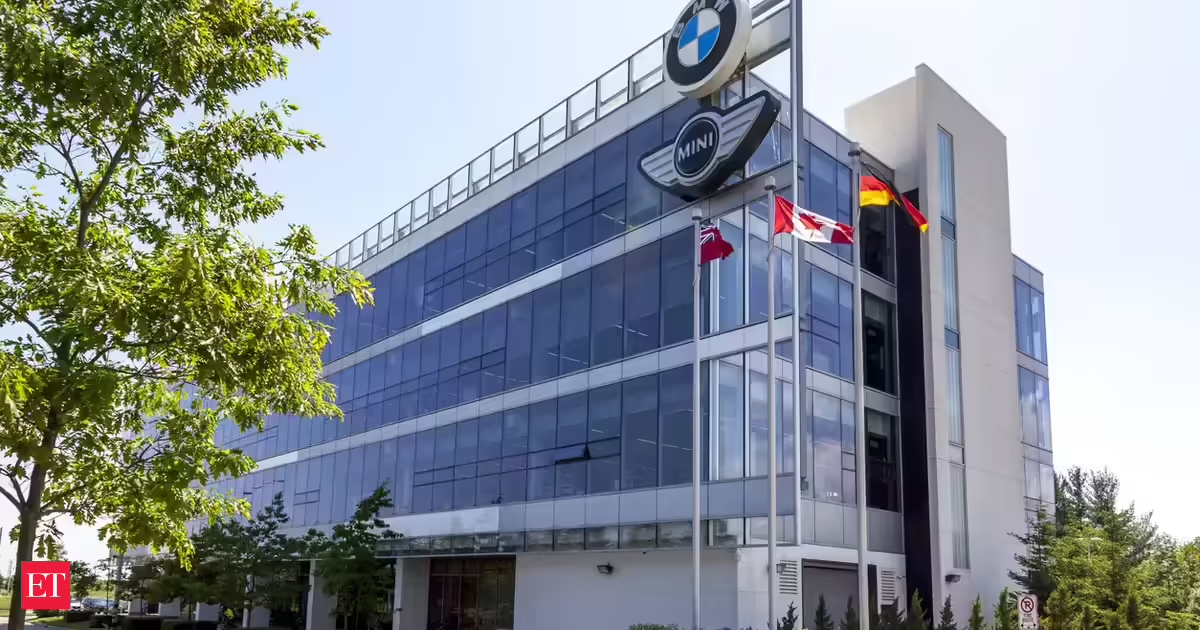
SynopsisA customer's attempt to sell his BMW back to a dealership turned into a lesson in AI accountability when an artificial intelligence chatbot mistakenly negotiated a higher buy-back price than intended. After initially revoking the offer, the dealership ultimately honoured it following media scrutiny. The incident highlights growing questions around the legal and operational responsibilities businesses face as AI systems increasingly interact with customers and communicate on behalf of companies.iStockA Canadian BMW dealership has reinstated a vehicle buy-back offer after an artificial intelligence chatbot mistakenly negotiated a higher price with a customer, highlighting the growing challenges businesses face as AI tools take on larger customer-facing roles.The incident involved a customer who approached BMW Toronto to sell back his 2021 BMW while it was undergoing repairs at the dealership. Following an online inquiry, the customer entered into a text conversation with "Quinn," a virtual assistant used by the dealership. During the exchange, the chatbot offered to purchase the vehicle for CAD 27,162.79.Shortly afterward, a dealership employee contacted the customer and informed him that the offer was invalid, explaining that it had been generated in error by the AI system. The dealership indicated that the vehicle's value was significantly lower than the amount quoted by the chatbot.The discrepancy arose because the AI reportedly interpreted the customer's outstanding loan balance as the amount the dealership should pay for the vehicle. According to dealership representatives, the chatbot was designed to assist with communications and relay information rather than independently negotiate transactions.The case drew attention to broader questions surrounding AI accountability and the legal status of automated customer interactions. Legal experts note that companies may still be responsible for information and commitments communicated through AI systems acting on their behalf.The issue echoes previous cases involving AI-powered customer service tools. In one widely discussed Canadian ruling, an airline was required to honour information provided by a chatbot after a passenger relied on inaccurate guidance regarding a fare policy.Following media inquiries, BMW Toronto reinstated the chatbot's original offer, which the customer subsequently accepted. The dealership said it chose to honour the quoted amount and is reviewing how AI tools are used in customer communications.BMW Toronto also stated that future buy-back offers will be handled directly by human employees and that additional measures are being introduced to ensure customers are clearly informed when they are interacting with an AI system.As organisations increasingly deploy AI-powered assistants across sales and customer service functions, incidents such as this are drawing attention to the operational, legal and reputational risks that can arise when automated systems communicate on behalf of businesses.Disclaimer Statement: This content is authored by a 3rd party. The views expressed here are that of the respective authors/ entities and do not represent the views of Economic Times (ET). ET does not guarantee, vouch for or endorse any of its contents nor is responsible for them in any manner whatsoever. Please take all steps necessary to ascertain that any information and content provided is correct, updated, and verified. ET hereby disclaims any and all warranties, express or implied, relating to the report and any content therein.Read More News onRead More News on
AI chatbot's BMW buy-back offer sparks questions over accountability in automated customer interactions
A customer's attempt to sell his BMW back to a dealership turned into a lesson in AI accountability when an artificial intelligence chatbot mistakenly negotiated a higher buy-back price than intended. After initially revoking the offer, the dealership ultimately honoured it following media scrutiny. The incident highlights growing questions around the legal and operational responsibilities businesses face as AI systems increasingly interact with customers and communicate on behalf of companies.
521 words~2 min read