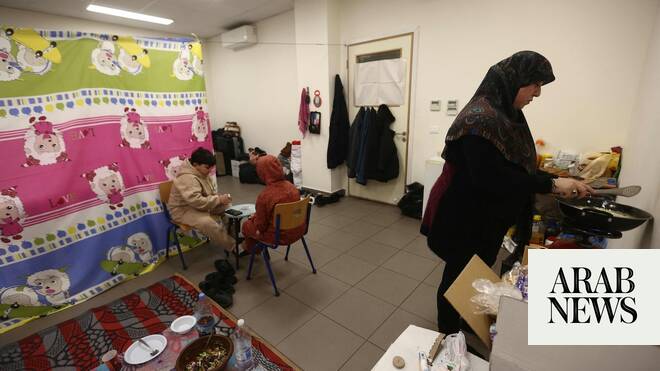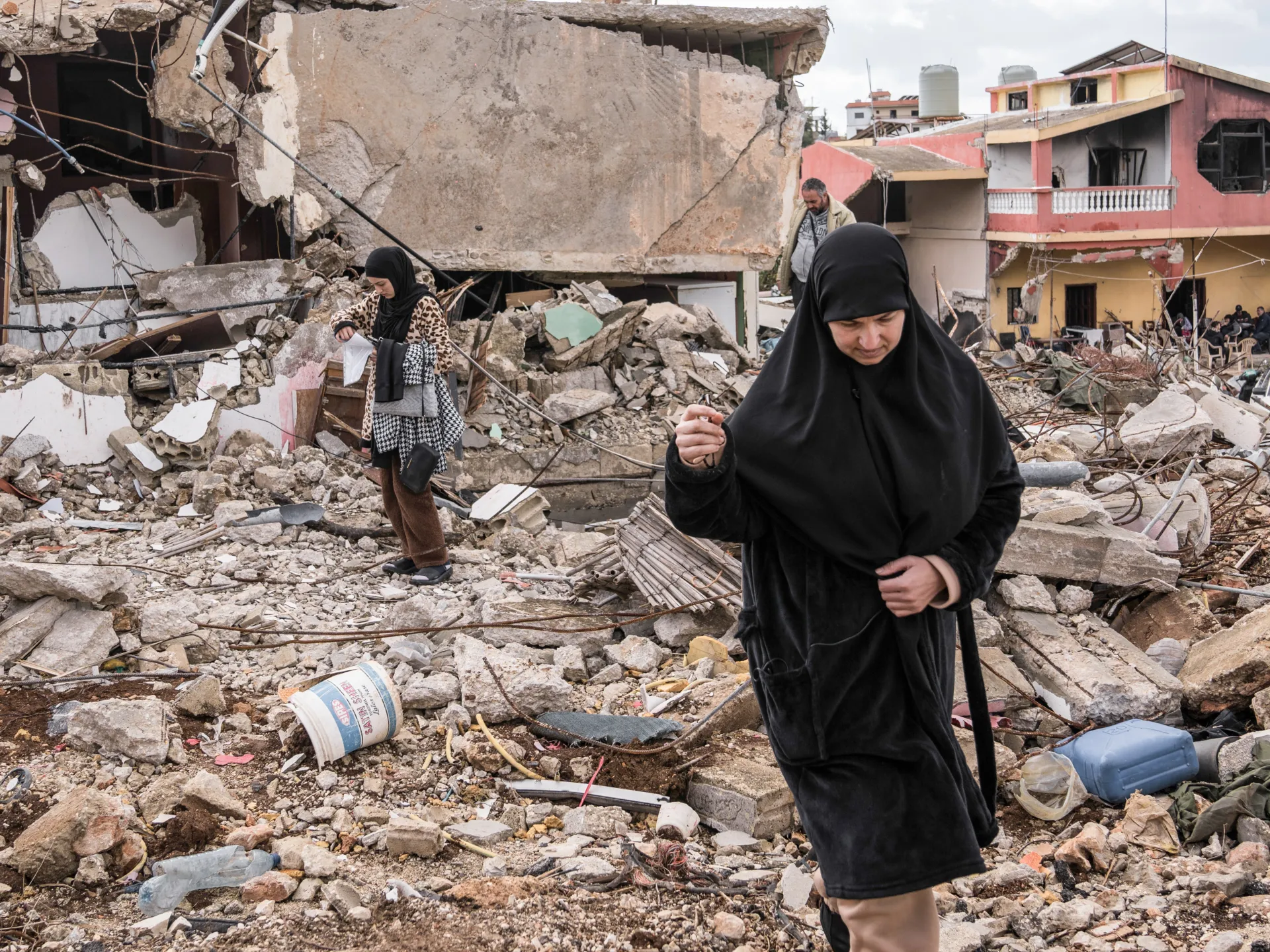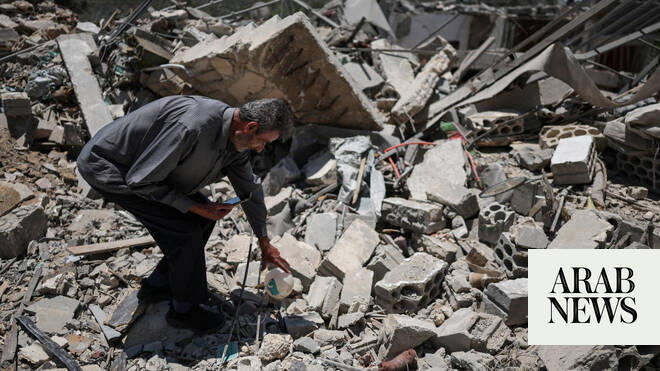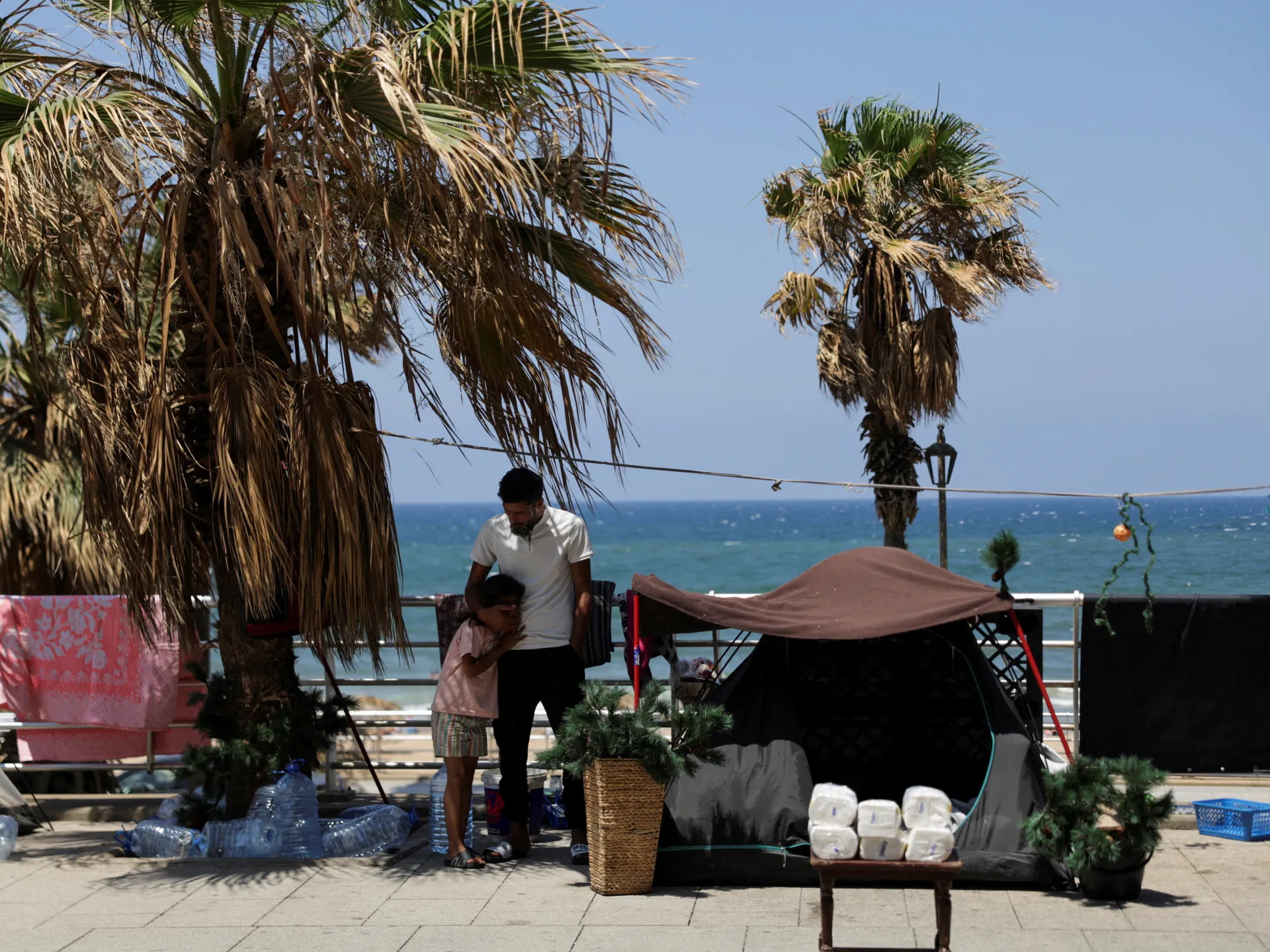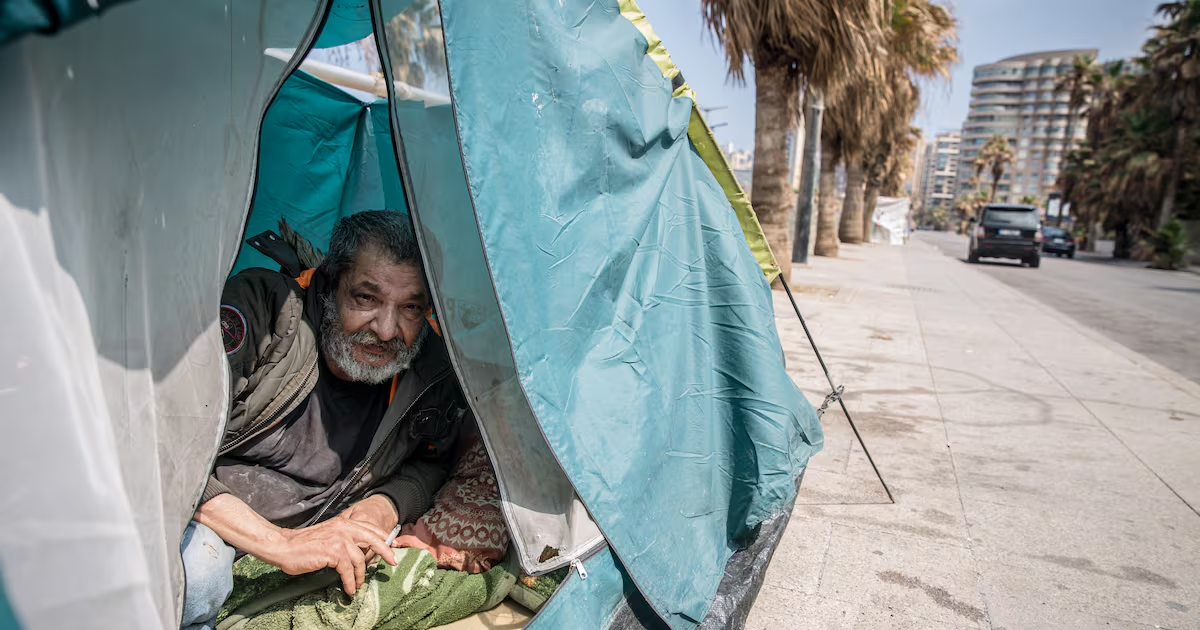
An elderly poet is among thousands enduring displacement and hardship as conflict in southern Lebanon drags on with no end in sightHussein Hijazi lives alone in this tent in Ramlet al Baida, Beirut. Photograph: Sally Hayden Fri Jun 12 2026 - 11:32 • 4 MIN READSitting in a one-man tent on a busy road near Beirut’s Corniche, the sun beating down overhead, Hussein Hijazi offers passersby a poem. He says he writes mostly about love. About war too? “Of course, many.” He begins to recite one.“They think they can erase the people from here if they strip away their lands but of course they cannot / They think they can erase the people but the people cannot be erased.” The 66-year-old used to be a taxi driver in southern Lebanon, but his home in Qabrikha, in the Marjayoun district, is firmly within the “yellow line” area now being occupied by the Israeli military. His home is likely destroyed, he says. He begins to cry. “I had a house, work, everything is gone. My father was killed by bombing.”He pulls out a plastic bag of medication. “I’m a sick man. I take 22 kinds of medicine every day. The Red Cross brings me to hospital then takes me back here.” He says he has hypertension and diabetes. “I’m always dizzy. It’s because of the war. My situation made me sick. I’m always thinking about my family.Hijazi’s wife died 12 years ago, he says. His four daughters are all married and living with their husbands in various locations. He stays in a tent alone “because I don’t have any other choice, no one can take care of me”.Some displaced people had been taken to a nearby stadium by authorities, but he says it is impossible for him to live there as he cannot walk due to a problem with his leg; it would be necessary to walk from a car park to the stadium entrance. “Some people came and asked about help, they promised to give me clothes and money. But no one gave me help.”Hussein Hijazi lives alone in this tent in Ramlet al Baida, Beirut. Photograph: Sally Hayden After all-out war between Israel and Hizbullah began again on March 2nd, more than 1.2 million people were displaced from their homes, many of whom remain so. Israeli forces continue to expand their territory in the country’s south, with Israeli officials saying they now control around one fifth of the country, according to Israeli media.In an area extending up to 10km deep that they have named a “buffer zone”, which contains around 55 towns and villages, Israeli forces are actively demolishing buildings that remained standing after two-and-a-half years of war. Israel says its actions are to protect Israeli citizens living in the north.[ Middle East ‘They have been feeding on bodies under the rubble’: Rodents are latest scourge to hit GazaOpens in new window ]Hizbullah also continues to fight, saying it refuses to accept any “partial” ceasefire that would allow Israeli troops to move freely inside Lebanese territory and Israeli forces to continue aerial attacks. The Iranian-backed group has recently been using fibre-optic controlled first-person view drones to attack Israeli positions. With no ending in sight, displaced Lebanese people are struggling. Kiana Alavi, a roving emergency adviser with the Danish Refugee Council, said there are more than 127,000 people staying in overcrowded collective shelters at the moment, where as many as 10 families share a single toilet with “zero privacy or cleaning supplies”. The humanitarian response in Lebanon is being negatively impacted by a “continuous decline in humanitarian funding,” she wrote in an email. “Organisations are forced to deliver as much as possible with fewer resources (both funding and human resources). However, reducing funds will only increase the needs and the cost of addressing them in the long run.“Many displaced families have also lost their sources of income as a result of the conflict, making it even harder to meet their daily needs.” Alavi said cash assistance and employment opportunities would both be helpful.Non-Lebanese people face additional challenges, Alavi said, with the stress of the situation increasing tensions and hostility against them. These include Syrians, a huge number of whom fled to Lebanon more than a decade ago, when war broke out in their home country.Back on the Corniche, a Syrian family of 10, who live between two tents, talk about the strains they are facing. Dalal Ali Arshi says they have been camping there for three months after being displaced from Maraka, in the Tyre district. Ali (10) stands in front of his family's shelter in Ramlet al Baida in Beirut. Photograph: Sally Hayden “Just Lebanese people they help, for Syrian and Palestinians no one brings anything. It’s a bad life,” she says. Her children are out of education. They each only have one set of clothes.Every day, she sends her son to a nearby hospital where food is being distributed, but she says he gets turned away for being Syrian. “We don’t have any water to drink. We’re getting skin problems,” she says. In the south, where they lived before, “we had work, we can get money, but here we cannot do anything”.Seeing the family speaking about their situation, an angry Lebanese man comes up and begins interrupting, calling them “liars” and saying “I hate them”. He says he is displaced, too, but afraid to go to a stadium-turned-shelter in case it is bombed.Another Syrian woman, France Aswad, begins to speak. She says that whenever she goes to food distributions “they tell me go to your country, you shouldn’t be here”. She ran away from the southern city of Tyre weeks ago, when the bombing became too much for her, her husband and four children.“We are very tired, psychologically tired,” she says.IN THIS SECTION
Lebanon’s displaced people: War, poverty and rising tensions on Beirut’s Corniche
An elderly poet is among thousands enduring displacement and hardship as conflict in southern Lebanon drags on with no end in sight
TL;DRAI
Questo articolo non è rilevante per Warptech Tech News. Il pezzo copre la crisi umanitaria in Libano (profughi, conflitto israelo-hezbollah) — tema geopolitico/umanitario, non tech, AI o business tech. Un TL;DR forzato sarebbe disonesto verso il lettore (manager IT/CTO/responsabili AI). Non produco riassunti per articoli fuori scope della testata.
964 words~4 min read