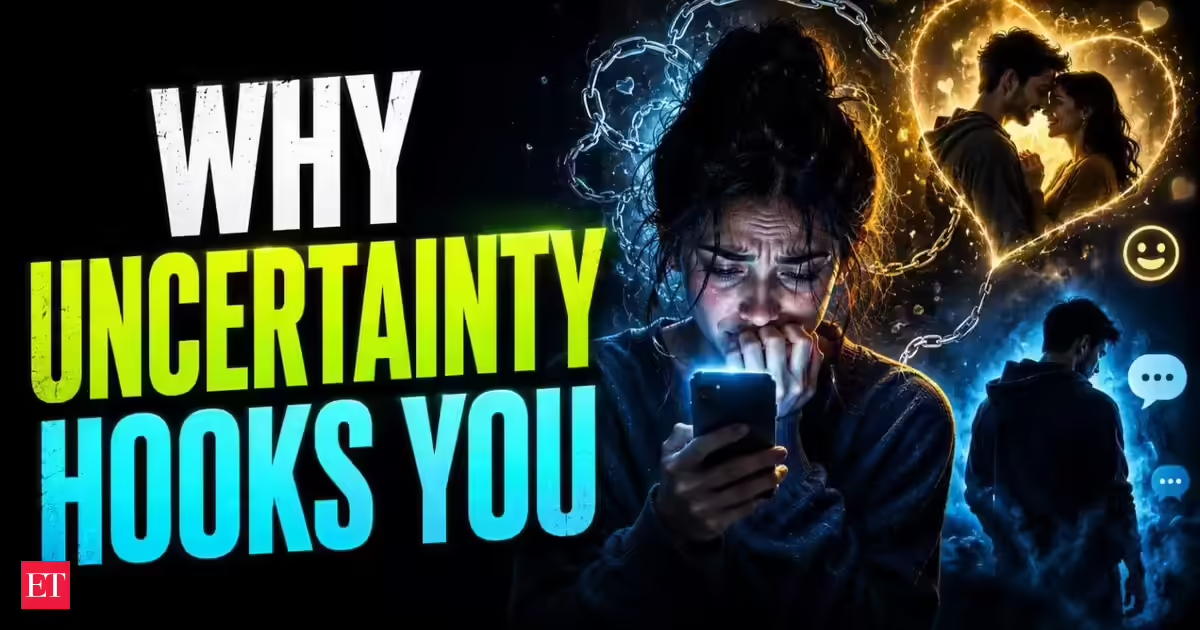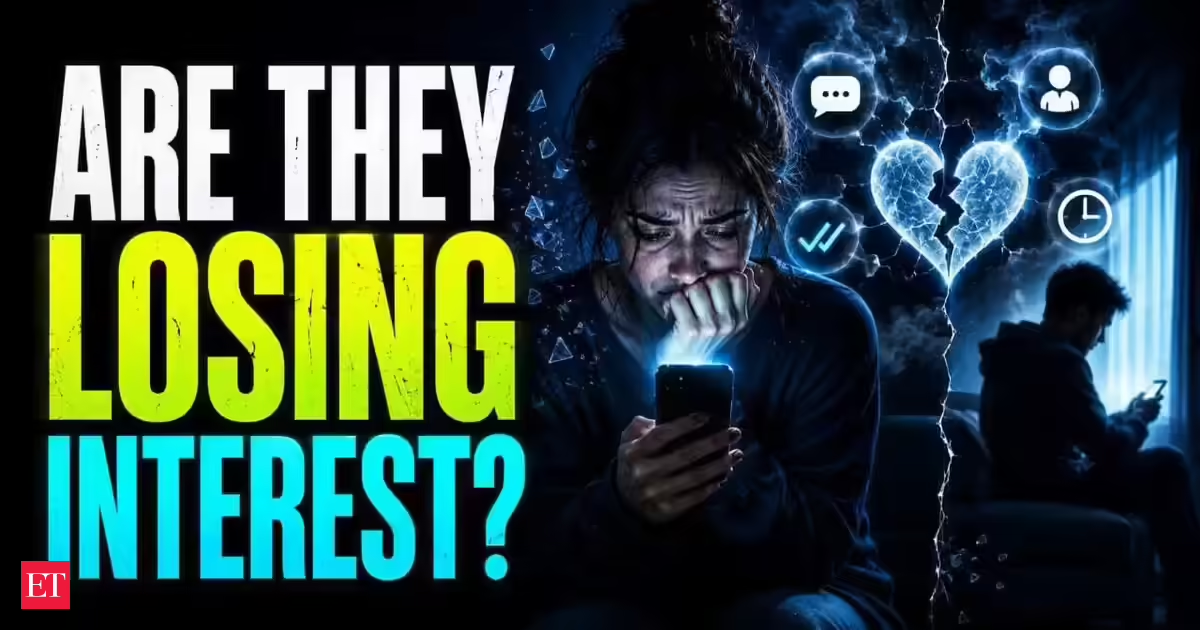
Most people assume they become attached to someone because of love, compatibility, or emotional connection. However, psychology suggests that uncertainty can sometimes create even stronger emotional reactions than predictability.This is why some people find themselves constantly thinking about someone who sends mixed signals. One day, the person is affectionate, attentive, and engaged. The next day, they seem distant, unavailable, or emotionally cold. Instead of losing interest, many people become even more invested.Psychologists have long studied why unpredictable behavior can feel surprisingly addictive. Research suggests that inconsistent attention activates powerful reward systems in the brain, creating a cycle of hope, anticipation, and emotional chasing that can be difficult to break.The result is a relationship dynamic where uncertainty becomes emotionally consuming, even when the connection itself may not be healthy.The Brain Is Drawn to Uncertainty More Than People RealizeOne of the most important psychological explanations comes from a concept known as intermittent reinforcement. This theory suggests that rewards delivered unpredictably often create stronger behavioral patterns than rewards delivered consistently.A simple modern example can be found in social media. People continue checking their phones because they never know when a message, notification, or exciting update will appear.Relationships can work in a similar way. When affection appears inconsistently, the brain begins anticipating the next positive interaction. The uncertainty keeps attention locked onto the person because the reward feels unpredictable.Psychologists have found that variable rewards often create stronger emotional engagement than predictable rewards.Dopamine Is About Anticipation, Not Just PleasureMany people associate dopamine with happiness, but psychologists and neuroscientists describe dopamine as a chemical heavily involved in motivation and reward-seeking behavior. Interestingly, dopamine often increases during anticipation rather than after receiving a reward.When someone sends a loving message after days of distance, the brain experiences relief and excitement. Because the positive interaction was uncertain, it may feel more significant than it actually is.A modern example is someone constantly checking their phone after a person they've been dating suddenly becomes less responsive. Every notification creates a burst of anticipation because it might be the message they've been waiting for.The emotional highs become more intense precisely because they are unpredictable.Attachment Theory Helps Explain Why Some People Chase HarderAccording to Attachment Theory, people develop different ways of responding to emotional closeness and distance.Individuals with anxious attachment tendencies are often especially sensitive to inconsistency. They may become highly focused on changes in communication patterns and seek reassurance when emotional uncertainty appears.If a romantic interest alternates between affection and withdrawal, an anxious individual may interpret the distance as a problem that needs solving. Instead of stepping back, they often lean in further. They text more. They think more. They worry more.The mixed signals become emotionally consuming because the brain is trying to restore certainty and connection.Why Mixed Signals Create an Emotional Roller CoasterPsychologists studying emotional regulation have found that uncertainty often amplifies emotional experiences. Consistent affection creates stability. Inconsistent affection creates emotional highs and lows.One day a person feels loved, valued, and important. The next day they feel confused, ignored, or rejected. This emotional contrast can make the positive moments seem even more rewarding.The brain begins focusing on the possibility of returning to the emotional high rather than evaluating whether the overall relationship is healthy.The Scarcity Effect Makes Attention Feel More ValuableAnother psychological concept involved is the Scarcity Principle. People tend to place greater value on things that seem limited or difficult to obtain.When attention becomes inconsistent, it may appear more valuable simply because it is less available. A partner who replies instantly every day may eventually feel predictable.A person who occasionally disappears and then returns with affection may seem more exciting, even if the relationship creates more stress than happiness. The emotional value often comes from perceived rarity rather than actual compatibility.Why Social Media Intensifies the ProblemModern technology has made mixed signals even more powerful. People can see online activity, story views, likes, follows, and changing communication patterns. This constant stream of information encourages overanalysis.Someone may spend hours wondering why a person viewed their story but did not reply to their message. Psychologists suggest that digital communication often increases uncertainty because people have access to partial information without full context.The mind fills in the missing details, often assuming the worst.What Psychology Really Says About Mixed SignalsPsychology does not suggest that everyone who sends mixed signals is manipulative or that everyone who chases them has attachment issues. Human relationships are far more complex than that.However, research indicates that intermittent reinforcement, dopamine-driven anticipation, attachment patterns, emotional uncertainty, and scarcity effects can make inconsistent attention feel unusually compelling.Sometimes people are not chasing a person. They are chasing the next moment of certainty, validation, or emotional reward. And understanding that difference may be the first step toward recognizing why mixed signals can feel so difficult to walk away from.Healthy Relationships Usually Feel PredictablePopular culture sometimes portrays emotional unpredictability as exciting or romantic. Psychology suggests the opposite. Research consistently finds that emotional security, trust, and consistent communication are associated with healthier and more satisfying relationships.While mixed signals can feel intense, intensity is not always the same thing as love. Stable relationships may seem less dramatic, but they often provide greater emotional well-being over time.FAQsWhy do mixed signals feel so addictive?Psychologists suggest that unpredictable attention activates reward systems in the brain, making people anticipate the next positive interaction.Why do I think about someone more when they pull away?Distance often creates uncertainty, and the brain naturally seeks answers, reassurance, and emotional closure.
Psychology says mixed signals feel addictive, here’s why one day of love and the next day of distance can make you chase someone even harder
Popular culture often presents emotional unpredictability as thrilling, mysterious or even romantic. Psychological research, however, points in a different direction. Studies consistently show that emotional stability, trust and reliable communication are far more closely linked to healthy, satisfying and long-lasting relationships.
905 words~4 min read