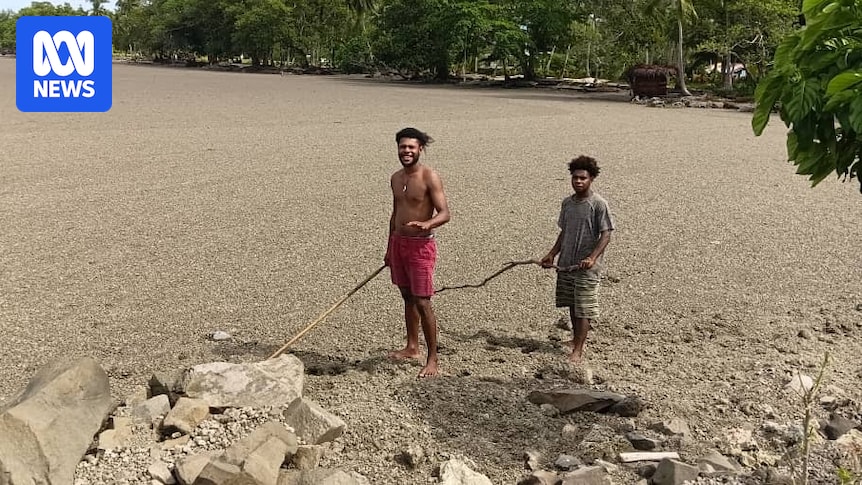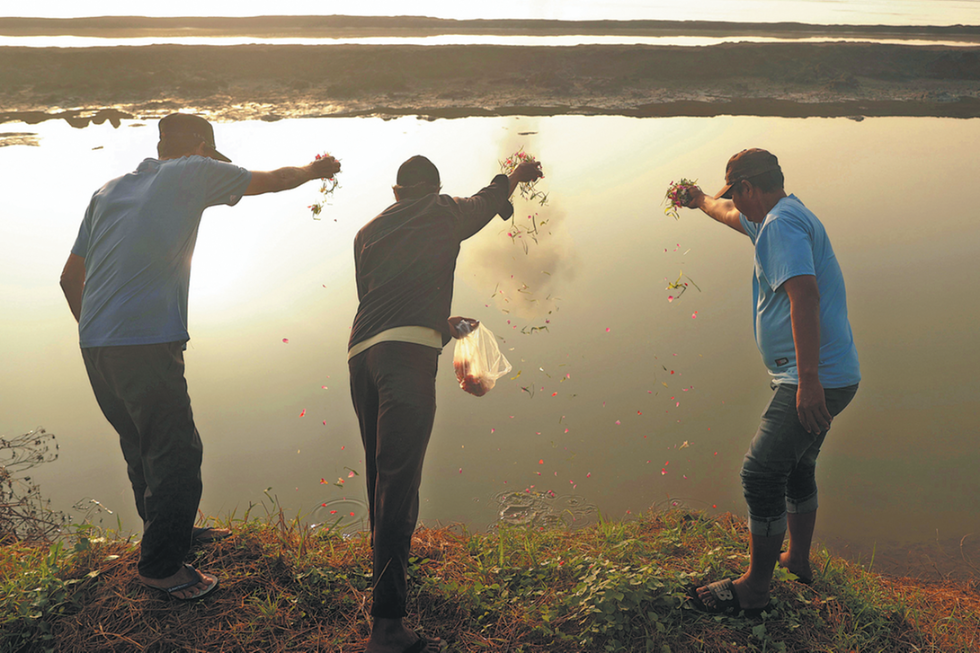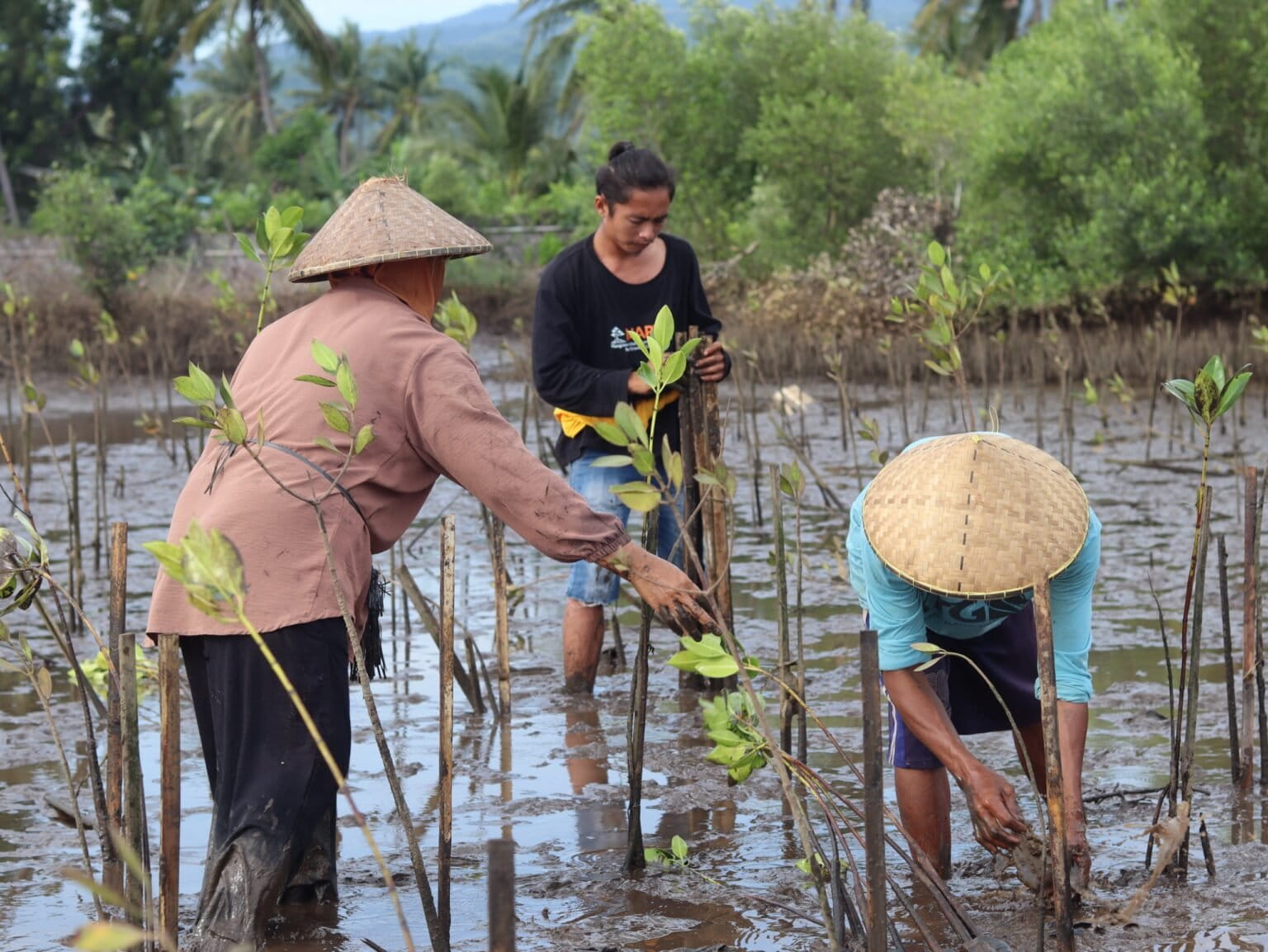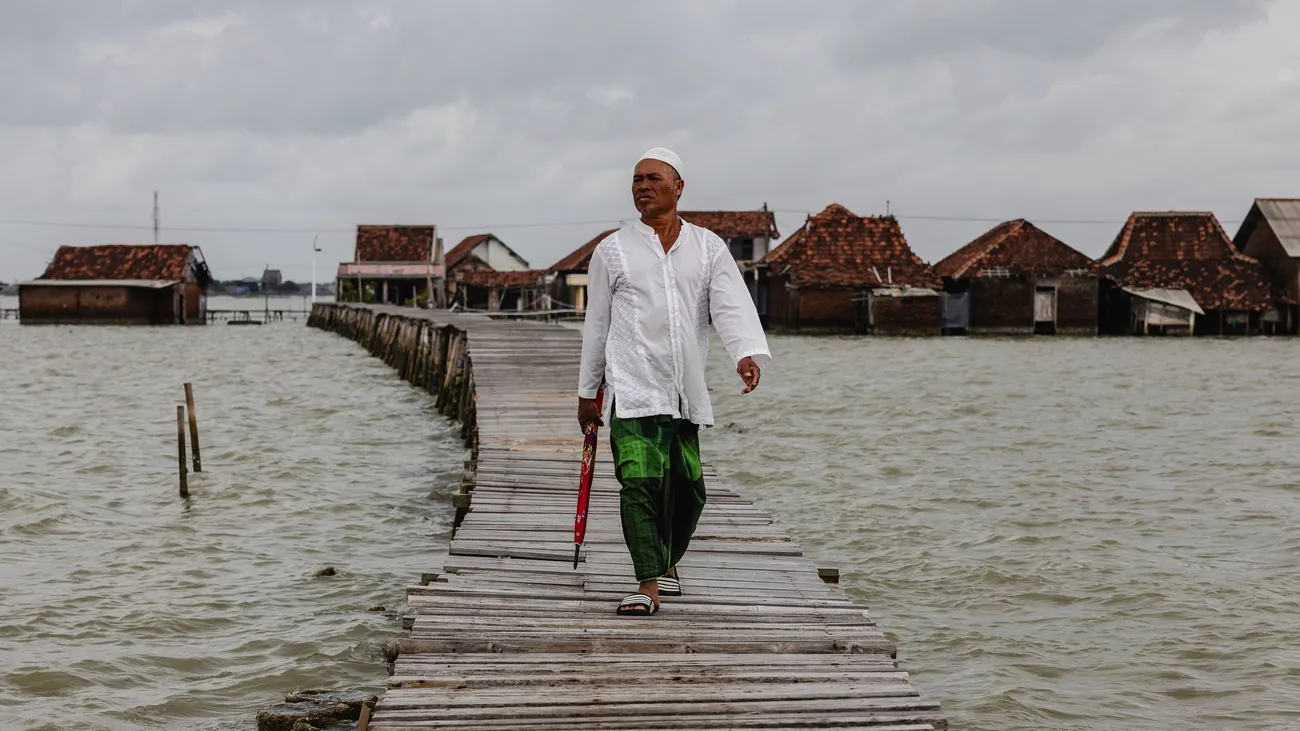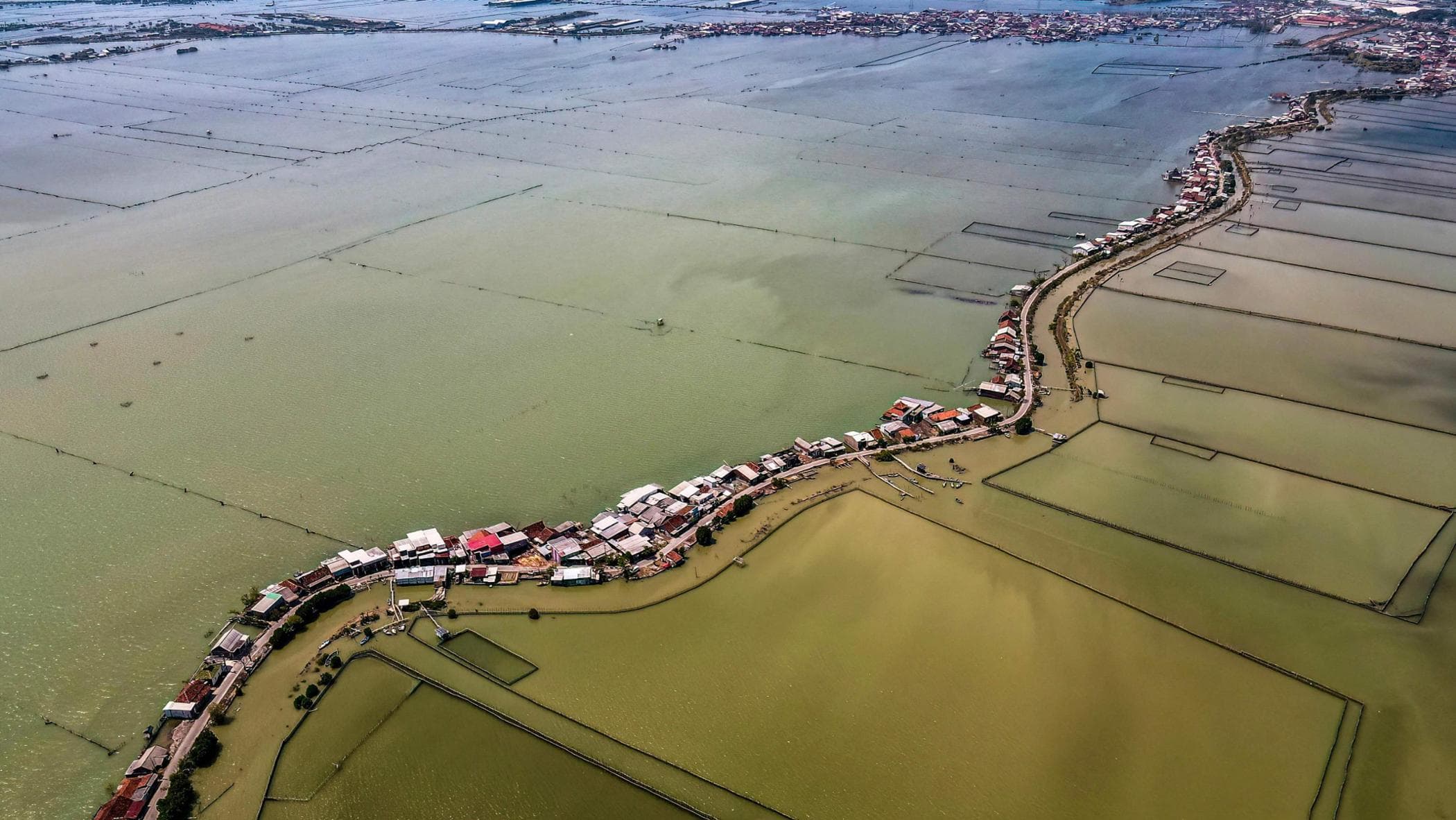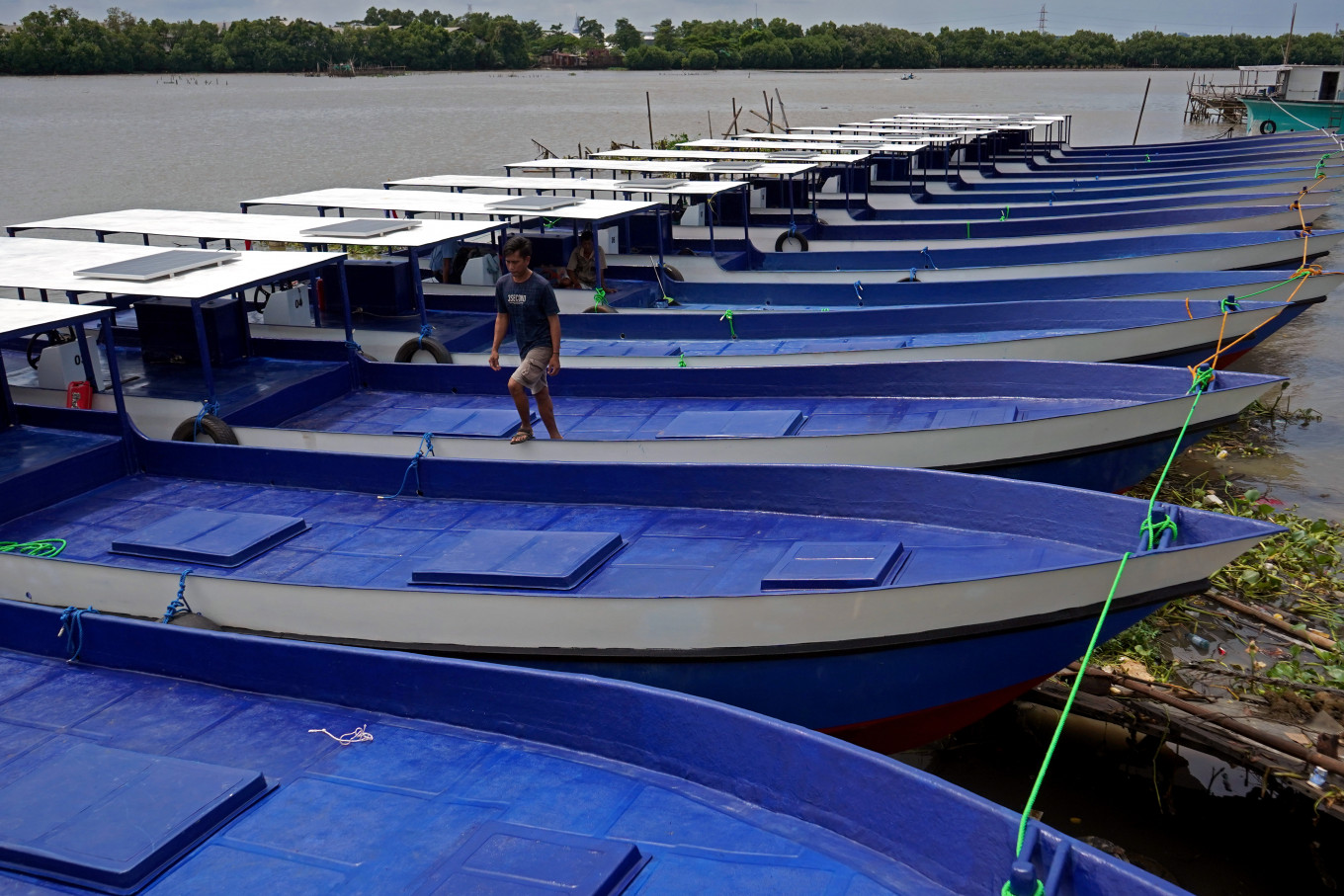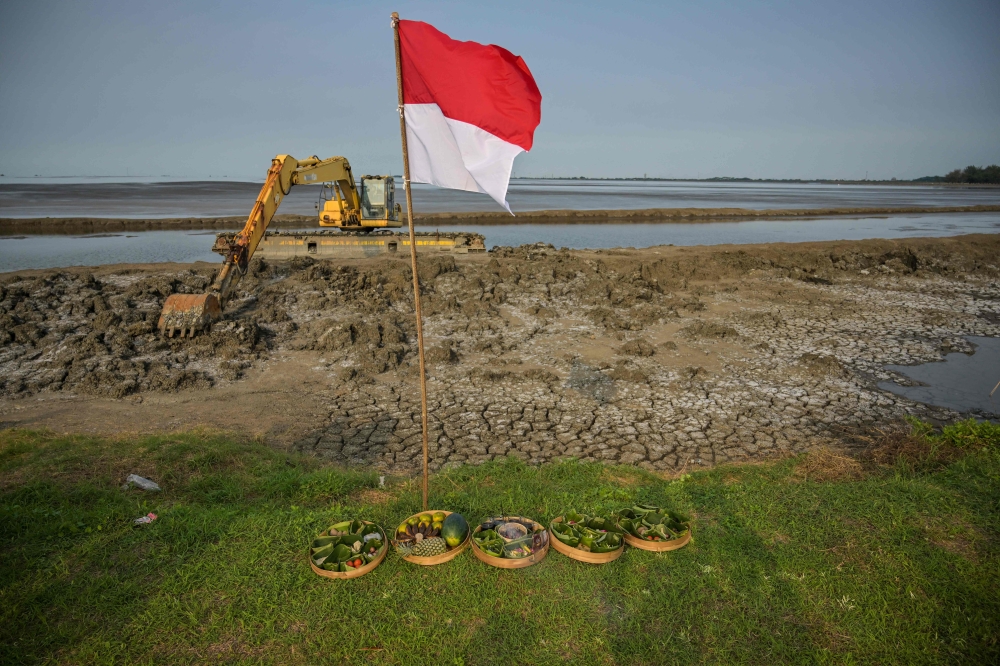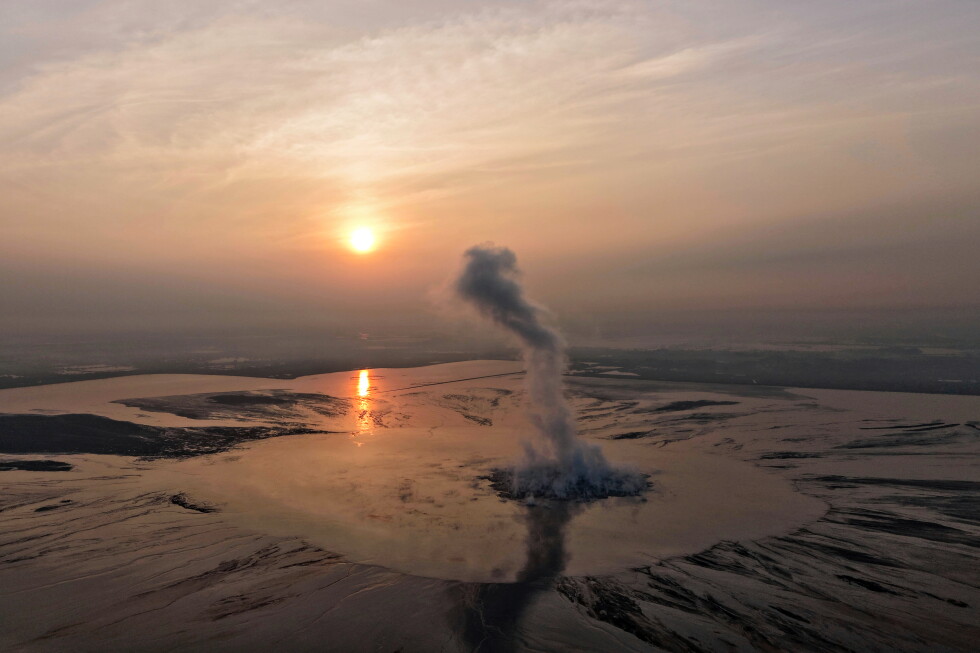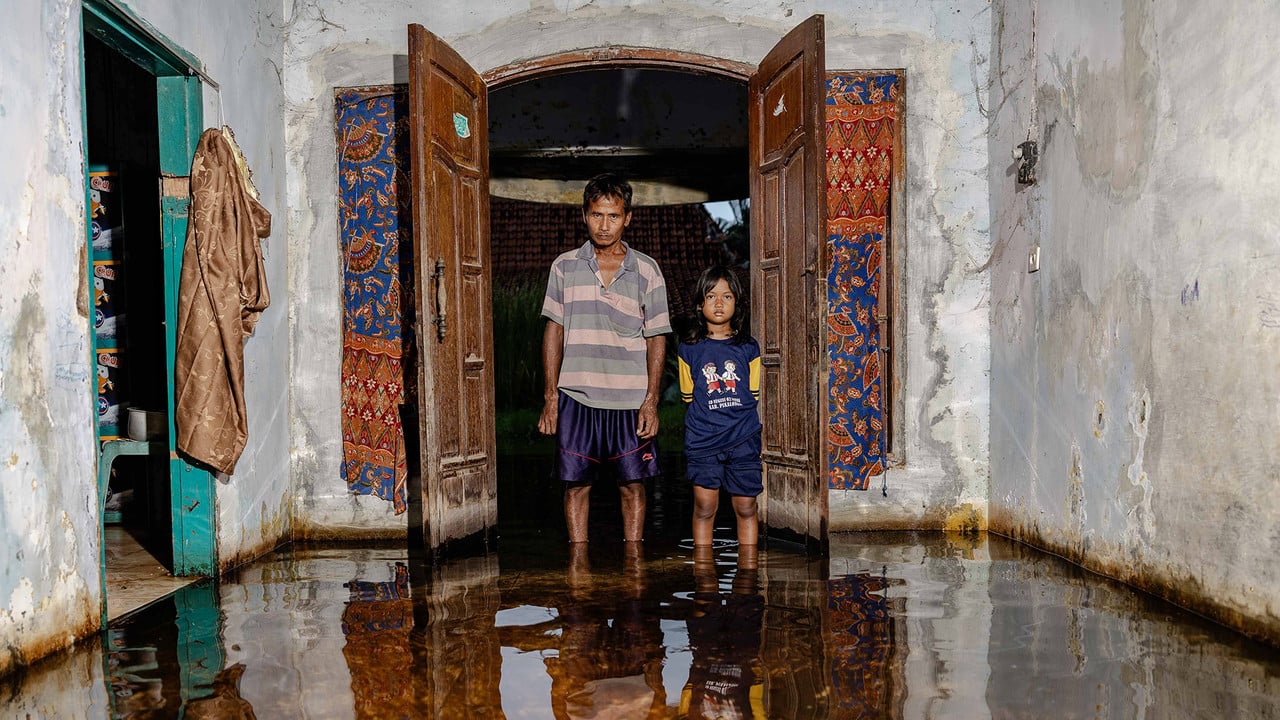
June 12th 2026A child perches on the edge of her bed. Waves lap at the floor beneath her dangling feet. Here in Depok, a village on the Indonesian island of Java, the ocean has flowed inside the house. Such a sight is not uncommon in the rural communities along Java’s northern coastline, where up to four metres of land each year are swallowed by the sea. Rice paddies, fish ponds and coconut trees have all vanished beneath the waves. Meanwhile the land that remains has become increasingly uninhabitable. Locals scramble to stay above the water. Some villagers have raised the floors of their homes with soil and cement, creating “dwarf houses” that people must stoop or crawl to enter. Those who can’t afford to elevate their floors store their possessions on high shelves, or build makeshift tidal barriers across their front doors. When the barriers overflow, residents bail out water with buckets. Sea levels are rising by around 5mm a year along Indonesia’s coastline, a rate far higher than the global average of 3.5mm. At the same time, some areas along Java’s coast are sinking by 1.15 metres a year. The island’s subsidence is partly the legacy of centuries of exploitation. In the 19th century, Dutch colonists built dams and embankments in Javan cities—projects that reduced flooding in the short term but interrupted the natural sedimentation process along the coasts. In 2023 the Indonesian government gave permission for sea sand to be extracted on a large scale for export, a controversial practice that scientists have warned will lead to further coastal erosion. Excessive use of groundwater has also accelerated the rate of subsidence, with well-digging and water-pumping causing soil to sink under its own weight. Your browser does not support this video. The Indonesian government has funded elaborate sea defences for Jakarta, the capital city, on the north-western coast of Java. It has also built a new capital in the inland jungles of Borneo, in case flooding in Jakarta becomes unmanageable. But for the residents of Java’s hundreds of drowning villages, there’s little help available. Garry Lotulung, an Indonesian photojournalist, has travelled to the coast several times to photograph the people who have been forced to adopt a semi-amphibious lifestyle. In the past few years many have given up their struggle against the oncoming tide. The village of Semonet is now completely abandoned, with all 265 of its inhabitants having sought refuge elsewhere. Some villages remain connected to the mainland by raised bamboo walkways (though these are often submerged at high tide); others are accessible only by motorboat. With the cost of oil soaring due to the Iran war, many people can’t afford fuel, and become cut off for days on end. Not all the villagers understand what has caused the floods, Lotulung said. For many, the global climate crisis remains abstract compared with their immediate concerns. In the village of Timbulsloko, for instance, the cemetery has become almost entirely submerged. Now the dead can only be buried at low tide. – Bathsheba Lockwood Brook Over the past 20 years, all of Pasijah’s neighbours have abandoned their homes because of the encroaching sea. She and her family are her village’s only remaining residents Locals can only access the cemetery at low tide by an elevated bamboo platform that connects it to the rest of the village In Depok, many houses have sunk too far below the water levels. They have since been abandoned by their owners A network of boardwalks and bamboo platforms connects the houses in Timbulsloko. Villagers walk along a flooded path at high tide in the village of Bogorame Photographs by Garry Lotulung
The amphibious villagers of Indonesia
As Java sinks into the sea, locals have been forced to live with water
606 words~3 min read