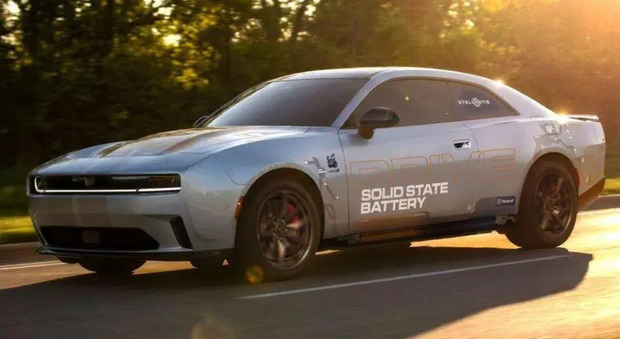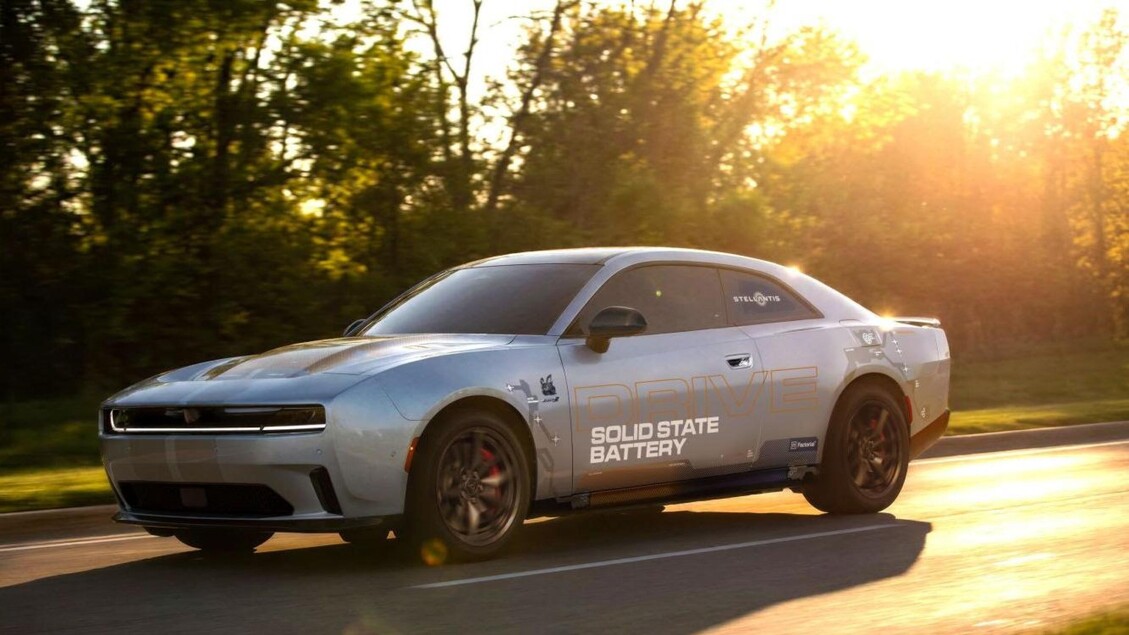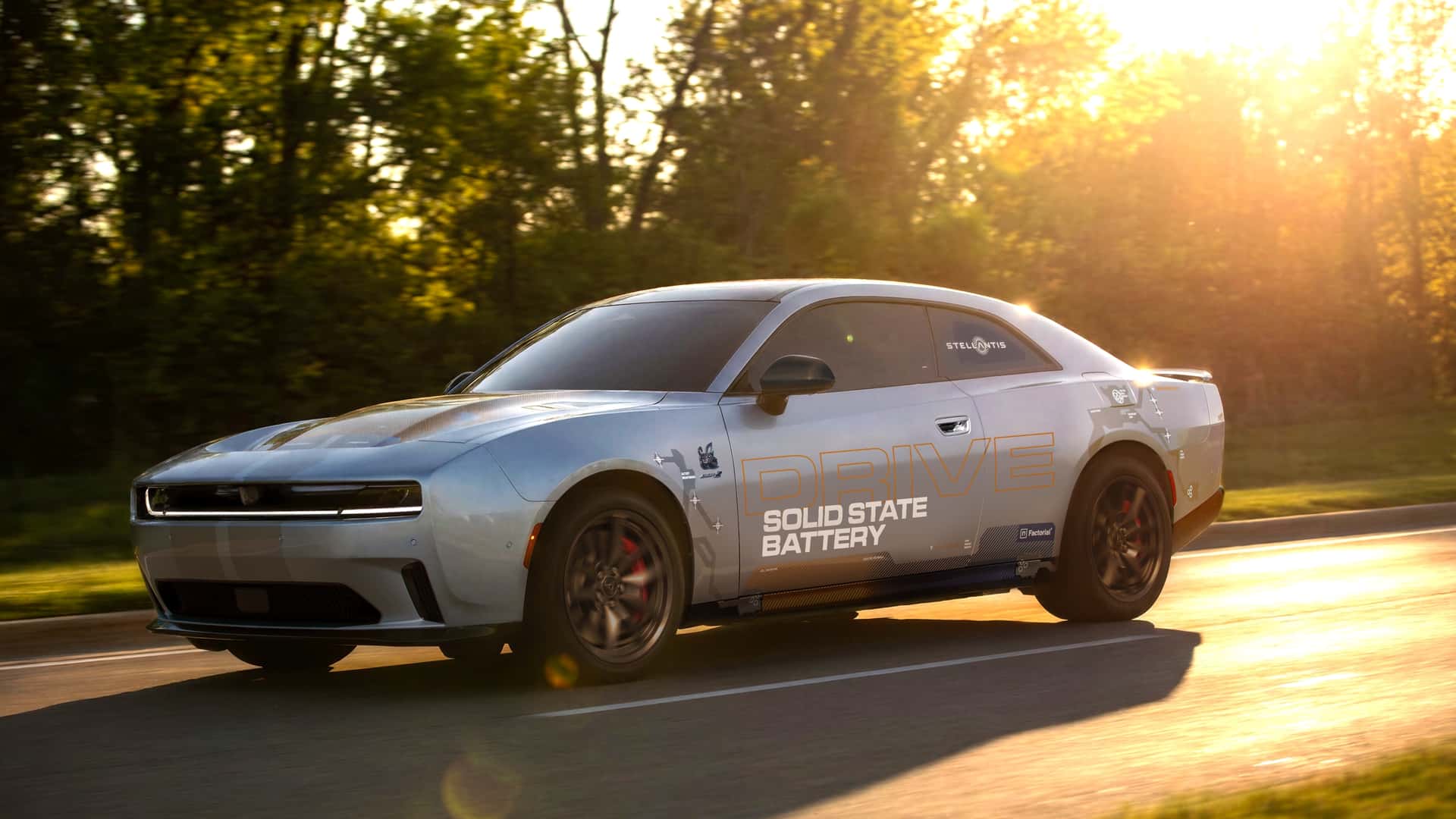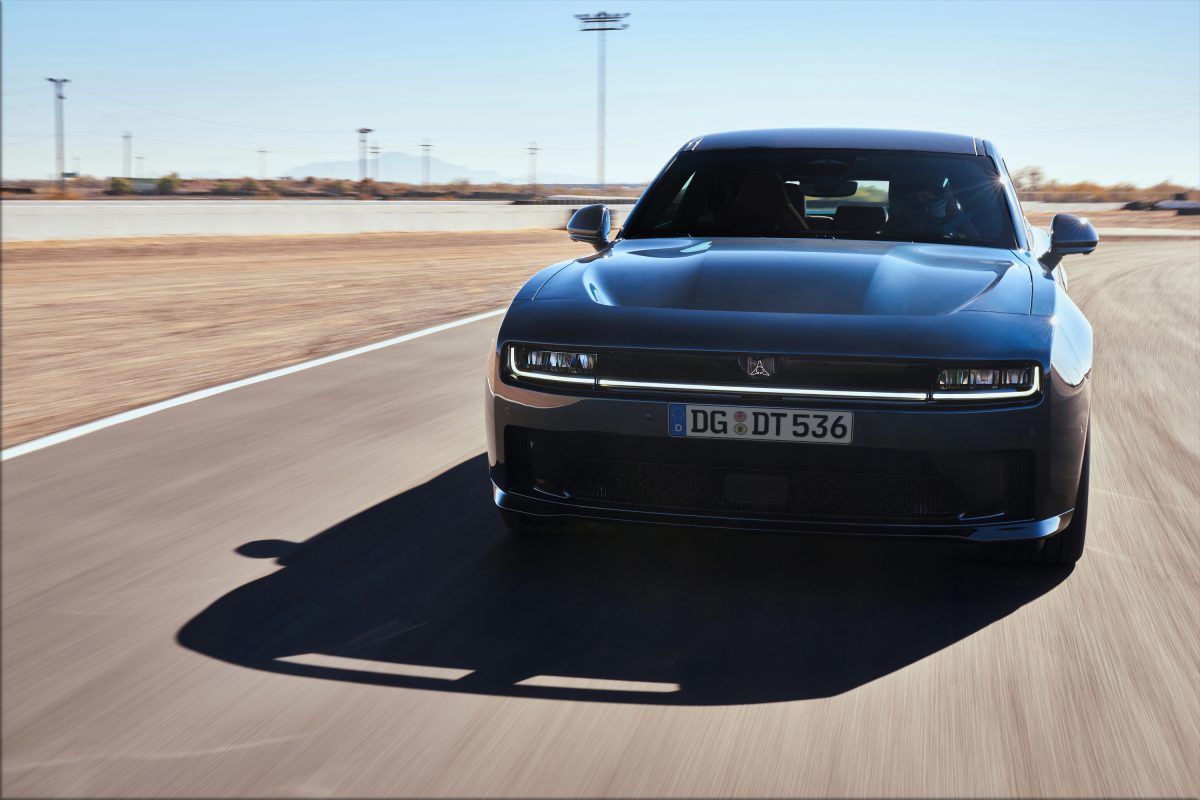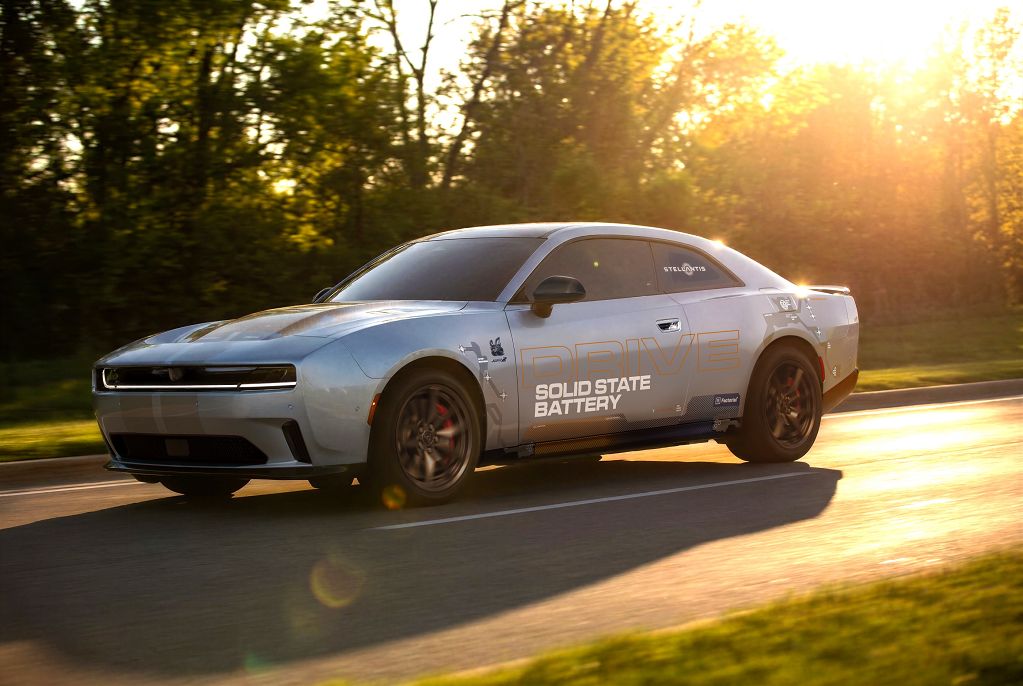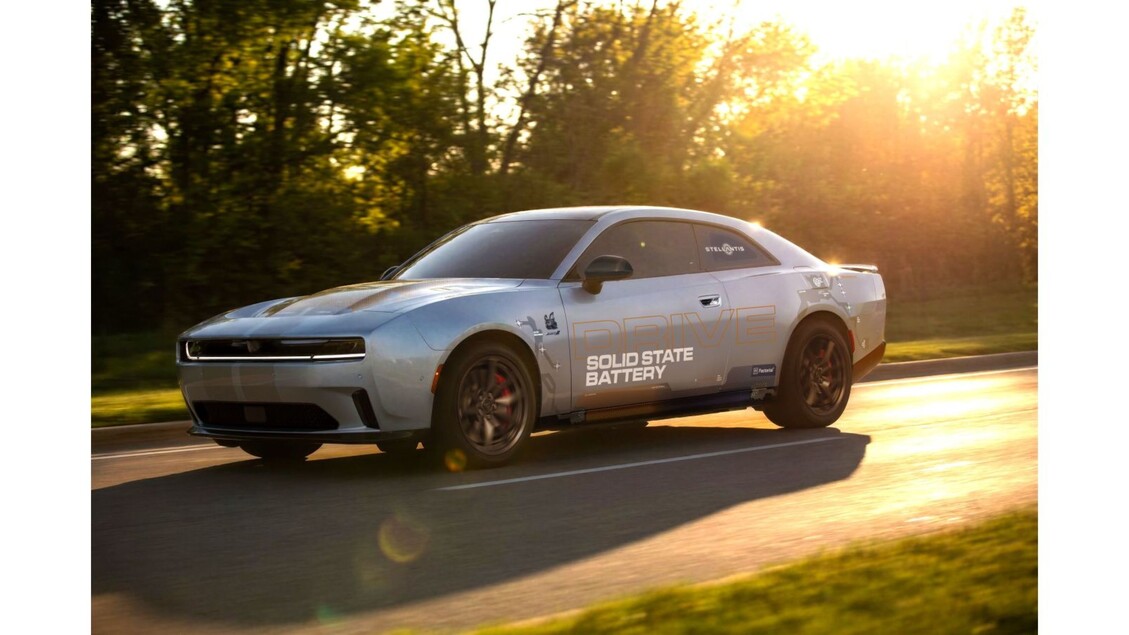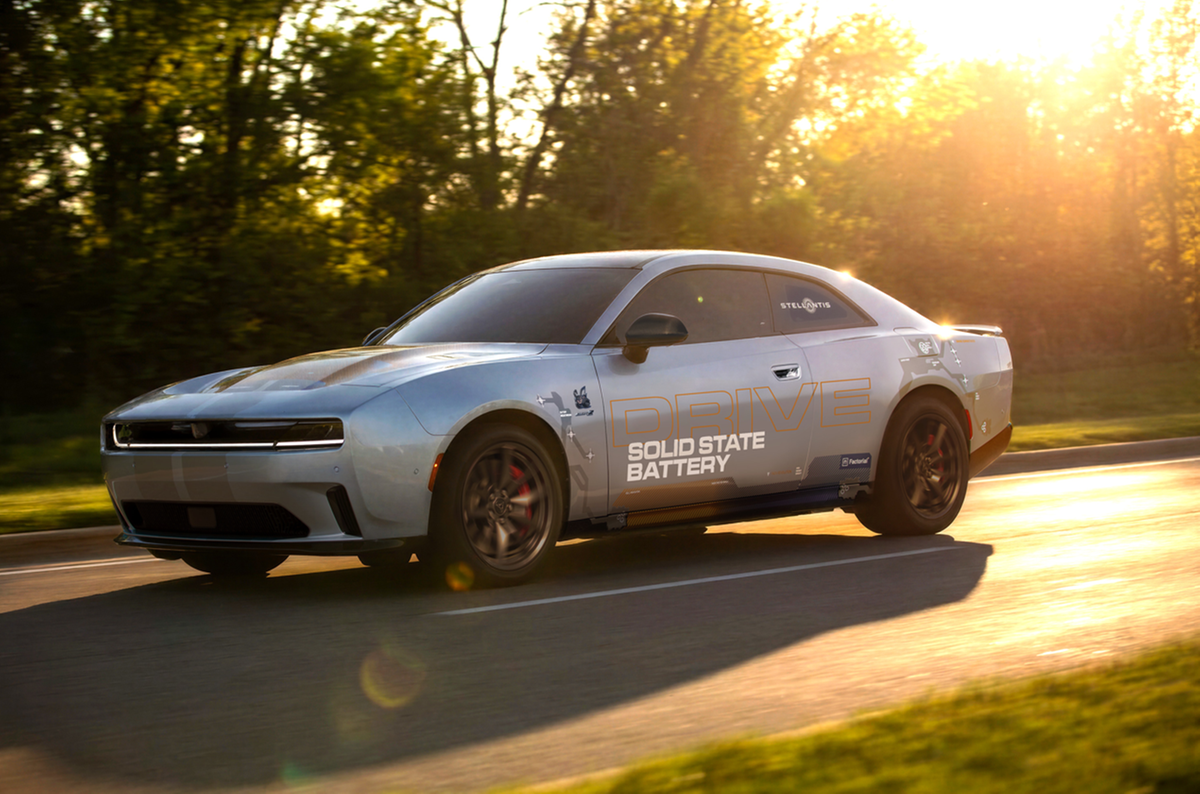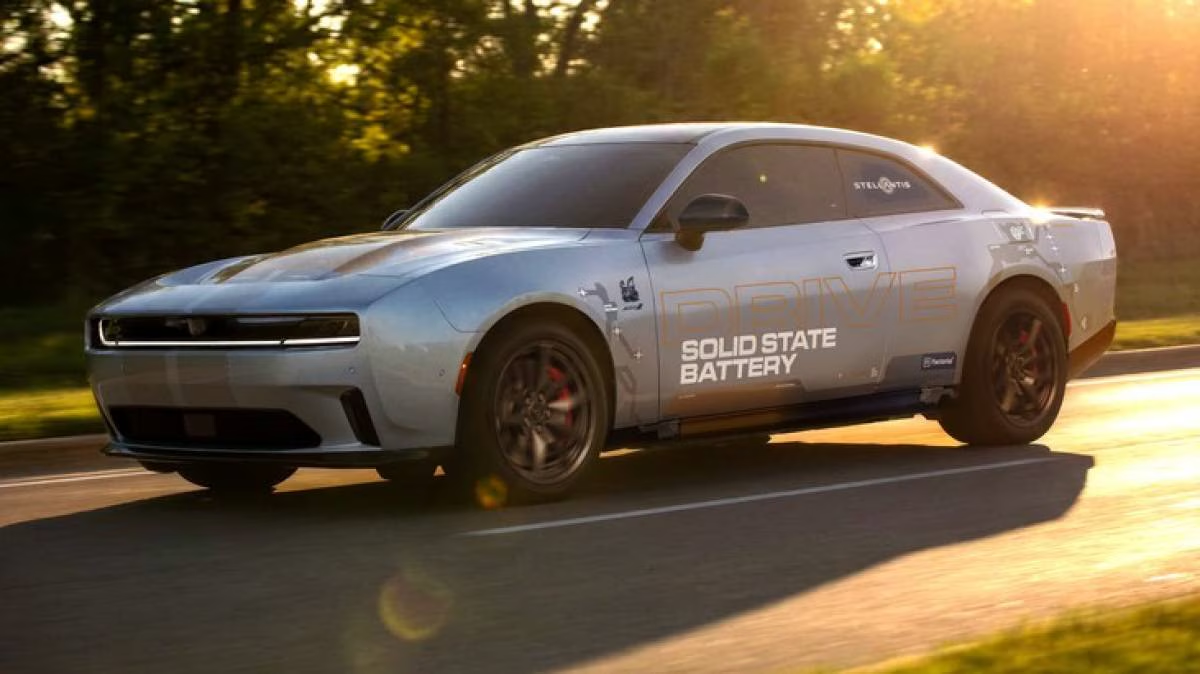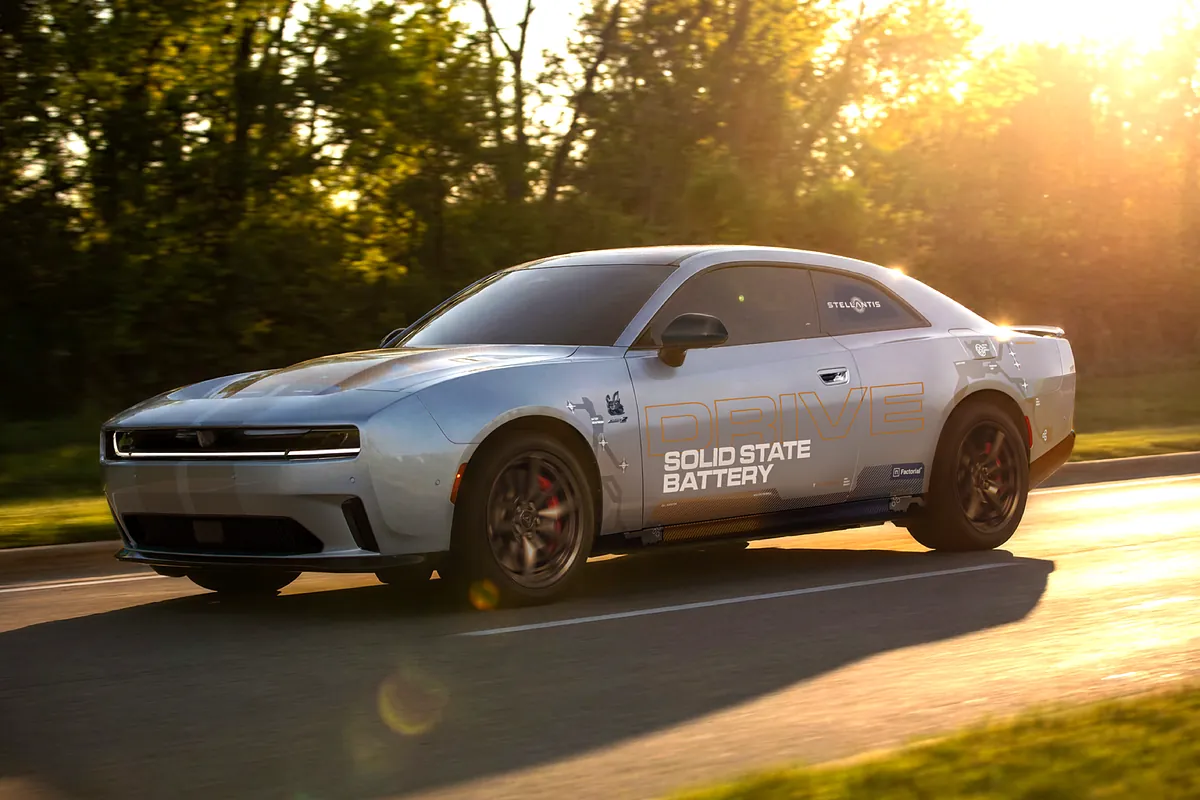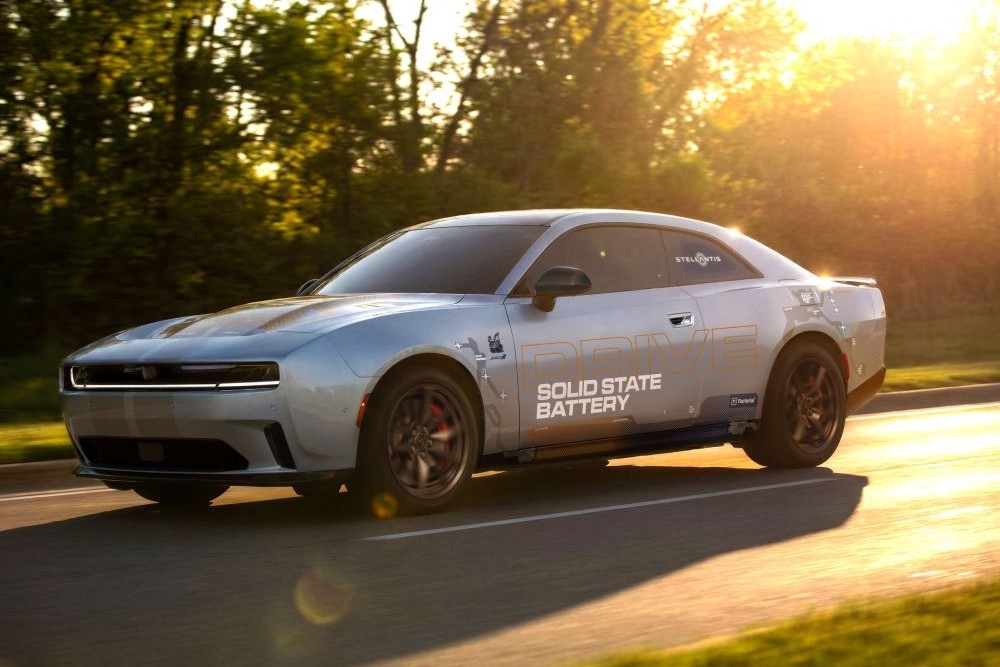
Stellantis has integrated solid-state battery cells from its partner Factorial Energy into a development vehicle and has now launched a road-testing programme. The move follows the initial validation of the cells by Stellantis last year.Image: StellantisStellantis has equipped a Dodge Charger Daytona development vehicle with a solid-state battery and will now use the technology demonstrator for real-world road testing. The programme is intended to assess the performance, safety and reliability of Factorial’s battery cells. According to the partners, this marks ‘the first integration of solid-state cells into a Stellantis vehicle.’The partners are focusing their testing on Factorial’s FEST (Factorial Electrolyte System Technology), which combines a lithium-metal anode with a polymer separator Factorial began distributing B-samples of the solid-state cells, which offer a capacity of more than 106 Ah, in June 2024. In 2025, Stellantis and Factorial demonstrated fast charging with FEST cells featuring an energy density of 375 Wh/kg, charging from 15 to 90 per cent SoC in 18 minutes. Stellantis also validated these FEST cells last year.Factorial Energy is a US-based developer of solid-state battery cells backed primarily by Stellantis, Mercedes-Benz and Hyundai-Kia. Alongside its FEST technology, the company is pursuing further development programmes. One example is its collaboration with Mercedes-Benz on solid-state cells marketed under the Solstice name. These cells are currently at the A-sample stage and are designed to offer higher energy density while using a dry cathode coating process.In September 2024, Factorial stated that its Solstice cells could achieve an energy density of up to 450 Wh/kg, although it remains unclear whether this figure refers to the cell or pack level. According to the company, this could increase the range of electric vehicles by up to 80 per cent. Factorial had previously also reported progress in reaching a cell capacity of 40 Ah for the Solstice technology.As part of the road-testing programme with Stellantis, the carmaker says the transition from cell validation to integration in a development vehicle required the combined expertise of engineers from both companies. Stellantis developed a ‘patented new mechanical architecture’ to integrate the FEST cells into the existing battery pack. At the same time, the teams adapted the control systems and pack design ‘to bring out the best of solid-state cell performance.’ According to the partners, these technical modifications are essential to ensure cell performance under all conditions.The Dodge Charger Daytona, with its integrated cells, will take centre stage in the upcoming calibration and test-drive programme. The model is an all-electric muscle car from Stellantis’ US brand Dodge, built on the STLA Large platform. Shortly after the electric vehicle’s market launch in late summer 2024, Stellantis announced its intention to collaborate with Factorial on a demonstration programme to integrate solid-state cells into the Dodge Charger Daytona. Nearly two years later, the programme is now set to begin.“Battery development is a balancing act. It’s not enough to optimise a single metric. We need a system that delivers real benefits in a real vehicle,” said Ned Curic, Stellantis Chief Engineering and Technology Officer. The goal is to bring solid-state batteries closer to customers—’with the potential for longer range, faster charging and lower costs.’ Equally important, however, is the strong compatibility of FEST with existing lithium-ion manufacturing processes.“We are deeply honoured to work alongside Stellantis, one of the world’s great mass-market automakers, on this STLA Large-based development car,” said Siyu Huang, CEO of Factorial. “What we have built together, from cell chemistry to pack architecture to enable real-world road testing, is exactly the kind of deep, full-stack collaboration that solid-state has always required”media.stellantis.com
Dodge showcases muscle car with solid-state battery - electrive.com
Stellantis has integrated solid-state battery cells from its partner Factorial Energy into a development vehicle and has now launched a road-testing
588 words~3 min read