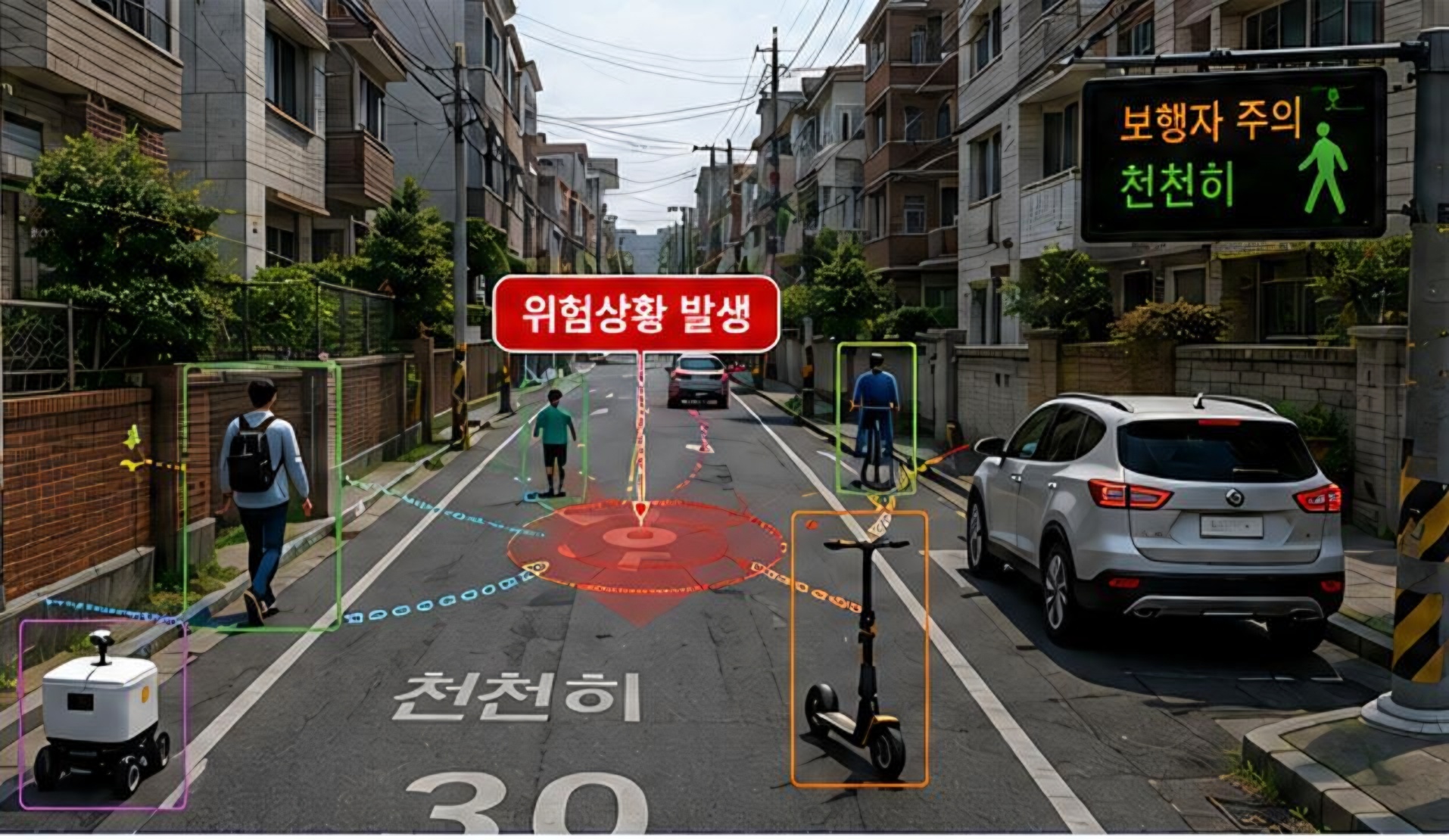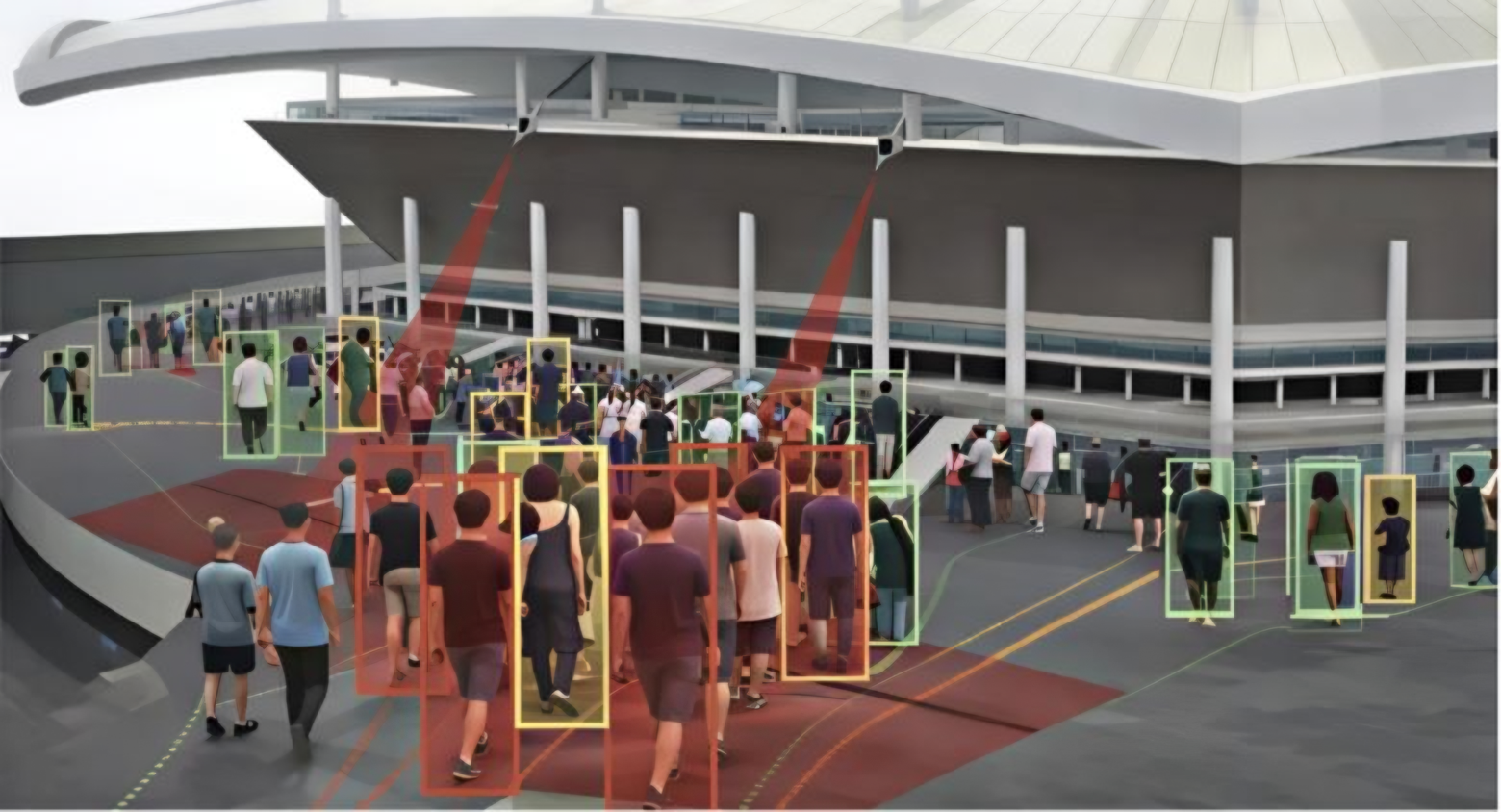
A rendered image of Seoul Facilities Corporation's artificial intelligence-based safety systems, using LiDAR sensors, at Seoul World Cup Stadium. Courtesy of the Seoul Facilities Corporation
The municipal agency responsible for overseeing the capital’s major public infrastructure will deploy a sweeping network of artificial intelligence (AI) safety systems this year, transitioning from manual surveillance to automated, real-time hazard detection.
The initiative, announced Friday by the Seoul Facilities Corporation, will introduce specialized algorithmic monitoring across the city's critical transit corridors, sports arenas and public grounds to eliminate blind spots.
At the Seoul World Cup Stadium, the agency will introduce an automated crowd management system utilizing LiDAR sensors, which emit laser pulses to map physical spaces in three dimensions. Operating alongside intelligent closed-circuit television cameras, the system will analyze crowd density in real time, classifying risk across four distinct alert tiers. If dangerous bottlenecks occur, the platform will automatically trigger evacuation warnings across the stadium's electronic scoreboards and public address systems.
The city’s high-speed thoroughfares will see a similar digital overhaul.