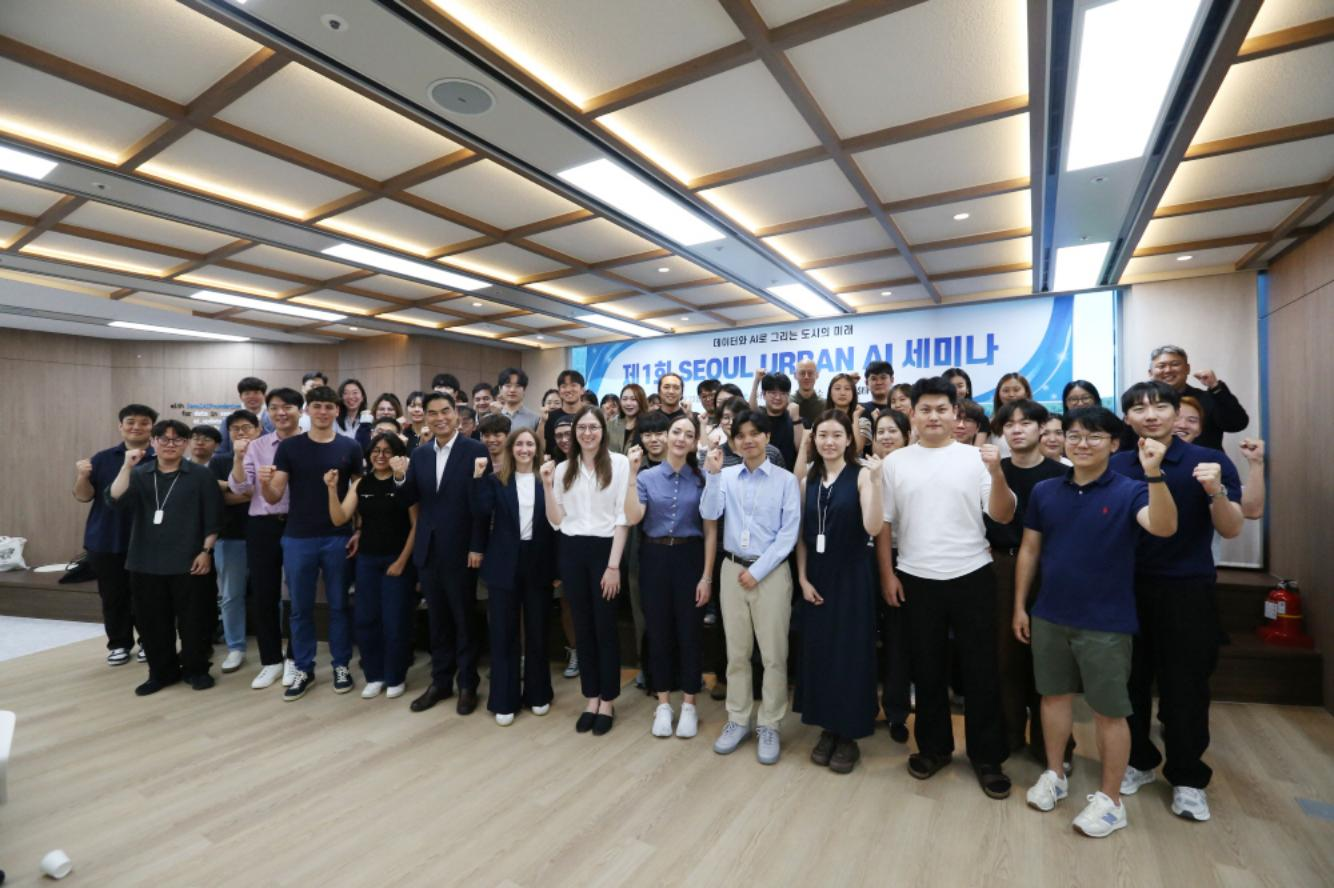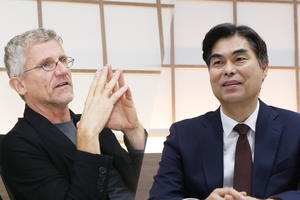
City-backed agency marks 10 years since launch as its role expands from digital access to urban research Carlo Ratti, director of the MIT Senseable City Lab (left) and Seoul AI Foundation Chair Kim Man-ki speak during their special dialogue. (Seoul AI Foundation) Artificial intelligence should be used not only to optimize city services but also to help address challenges such as aging populations, declining birth rates and social isolation, city officials and researchers from the Massachusetts Institute of Technology said Thursday.Carlo Ratti, director of the MIT Senseable City Lab, said Seoul is well positioned to become a model for how cities can use AI to better understand how people live, interact and build communities.“Many cities will use AI to develop services or optimize transportation systems, but Seoul can go one step further,” Ratti said during a special dialogue marking the 10th anniversary of the Seoul AI Foundation.Ratti made the remarks alongside Seoul AI Foundation Chair Kim Man-ki as the two discussed the city’s digital transformation and the role AI could play in shaping the next generation of urban policy.Seoul has been expanding its AI ambitions under Mayor Oh Se-hoon’s push to make the city a global leader in AI-powered urban innovation.The city-funded Seoul AI Foundation, formerly known as the Seoul Digital Foundation, marks its 10th anniversary this year as it expands from supporting digital infrastructure to shaping Seoul’s AI policies through research, consulting and public-sector technology projects.According to Kim, the foundation’s role has expanded from supporting digital infrastructure and citizen education to conducting policy research, data analysis and AI consulting for public agencies since its launch in 2016.Ratti said Seoul’s experience confronting demographic challenges could provide valuable lessons for cities around the world.“Real value is created when AI is used to respond to issues such as mobility for older adults, activity spaces for young people and the use of public spaces in response to climate change.”Ratti added that advances in visual AI, big data analytics and sensing technologies are allowing researchers to better understand how people use cities across different age groups, income levels and environmental conditions.“The moment technology delivers its greatest value is when it helps us understand cities as places where people live their lives,” he said.Earlier this year, the two organizations launched Senseable City Seoul at the S-Plex Center in western Seoul. The facility is the fourth global research hub established by the MIT lab.“Establishing Senseable City Seoul was an important turning point for Seoul as it seeks to become both a test bed and a benchmark for AI-powered urban innovation,” Kim said.Kim said the foundation is working with MIT researchers on projects related to public safety and tourism while also collaborating with the University of Cambridge’s Maxwell Centre on research involving physical AI and urban environments.“The next 10 years will be a period in which Seoul works alongside major cities around the world to lead AI innovation,” Kim said. “Our goal is to connect world-class research with people’s everyday lives and ensure the benefits of AI are shared by all citizens.”
Seoul AI Foundation, MIT discuss people-centered AI city
Artificial intelligence should be used not only to optimize city services but also to help address challenges such as aging populations, declining birth rates a
506 words~2 min read