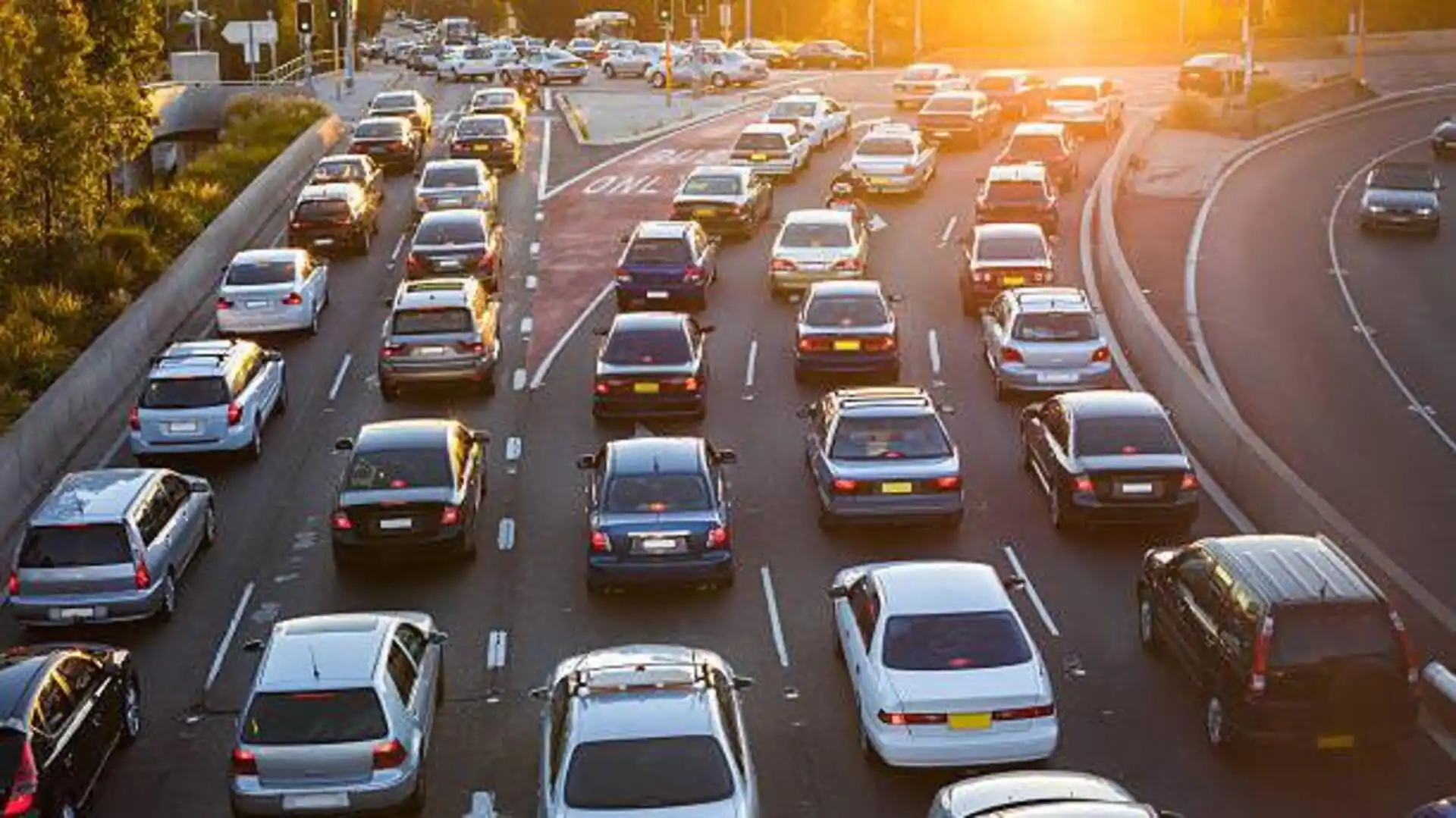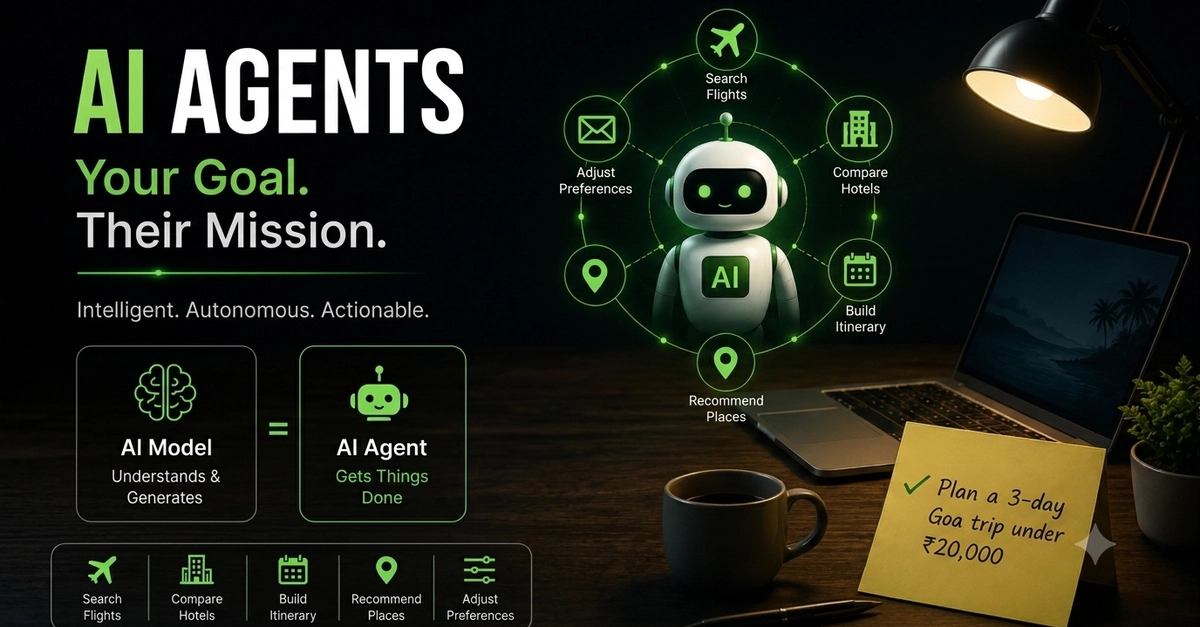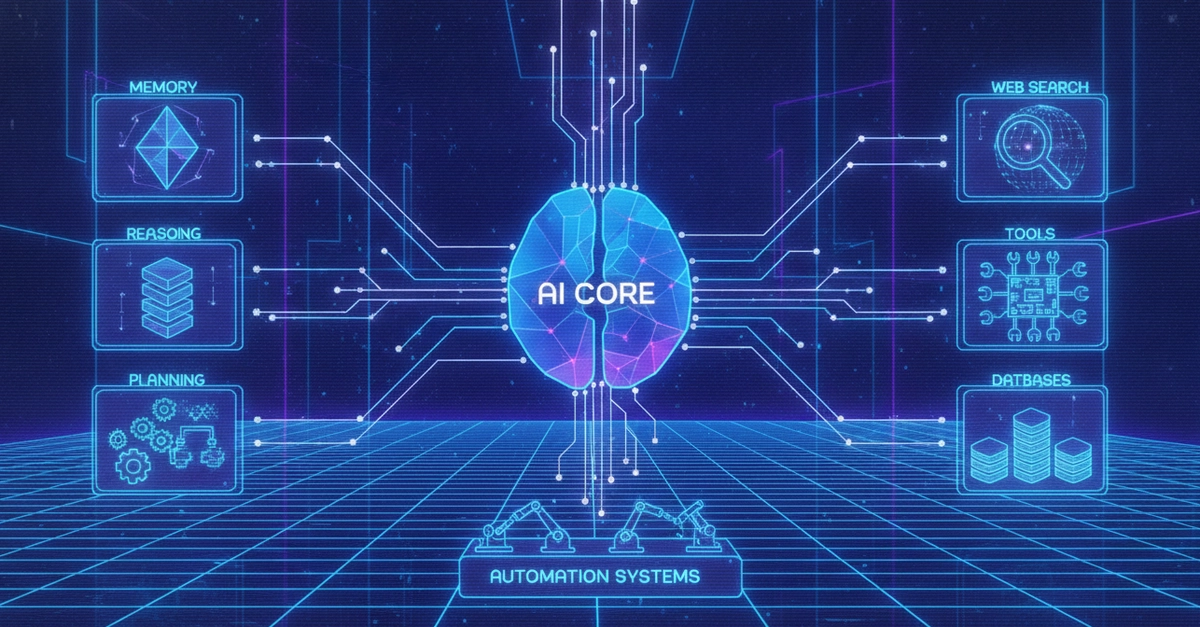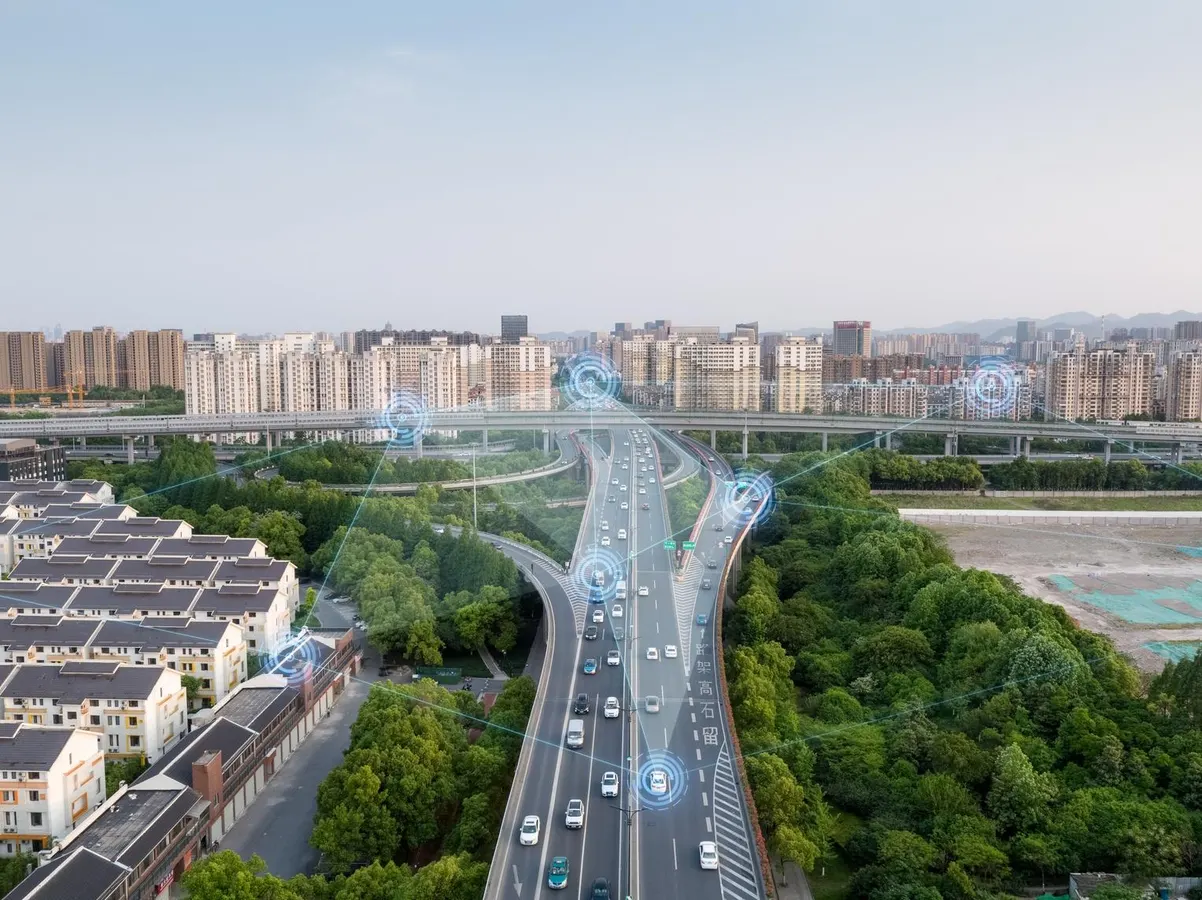
AI agents can help cities connect data, infrastructure and services in real time — moving from reactive response to coordinated action.GettyCities are being asked to do more with less. Populations are growing. Infrastructure is aging. Budgets are tight. Workforces are stretched. At the same time, residents expect city services to feel as simple, fast and reliable as the digital tools they use every day.AI agents can help close that gap.Unlike traditional AI tools that answer a question or flag a single issue, AI agents can observe what’s happening, reason through context, plan next steps and take action across connected systems. They can help cities respond faster, reduce manual work, improve resident services and operate with greater confidence.For city leaders, this creates new opportunities to design public services around speed, coordination and real-world outcomesThe pressure cities faceLocal governments manage some of the most complex operating environments in the world. Transportation, utilities, permitting, emergency response, public works and resident services all depend on timely decisions and coordinated action.Cities need a more proactive model. They need tools that can identify issues earlier, route work faster and help employees focus on higher-value tasks. AI agents make that possible by bringing intelligence directly into the flow of city operations.What makes AI Agents differentTraditional AI tools usually perform one narrow function. A chatbot answers a question. A prediction model forecasts demand. AI cameras detect an object in a camera feed. These tools can be useful, but people still need to interpret the output and decide what happens next.AI agents go further. They combine several capabilities into a continuous loop:Observe: Gather information from cameras, sensors, applications, data feeds and connected devices.Reason: Understand context using large language models and vision-language models (VLMs).Plan: Break a goal into steps and decide the best action.Act: Trigger workflows, call APIs, send alerts, update systems, or coordinate with other agents.Learn: Improve performance based on outcomes and feedback.That shift matters. A traditional system might detect traffic accidents. An AI agent can detect the accident, assess severity, alert responders, adjust nearby traffic signals, notify transit operators and update public information channels.The result is AI that doesn’t just inform decisions. It helps cities act.How AI Agents improve productivity and reduce costsAI agents create value by reducing repetitive work, improving response times and helping cities use limited resources more effectively.Automating routine work - Cities process large volumes of routine requests. AI agents can handle intake, classification, review and routing of permit applications, utility inquiries and enforcement reports autonomously, compressing cycle times from days to minutes.Moving from reactive to proactive operations - Rather than relying on inspections or complaints, AI agents continuously monitor sensor and video feeds, detecting potholes, signal malfunctions, or water leaks as they emerge and initiating responses immediately.Coordinating across departments - Cities face events that cross department lines. Severe weather can affect emergency services, transportation, utilities, public works, and communications at once. AI agents can help coordinate response. They can monitor forecasts, alert teams, recommend resource placement, update residents and track tasks across agencies. That kind of orchestration helps cities move faster when timing matters most.Optimizing resources - AI agents analyze real-time and historical data to optimize staffing, fleet deployment, energy usage, and maintenance schedules, reducing costs without human dashboard monitoring. For budget-constrained cities, the goal isn’t simply to spend less. It’s to deliver better services with the resources already in place.Technologies are making AI-Powered cities practical. AI agents are becoming more useful because several important technologies are maturing at the same time. Vision Language Models, powered by NVIDIA Cosmos and NVIDIA Metropolis Blueprint for video search and summarization, help make sense of visual information in real-time. Where earlier computer vision tools were limited to basic detection, NVIDIA NIM microservices and agentic tools integrated into the Dell AI Factory allow cities to deploy, fine-tune and scale these sophisticated models with predictable performance. This means cities can move beyond simple alerts to complex contextual reasoning.In a city setting, that means AI can move beyond “a person is in the crosswalk” to “a person using a mobility aid is crossing a wide intersection during heavy traffic and the signal timing may be too short.”That deeper context supports better decisions in areas such as traffic safety, accessibility, public works, and emergency response.Accessible Development ToolsHistorically, building AI-powered vision applications for city infrastructure was a fragmented, custom-development effort. That barrier is falling. NVIDIA Metropolis provides a suite of tools, agentic skills, and models to build and deploy AI agents from visual data, moving city-scale AI solutions from proof-of-concept to production at scale. By leveraging the NVIDIA Metropolis stack, traffic monitoring applications that once took months of custom engineering can now be deployed and replicated across city districts in weeks.The value of the Dell AI Factory with NVIDIAThe Dell AI Factory with NVIDIA is an end-to-end architecture bringing together Dell's servers, storage, networking and edge platforms with NVIDIA's GPUs, AI software and pre-trained models. For cities, this delivers:Accelerated computing - enterprise-grade performance via Dell PowerEdge servers with NVIDIA accelerated computing, optimized for the high-compute demands of agentic reasoning and real-time inference. Scalable data management - through Dell PowerScale and ECS storage platforms.Validated designs - reduce deployment risk and compress timelines.Professional services - from assessment through deployment and ongoing operations.Software Stack - deployment-ready intelligence through NVIDIA AI Enterprise, including NVIDIA NIMs, which streamline the deployment of pre-trained models, allowing cities to implement agents that reason, plan, and act without the complexity of building from scratch.Connectivity -high-bandwidth, low-latency networking powered by NVIDIA Spectrum-X to ensure data and signals move seamlessly between the edge and the data center. This platform approach transforms AI from disconnected experiments into a strategic capability that compounds in value over time Smart City use cases with AI AgentsAI agents can support many areas of city operations. The strongest programs start with focused use cases, prove value, and then scale across a shared platform.Public safety: Agents can detect incidents, share context with responders, support command centers, and coordinate alerts across agencies.Transportation: Agents can monitor congestion, pedestrian activity, road conditions, and signal performance, then recommend or trigger changes.Infrastructure and utilities: Agents can watch for early signs of failure in roads, bridges, water systems, and facilities, helping teams prioritize maintenance.Resident services: Agents can answer questions, process routine requests, schedule inspections, update records, and route complex issues to staff.Energy management: Agents can improve building systems based on occupancy, weather, equipment performance, and energy costs.Together, these use cases improve the daily experience of residents while helping city employees work with better information and less friction.Addressing the questions cities are askingCity leaders evaluating AI agents are right to ask about governance, equity, privacy and workforce impact. Responsible Vision AI deployments protect civil liberties through anonymization, edge processing and strict access controls, reducing exposure of sensitive data and supporting local compliance. Cities must also address bias by requiring transparent validation, diverse training data and ongoing monitoring across demographic groups. AI will reshape city work, but the strongest implementations use it to augment staff, helping employees focus on higher-value tasks instead of routine manual work. Success depends on pairing technology with training and change management. Just as important, cities need sovereignty over their data and systems. On-premises and hybrid AI architectures allow sensitive data to stay under local control while preserving flexibility, compliance, and operational independence.A practical roadmap for getting startedCities don’t need to transform everything at once. A disciplined approach can build trust, prove value, and create momentum.Choose a high-impact use case. Start with a clear problem, available data, and measurable outcomes.Build on a scalable platform. Avoid one-off pilots that can’t grow. Use an architecture that can support more departments and workloads over time.Use the partner ecosystem. Work with validated partners that bring proven applications for transportation, public safety, infrastructure, energy, and resident services.Set governance early. Define policies for privacy, security, access, model validation, human oversight, and auditability.Measure and share results. Track response times, cost savings, energy reduction, service completion rates, and resident satisfaction.The time to act is nowAI agents give cities a practical way to improve operations, strengthen resilience and deliver better resident experiences. They help teams move from reactive service to proactive action, from disconnected systems to coordinated workflows and from pilots to scalable impact.With the Dell AI Factory with NVIDIA, cities have a stronger foundation for responsible AI adoption.The next step is to start with one high-value use case, build the right governance and scale with confidence. Dell Technologies and NVIDIA provide more than just infrastructure; we provide the end-to-end production ecosystem, from deskside development to data center scale, that cities need to turn AI potential into sustainable, operational progress. We are moving cities from isolated pilots to a unified, scalable foundation that compounds in value over time.
How AI Agents Can Help Cities Work Smarter
AI agents offer a transformative solution. For city leaders, this creates new opportunities to design public services around speed, coordination and real-world outcomes.
1,445 words~7 min read