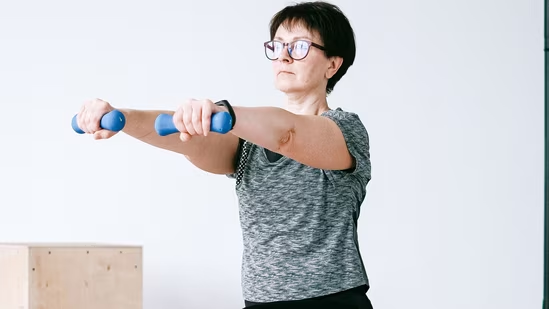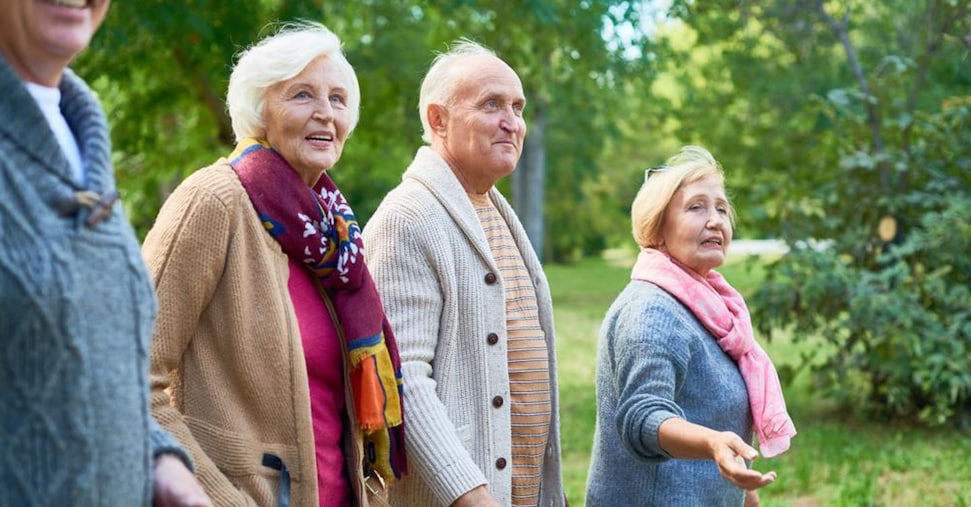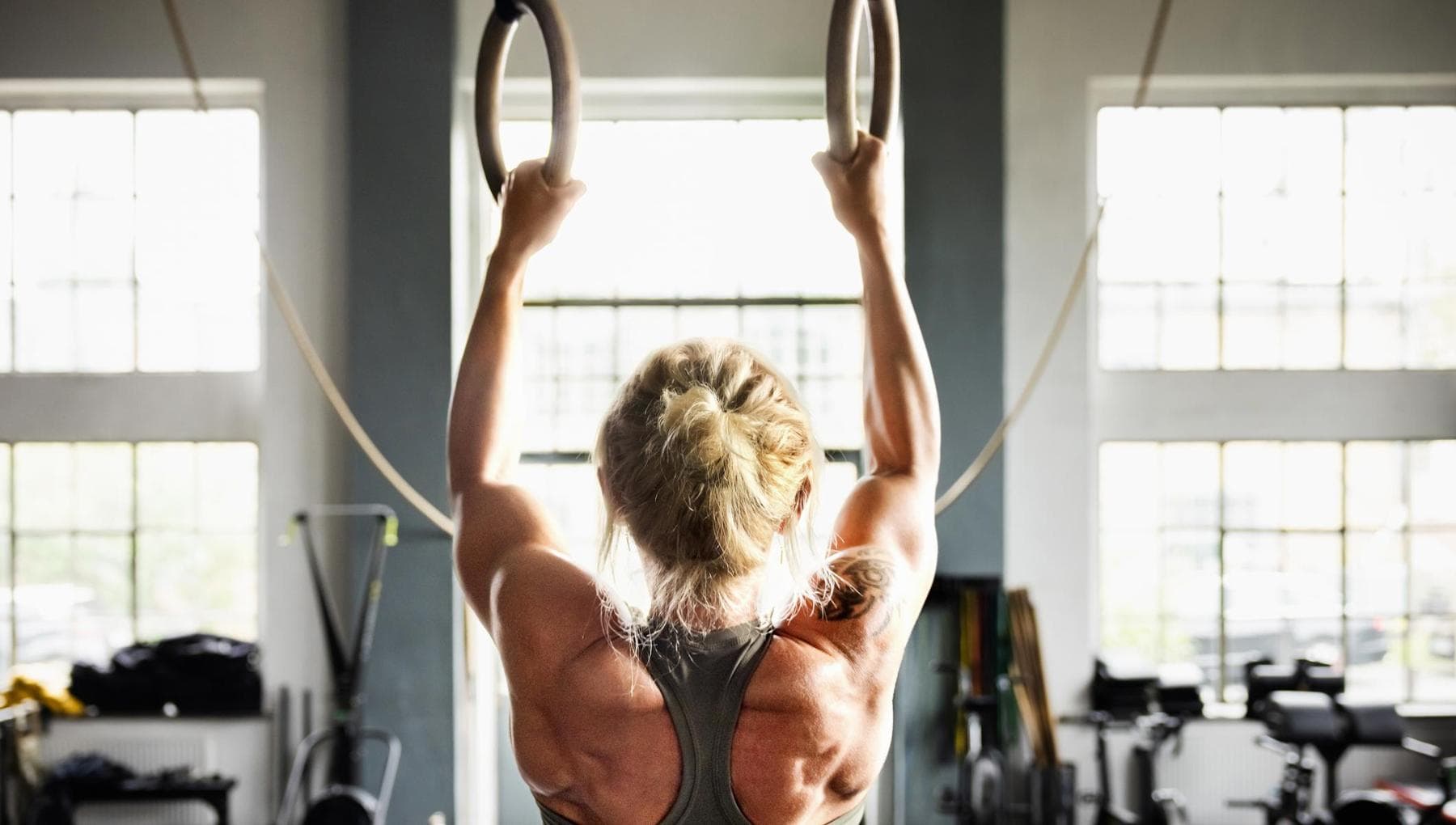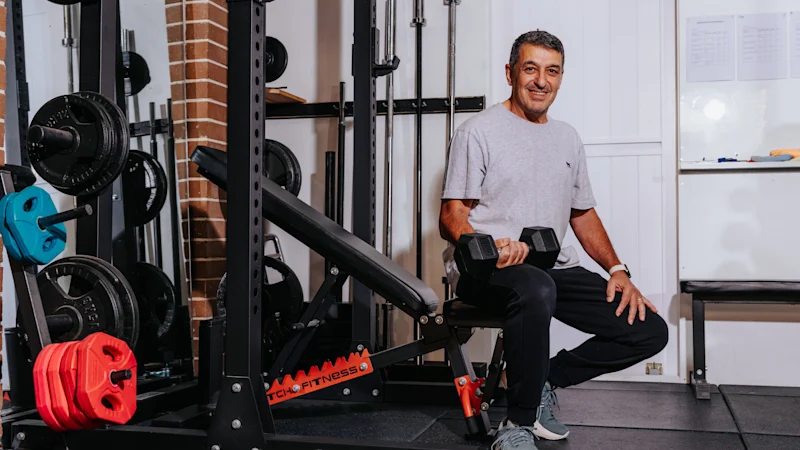
June 12, 2026 — 3:00pmRobert Catanese anticipated some learning curves when he took on part-time garden maintenance work, but he wasn’t expecting to uncover a previously unnoticed health issue.“I worked in middle management at a bank for 40 years, so the new job is far more active. I’m bending down doing weeding, I’m doing a lot more walking, and holding and using a lot of garden maintenance tools,” says the Sydney-based 66-year-old.Robert Catanese, 66, discovered his muscle loss when he semi-retired.James Brickwood“I was feeling that my body was getting weaker, that I just didn’t have the strength; some of these tasks were hard to do, and I was experiencing a few aches and pains so I went to my GP, who told me I was experiencing muscle loss.”Catanese is far from alone. The National Muscle Health Survey, conducted in 2024 by Deakin University’s Institute for Physical Activity and Nutrition (IPAN), found that one in five Australians aged over 60 are living with muscle loss, a condition also known as sarcopenia.This rate is higher than the prevalence of diabetes, which at 18.7 per cent, is one of the most common health conditions among older Australians.What is sarcopenia?Professor David Scott, one of the study’s researchers, says people gradually lose muscle mass and strength from their mid-30s.“These losses accelerate as we get older and can result in the development of the age-related muscle disease known as sarcopenia,” Scott says. “A person may be diagnosed … if their muscle mass and strength decline to levels low enough to impact their health and ability to live independently.”In addition to age, there are numerous red flags that can indicate or cause deterioration in muscle health.“If you have a sudden weight loss, including from GLP-1 medications, a substantial proportion of that weight loss will be muscle,” Scott says.People with sedentary lifestyles, poor diets or chronic diseases such as type 2 diabetes, heart disease and cancers can also experience muscle loss, as can events such as surgery or being bedridden with the flu, which reduce physical activity.What are the signs and how serious can it be?General practitioner Dr Jeremy Keh says that like Catanese’s case, sarcopenia is often silent.“It creeps up on people; a patient will come to me and will say, ‘Look, I just feel I’m getting older, or things are becoming more difficult’,” he says.“When they say holding a cup or opening a jar is more difficult or, ‘I’m having trouble getting up and down from a chair’, those are the signs that tell me straight away that their muscle mass is decreasing.”If left unmanaged, sarcopenia may lead to physical disability, wheelchair necessity and falls, which in turn can cause broken bones and can limit a person’s independence, says Dr Ben Kirk, a senior research fellow in exercise physiology from the University of Melbourne.“These adverse outcomes have terrible consequences on quality of life and are costly to the Australian health system,” Kirk says.“Sarcopenia also increases the risk of osteoporosis and cardiovascular diseases [because] skeletal muscle is required for healthy bones through mechanical loading, and the muscle is the body’s largest storage site for sugar and helps protect against cardiovascular diseases.”Issues with diagnosis Despite its prevalence, the National Muscle Health Survey found that fewer than one in four respondents who noticed declining or poor muscle health have taken steps to address the issue with their doctor. This is due to a range of factors, including limited knowledge of muscles.Experts say it’s never too late to build strength, which Catanese has found to be true since his diagnosis. James BrickwoodThe lack of screening for sarcopenia and constraints on GPs can also delay diagnosis, Keh says, as does a lack of urgency, which can mean it is not considered a priority.“On the list of glamorous medical conditions, sarcopenia is down at the bottom,” Keh says.“But it really needs to come to the forefront because, without sarcopenia screening, you’re going to end up with those fancy medical conditions.”Some of the tests GPs can do include grip strength and the speed of sitting up and standing up from a chair.“Simple things like that we can measure over time to see if there’s improvement or deterioration,” Keh says.According to Scott, the stronger a person’s muscles are before their mid-30s, when muscle loss usually begins, the better off they will be.“For young people, the goal is to maximise their peak amounts of muscle mass and strength by young adulthood,” he says. “By being active, young people can put larger deposits into their ‘muscle banks’ so that they have sufficient muscle reserves to draw down on later in life.”Seeking treatmentEven if you are in a later stage of life, Kirk advises not to dismiss feeling weaker as a sign of natural ageing because it’s never too late to build strength.Experts say people need ‘muscle banks’ to draw on later in life.iStock“In regard to muscle loss, the term ‘use it or lose it’ holds true,” he says. “I cannot emphasise the importance of resistance-based exercise – use of free weights like dumbbells or kettlebells, resistance bands and medicine balls, two to three times per week, to preserve muscle mass or halt the progression of muscle loss.”Additionally, Keh says that nutrition-wise, it’s all about protein.“Protein is the building block of our muscles, and it’s needed to strengthen and keep our muscles firm. In addition to protein, essential vitamins and minerals like vitamin D and calcium, even via supplements or shakes, are good,” he says.For Robert Catanese, these fundamental elements have been key to his treatment, which began about seven weeks ago.“I have been doing a personal training session of between 30 and 60 minutes, two times a week, doing resistance training like weighted squats. I also have a daily protein supplement,” he says.“I’ve felt a hell of a lot better ever since I started, with fewer aches around the knees and back; I’ve felt stronger, and it’s motivated me to get healthier overall.”Make the most of your health, relationships, fitness and nutrition with our Live Well newsletter. Get it in your inbox every Monday.From our partners
Muscle loss is more common than diabetes in old age. Here’s how to avoid it
One in five Australians over 60 are living with sarcopenia. Experts share how to avoid and prevent this common health condition.
TL;DRAI
Sarcopenia affects one in five Australians over 60, a higher prevalence than type 2 diabetes (18.7%), yet fewer than one in four patients take action with their GP despite noticing muscle decline. Resistance training two to three times weekly combined with adequate protein intake can halt progression, making strength conditioning a cost-effective intervention for aging workforce health and independence.
1,010 words~5 min read