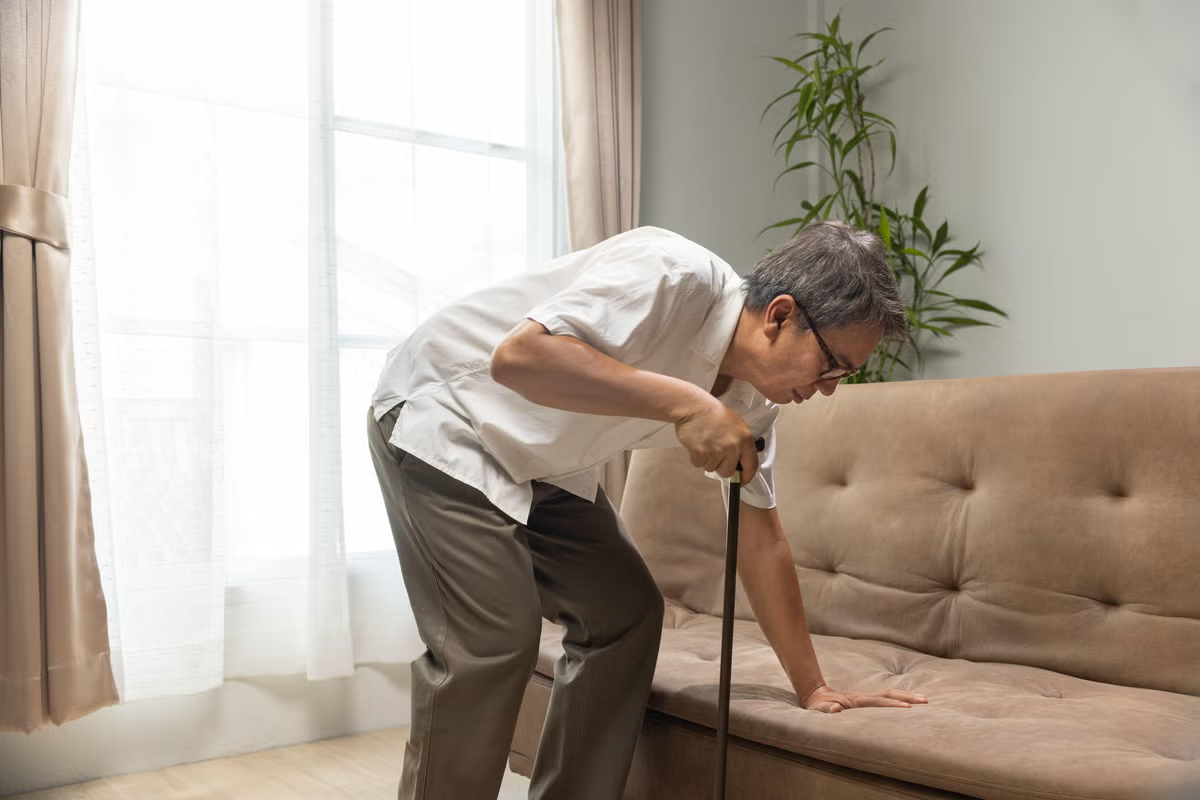
You are reminded of how time exacts its toll on the human body when you see the way your aged parents move. What were once robust limbs that carried schoolbags and groceries, and strode you to tuition and swimming lessons now falter at traffic crossings and staircases. You start to notice Ma and Pa walking less steadily, how they shuffle rather than take regular steps. Even daily activities such as going to the market tire them more easily now. At home, you see them struggling to get up from a chair.“Some people may also notice that they are moving more slowly or avoiding activities they used to comfortably do. Over time, these changes can increase the risk of falls and make it harder to stay active and independent,” said Dr Chen Shuyu, a consultant with Tan Tock Seng Hospital (TTSH), Department of Geriatric Medicine.What you're seeing are the effects of sarcopenia or age-related muscle loss. And as Singapore’s population ages, more patients are being diagnosed with the condition. In fact, 60 per cent to 80 per cent of the patients at TTSH’s Falls And Balance Clinic are at risk of sarcopenia, said Dr Chen.
In Singapore, seniors are starting to get hospitalised from falls as young as age 65, which is at the younger end of the older adult age spectrum. (Photo: iStock/whitebalance.space)