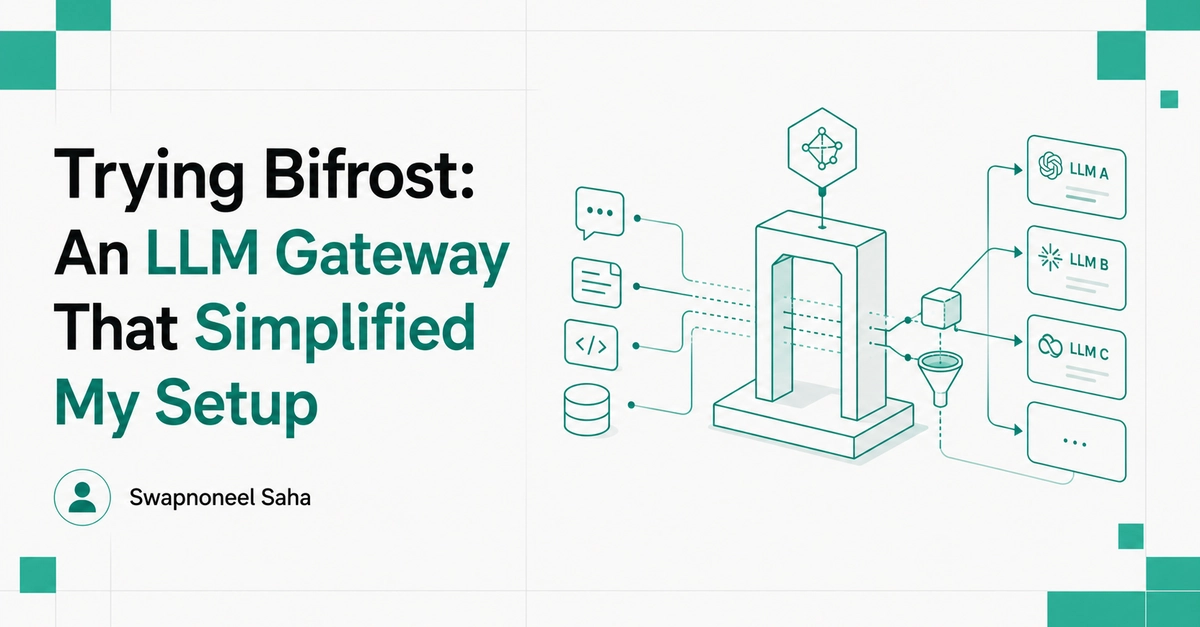
Bifrost, the open-source AI gateway, handles thousands of concurrent LLM requests on Kubernetes with near-zero overhead, autoscaling, and centralized governance, everything you need for enterprise-grade production traffic.
When AI requests arrive at scale (hundreds or thousands per second), even milliseconds of added latency compound into user-visible slowdowns and unnecessary token costs. A high-performance AI gateway on Kubernetes lets you absorb that load with a declarative, horizontally scalable deployment while maintaining full control over data, policy, and request routing. Bifrost, an open-source AI gateway written in Go, is purpose-built for enterprise teams handling mission-critical AI workloads at high concurrency. This guide covers deploying Bifrost on Kubernetes at production scale, from initial Helm installation through multi-replica cluster mode, autoscaling, and enterprise-grade governance.
Core Requirements for a Production AI Gateway on Kubernetes
More than just a proxy is needed to handle enterprise AI traffic. A gateway that can sustain thousands of concurrent requests requires:
Horizontal scaling: pods that scale in and out automatically, driven by CPU and memory metrics.