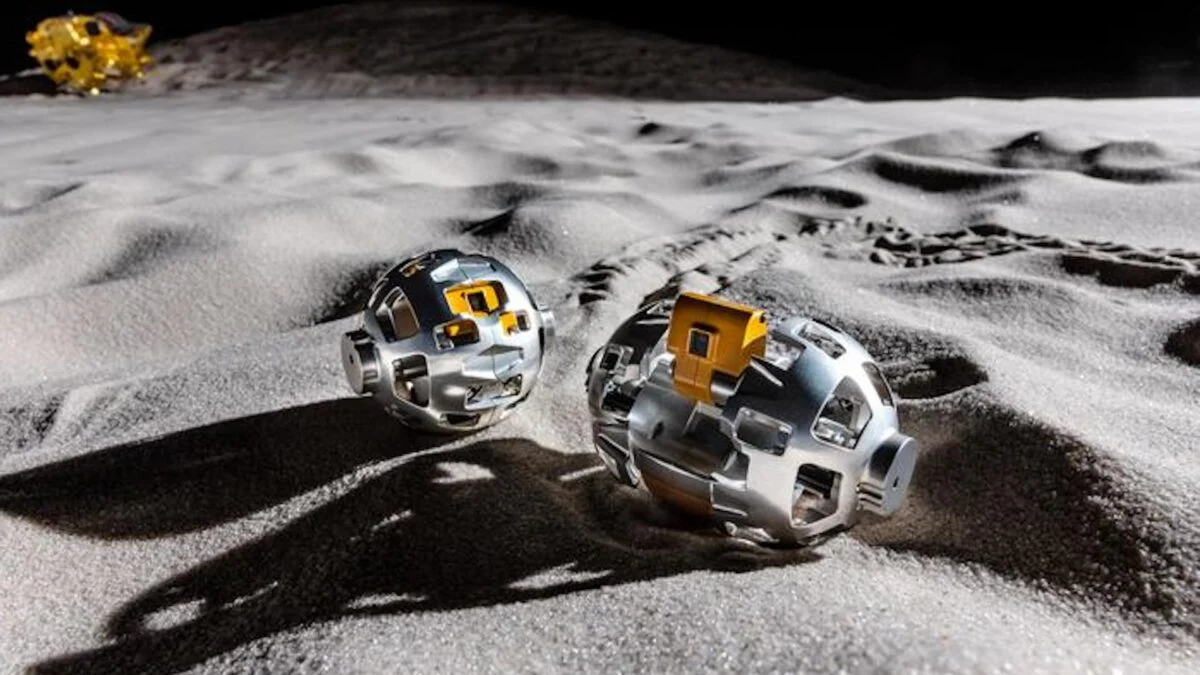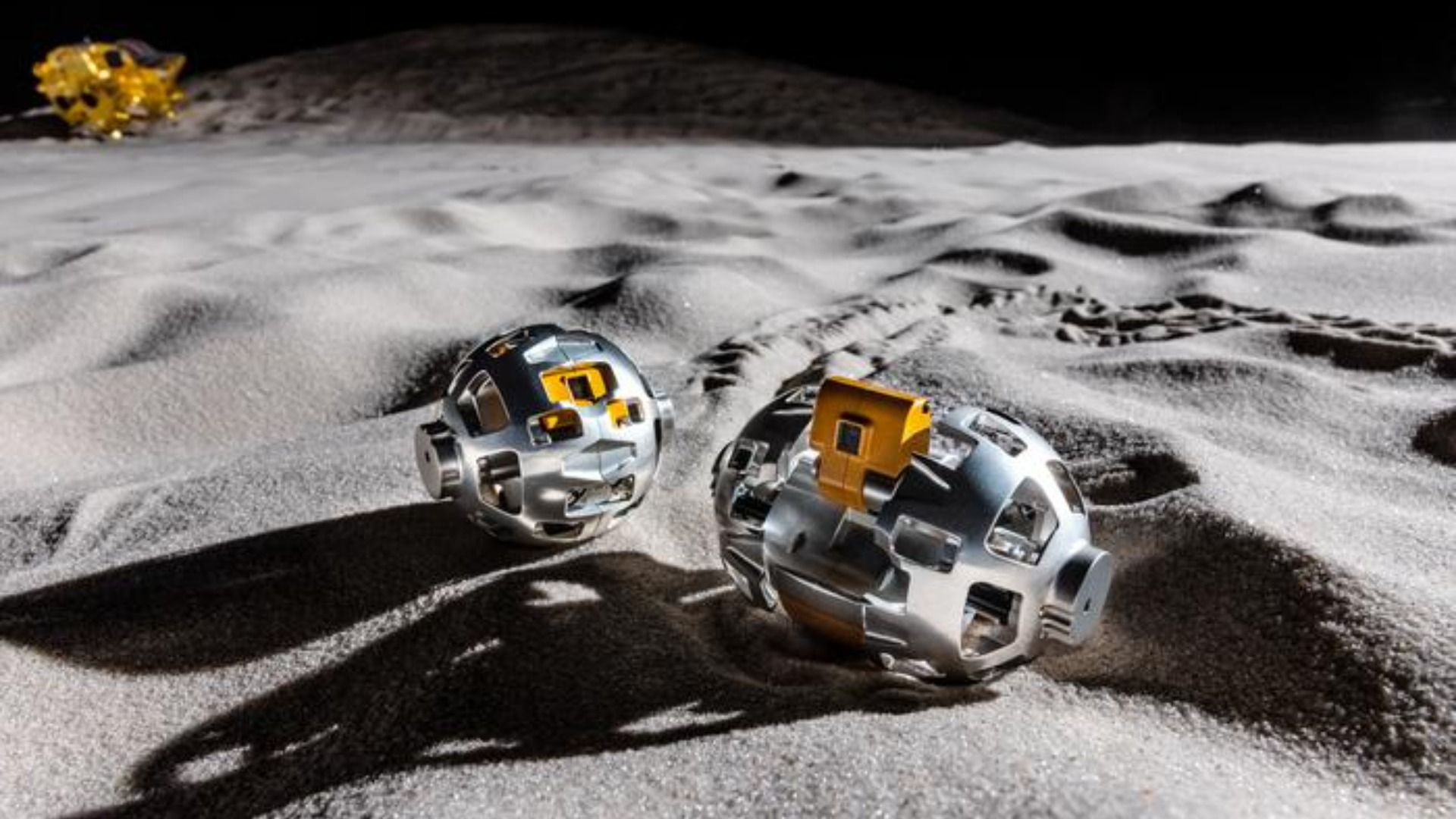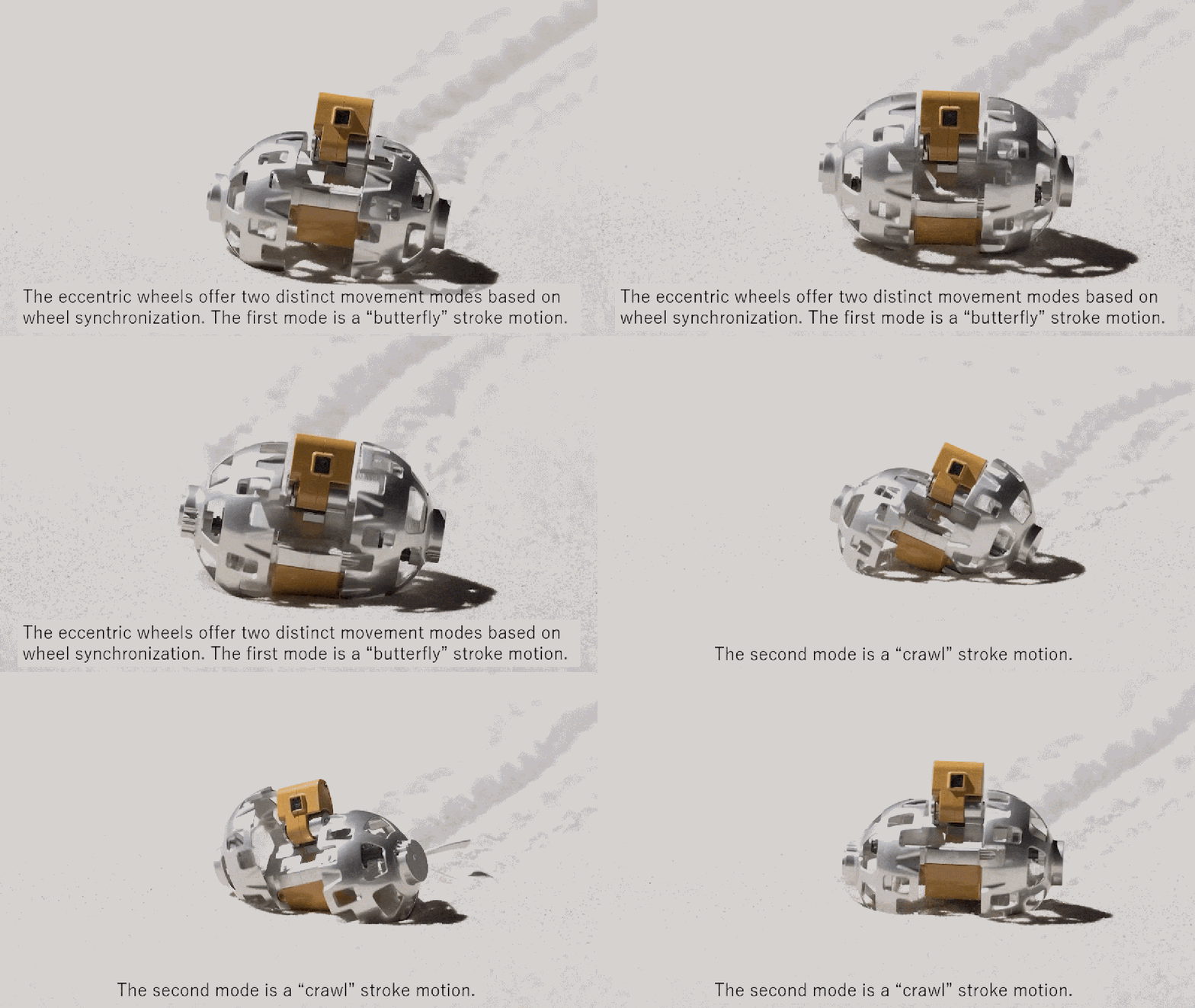
This tiny robot might look like a high-tech hamster ball, but it could hasten lunar explorationBy Jackie Flynn Mogensen edited by Claire CameronTwo travel modes of the LEV-2 moon rover. D. HiranoJoin Our Community of Science Lovers!Lunar Excursion Vehicle 2 (LEV-2), a lunar robot from the Japan Aerospace Exploration Agency (JAXA), could have been plucked from a science-fiction movie. It’s small—about the size of a baseball—it’s cute and it can transform, easily morphing from what looks like a high-tech hamster ball into a two-wheeled rover capable of autonomously exploring the moon’s surface.Now, two years after JAXA put LEV-2 to the test on the moon’s surface, the results are in: according to a new study, this cute little silver transformer could be a powerful new kind of robot for future moon missions.LEV-2 landed on the moon alongside JAXA’s Smart Lander for Investigating Moon (SLIM) in January 2024. LEV-2 successfully rolled, shimmied and wheeled its way around the moon’s surface near the lander. The little bot also captured images of the lander and of the moon and successfully transmitted those pictures back to Earth via LEV-1, a sister rover SLIM also carried to space.On supporting science journalismIf you're enjoying this article, consider supporting our award-winning journalism by subscribing. By purchasing a subscription you are helping to ensure the future of impactful stories about the discoveries and ideas shaping our world today.LEV-2D. HiranoAutonomous space robots are critical to space exploration because they can navigate and map harsh or dangerous environments without putting humans at risk. But roving robots are often clunky and heavy: LEV-2, on the other hand, was designed to be small and lightweight, measuring a dainty three inches (eight centimeters) in diameter and weighing eight ounces (less than 230 grams)—about the same as two sticks of butter.Part of why LEV-2 looks uncannily cute may be by design: JAXA worked with Japanese toy company TOMY to develop LEV-2, according to the space agency. Its transformation abilities are largely the result of a rotating shaft inside the rover that unlocks the robot’s wheels—a feature LEV-2 borrowed from children’s toys.“This transformation mechanism incorporated technology from commercial toys that transform vehicles into robots, with specific design improvements implemented to prevent jamming during the transformation sequence,” the authors write.The 2024 mission didn’t come without challenges, however. LEV-2 lost connection with LEV-1 multiple times throughout its visit to the moon. In fact, after an hour and a half on the moon, LEV-2 lost communication entirely with LEV-1—and Earth.“The lessons learned from this mission provide practical guidance for the design and operation of next-generation distributed space robotic systems,” the authors write.The study was published on Wednesday in the journal Science Robotics.It’s Time to Stand Up for ScienceIf you enjoyed this article, I’d like to ask for your support. Scientific American has served as an advocate for science and industry for 180 years, and right now may be the most critical moment in that two-century history.I’ve been a Scientific American subscriber since I was 12 years old, and it helped shape the way I look at the world. SciAm always educates and delights me, and inspires a sense of awe for our vast, beautiful universe. I hope it does that for you, too.If you subscribe to Scientific American, you help ensure that our coverage is centered on meaningful research and discovery; that we have the resources to report on the decisions that threaten labs across the U.S.; and that we support both budding and working scientists at a time when the value of science itself too often goes unrecognized.In return, you get essential news, captivating podcasts, brilliant infographics, can't-miss newsletters, must-watch videos, challenging games, and the science world's best writing and reporting. You can even gift someone a subscription.There has never been a more important time for us to stand up and show why science matters. I hope you’ll support us in that mission.
Meet LEV-2, a baseball-sized and absurdly cute moon robot
This tiny robot might look like a high-tech hamster ball, but it could hasten lunar exploration
TL;DRAI
JAXA's LEV-2 (230g) autonomously explored the moon in January 2024, transmitting imagery via distributed systems. The mass-efficient, distributed design reduces launch costs and validates swarm robotics for future missions, signaling a strategic shift in space exploration.
645 words~3 min read