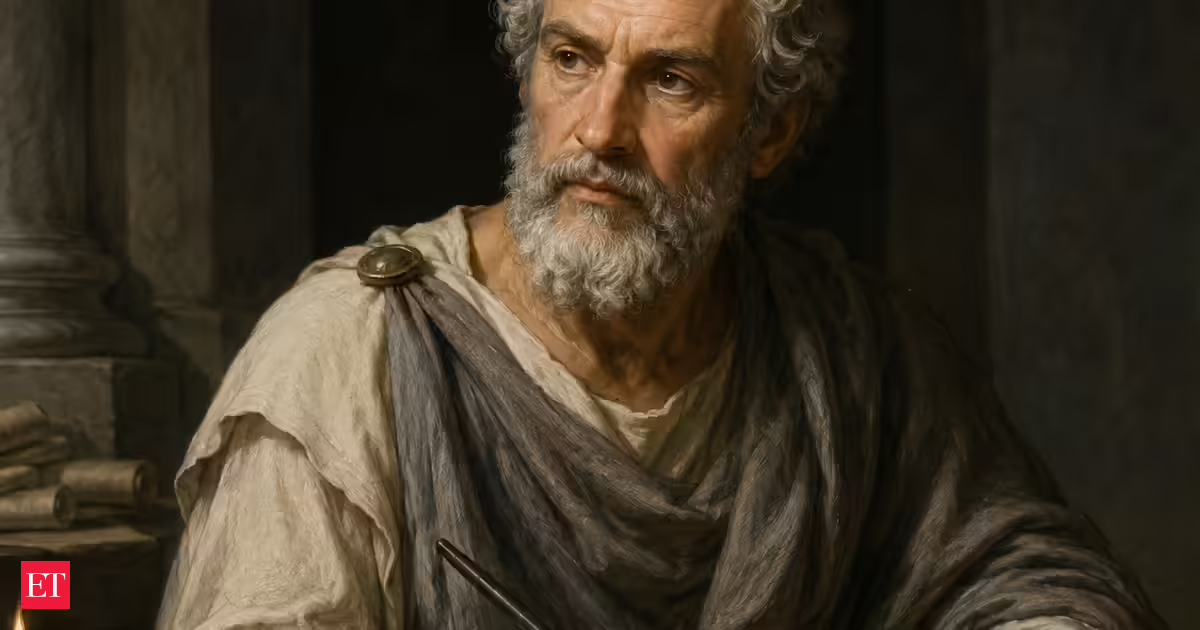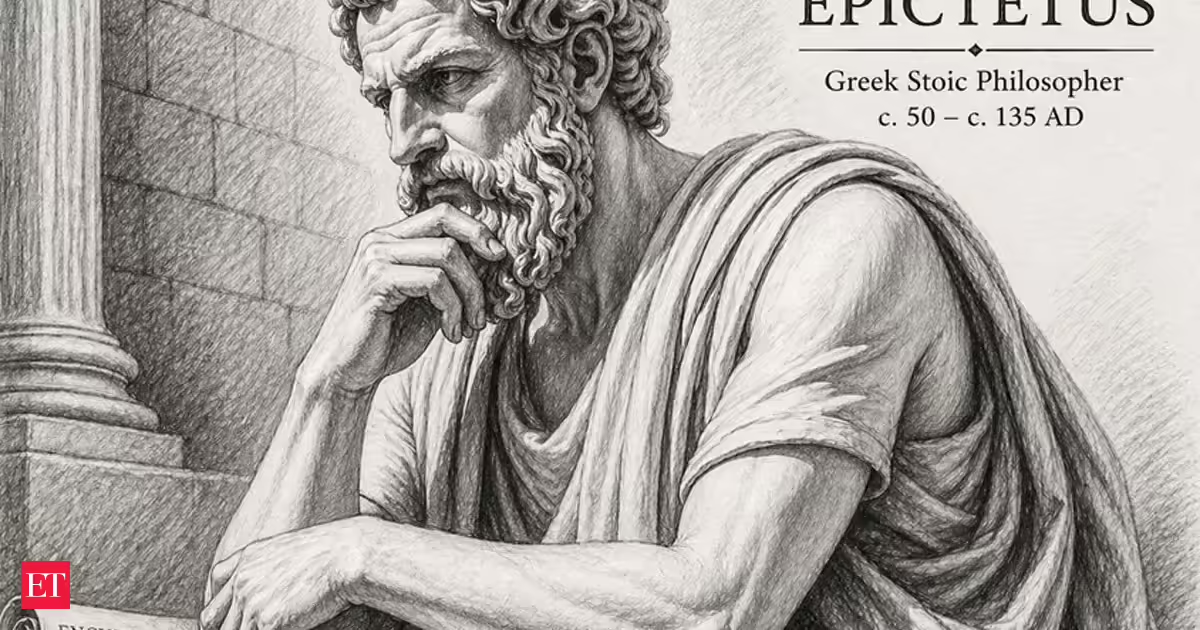
The Stoic Quote of the Day, “The soul becomes dyed with the color of its thoughts,” delivers a timeless lesson about the human mind, emotional strength, and personal transformation. This powerful Stoic philosophy reminds us that thoughts silently shape our identity, choices, habits, and future. Every repeated belief leaves an invisible mark on our character. The wisdom behind this quote connects ancient philosophy with modern psychology, mindset growth, and emotional intelligence. Our thoughts influence how we handle stress, failure, success, relationships, and life challenges. A strong mindset does not remove problems. It changes the way we face them.Marcus Aurelius, the famous Roman emperor and Stoic philosopher, lived this truth during wars, personal losses, and political struggles. His success came not only from leadership but from mastering his inner world. His teachings still inspire millions because they focus on discipline, clarity, and self-control. The Stoic Quote of the Day asks a simple but powerful question: what kind of thoughts are we allowing to shape our lives? Positive thinking alone is not the answer. The real lesson is awareness. The mind must learn to choose wisdom over fear, courage over doubt, and purpose over negativity.Quote of the Day: Stoic Wisdom - Human Suffering Begins When Emotions Rule the Mind Instead of Reason“The soul becomes dyed with the color of its thoughts.”The quote teaches that repeated thoughts become a reflection of who we are becoming. When the mind focuses on courage, patience, and wisdom, those qualities appear in our choices. But when negativity, fear, and anger dominate our thinking, they can affect our confidence and relationships. Marcus Aurelius believed true strength begins with controlling our own judgments.In modern life, this ancient lesson remains deeply relevant. Every day brings pressure, distractions, and challenges that test our mindset. The way we think about failure, success, and uncertainty decides how we move forward. A disciplined mind can transform struggles into lessons and create a stronger, more meaningful path in life.Meaning of the Quote of the Day: When You Master Your Emotions, You Master Your LifeAt the heart of Stoicism lies a simple but powerful truth: your life is shaped less by what happens to you and more by how you respond to it. The Stoics believed that external events—wealth, poverty, success, failure, praise, criticism, good luck, and bad luck—are largely beyond our control. What remains within our control is our mind.This is why Stoic philosophers taught that emotional mastery is the foundation of a meaningful life. Anger clouds judgment. Fear magnifies obstacles. Envy poisons contentment. Unchecked emotions push people toward decisions they later regret. The damage often comes not from circumstances themselves, but from emotional reactions to them.Stoicism does not ask us to suppress emotions. It teaches us to understand them. Every emotion begins with a thought. Change the thought, and you change the emotion. Change the emotion, and you change the action that follows.When Marcus Aurelius wrote, “The soul becomes dyed with the color of its thoughts,” he was reminding us that our minds slowly become what they repeatedly think. A mind filled with resentment produces suffering. A mind trained in reason, gratitude, discipline, and perspective produces strength.The Stoic path is not about controlling the world. It is about controlling yourself. The person who masters emotions remains calm in chaos, focused in adversity, humble in success, and resilient in failure. Such a person cannot be easily defeated because their peace does not depend on circumstances.The greatest freedom is not having everything you want. It is reaching a point where your emotions no longer control your choices. According to Stoicism, that is where true power begins. When you master your emotions, you master your life.Stoicism was an ancient Greek and Roman philosophy that taught people how to live with wisdom, courage, self-control, and inner peace. It began in Athens around the early 3rd century BCE with Zeno of Citium. Stoics believed that while people cannot control every event in life, they can control their thoughts, choices, and reactions.The philosophy became famous through thinkers like Seneca, Epictetus, and Marcus Aurelius. Their teachings focused on accepting reality, improving character, and staying calm during hardship. Stoicism continues to influence modern ideas about resilience, emotional intelligence, personal growth, and mental strength.How does Stoic philosophy connect thoughts, mindset, and success?Stoic philosophy views the mind as the strongest tool for personal growth. The Stoics believed that a disciplined mind creates freedom. External success can disappear, but inner strength remains.The Stoic Quote of the Day highlights the connection between thinking and achievement. History shows many successful individuals who transformed failure into progress because they controlled their perspective.Thomas Edison experienced repeated failures while developing inventions. Instead of accepting defeat, he treated mistakes as lessons. His mindset helped him continue until he created breakthroughs that changed the world.This approach reflects a core Stoic principle. Failure is not always an ending. Sometimes it becomes information that guides improvement. The interpretation of an event often determines its impact.People who develop a growth mindset understand that setbacks can teach valuable lessons. They analyze mistakes, adjust strategies, and continue moving forward. This mental habit separates temporary struggles from lasting success.The Stoic Quote of the Day encourages people to examine their inner conversations. The words people tell themselves every day influence confidence, motivation, and decisions. A healthier inner dialogue creates stronger actions.Other famous Stoic quotes and their life lessons “You have power over your mind — not outside events. Realize this, and you will find strength.” — Marcus Aurelius This quote teaches that true control comes from managing thoughts, emotions, and reactions rather than trying to control everything around us. “We suffer more often in imagination than in reality.” — Seneca Seneca explains that fear often grows from our thoughts. Many worries become bigger in the mind than they are in real life. “It is not things that disturb us, but our judgments about things.” — Epictetus This wisdom highlights that our interpretation of events shapes our emotions more than the events themselves. “The greatest wealth is to live content with little.” — Seneca This quote reminds people that happiness does not always come from possessions but from gratitude and inner peace. “First say to yourself what you would be; and then do what you have to do.” — Epictetus It encourages people to define their values first and then build actions that match their purpose. Stoic quotes continue to inspire people because they focus on timeless human struggles. Their lessons about discipline, resilience, patience, and self-awareness remain useful in modern life. Stoicism shows that a stronger life begins with a stronger mind.
Stoic Quote of the Day: “The soul becomes dyed with the color of its thoughts.” Why the greatest danger to human success is not poverty, failure, competition, or bad luck, but uncontrolled emotions and self-mastery — here's what Stoicism teaches to transform your life
Every success begins as a thought. Every failure does too. That is the timeless wisdom behind the Stoic quote, “The soul becomes dyed with the color of its thoughts.” Most people fear poverty, failure, competition, or bad luck. Stoicism points to a greater threat: an undisciplined mind. Negative thoughts fuel anger, fear, envy, and impulsive decisions. Over time, these emotions shape character and destiny. Stoic philosophy teaches self-mastery, emotional control, mental strength, resilience, and inner peace. Change your thoughts, and you change your emotions. Change your emotions, and you transform your life.
1,093 words~5 min read